A first for Gnarlydog News, here is a bilingual guest post from Marco Ferrario, a Gnarlydog News reader.
The English text is in YELLOW, the Italian text (original) is in
GREEN.
Questa e` la prima pubblicazione di Gnarlydog News bilingue, cortesia di Marco Ferrario.
Il testo in VERDE e` in Italiano
KAYAKER’S EAR – L’ORECCHIO DEL KAYAKER
Rolling and tinnitus - Eskimo ed acufene
Il kayaker appassionato di rolling (eskimo) è un soggetto a rischio di acufene (tinnitus)?
Forse molti kayakers si chiederanno cosa centrano gli acufeni con il kayak da mare, ebbene ...
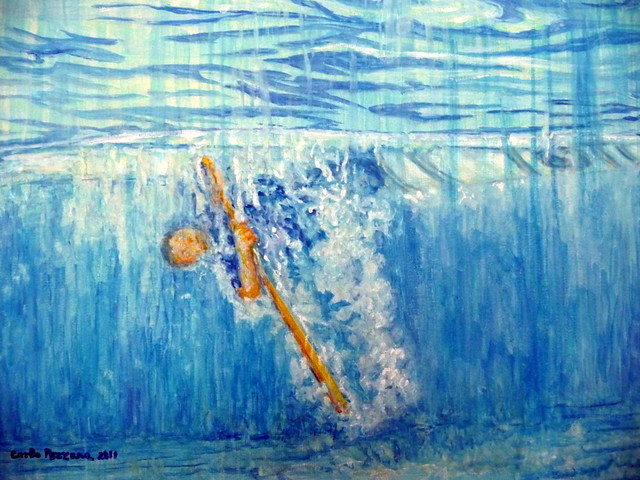
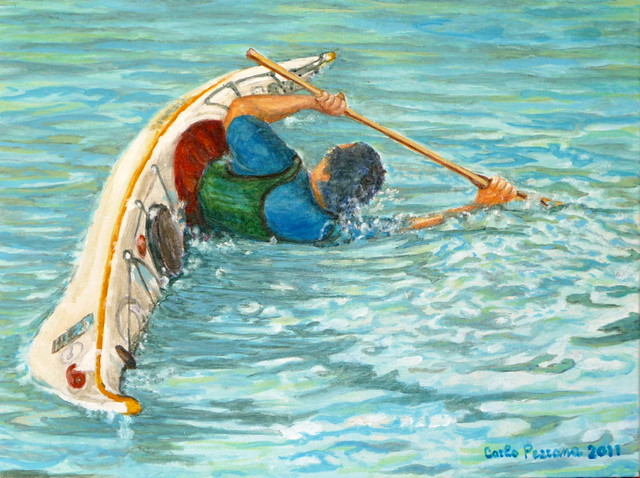 Image of KayArt - di Carlo Pezzana (http:/www.kayart.it)
Nel 1996 feci il mio primo corso di eskimo (rolling) in piscina.
Dopo le prime lezioni iniziai ad eseguire stentatamente i primi miei eskimo senza l’aiuto dell’istruttore.
Con soddisfazione avevo compiuto i primi passi verso questa divertente tecnica di auto-salvataggio.
Negli anni seguenti, provai più volte ad eseguire l’eschimo in mare, ma non sempre con successo , la mia esecuzione era ancora scadente.
Così, nell’inverno 2001-2002, per migliorarmi, tornai in piscina, che era a disposizione dei kayakers per una sera a settimana, per un paio d’ore.
Il divertimento e la soddisfazione nell'eseguire la manovra dell'eskimo, mi spingeva a provare e riprovare molte volte, continuativamente.
Per eseguire l’eskimo (rolling), dalla posizione seduta in kayak, si entra in acqua su un fianco, eseguendo un “piccolo tuffo” laterale, impattando contro la superficie dell’acqua.
Image of KayArt - di Carlo Pezzana (http:/www.kayart.it)
Nel 1996 feci il mio primo corso di eskimo (rolling) in piscina.
Dopo le prime lezioni iniziai ad eseguire stentatamente i primi miei eskimo senza l’aiuto dell’istruttore.
Con soddisfazione avevo compiuto i primi passi verso questa divertente tecnica di auto-salvataggio.
Negli anni seguenti, provai più volte ad eseguire l’eschimo in mare, ma non sempre con successo , la mia esecuzione era ancora scadente.
Così, nell’inverno 2001-2002, per migliorarmi, tornai in piscina, che era a disposizione dei kayakers per una sera a settimana, per un paio d’ore.
Il divertimento e la soddisfazione nell'eseguire la manovra dell'eskimo, mi spingeva a provare e riprovare molte volte, continuativamente.
Per eseguire l’eskimo (rolling), dalla posizione seduta in kayak, si entra in acqua su un fianco, eseguendo un “piccolo tuffo” laterale, impattando contro la superficie dell’acqua.
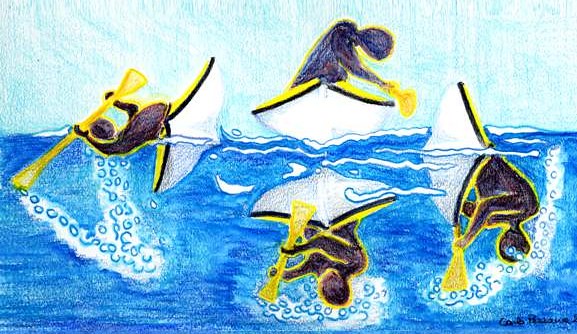
Image of KayArt - di Carlo Pezzana (http://www.kayart.it)
The kayaker keen on rolling (Eskimo) is a subject at risk of tinnitus?
Perhaps many will wonder what kayakers and tinnitus have in common with sea kayaking; well ...
In 1996 I took my first kayak rolling course in the pool.
After the first lessons I started to run my first haltingly roll without the help of the instructor.
With satisfaction I had taken the first steps towards this fun technique of self-rescue.
In the following years, I tried several times to roll
at sea but not always successfully, my
performance was still poor.
Thus, in the winter of 2001-2002, to improve myself, I returned to the pool, which was available to kayakers one night a week, for a couple of hours. The fun and satisfaction in performing a roll pushed me to try again and again many times, continuously. To perform a roll, while sitting in a kayak, you enter the water on one side, performing a "little side dive", impacting against the surface of the water.
Il mio corpo entrava ed usciva dall'acqua e, una volta sott’acqua, rimanevo per alcuni secondi a testa
capovolta, prima di completare l’eskimo. Il fastidio dell’acqua nelle orecchie e nel naso era sopportabile, perciò non utilizzavo tappi per le orecchie e alcune volte non mettevo neanche la molletta per chiudere il naso. All’uscita dalla piscina, con la testa forse ancora un poco umida, percepivo tutto il gelo della serata invernale con temperature inferiori agli 0° centigradi e spesso avevo la sensazione di avere le orecchie chiuse e piene d'acqua. A volte l’udito, per i primi minuti, era ovattato e rimbombante, poi le orecchie si stappavano e il problema si risolveva, perciò non ho mai dato molta importanza a questo disturbo passeggero.
Una sera, tornato a casa, non riuscii più a liberarmi della sensazione di acqua nelle orecchie.
Scuotevo la testa e mi schiaffeggiavo le tempie, ma nulla, le orecchie rimanevano tappate e persisteva la sensazione di avere ancora acqua nel loro interno.
In questa condizione rimasi per alcuni giorni, passati i quali, iniziai a percepire un miglioramento, l'orecchio si stava finalmente liberando dall'acqua, ma, alla sensazione di essersi liberati, si sostitui presto un costante piccolo fruscio. Inizialmente la sensazione fu che il fruscio provenisse dall’ambiente, ma presto mi resi conto che proveniva dalle mie orecchie.
Avevo l’impressione che un insetto sia entrato nel mio condotto uditivo e, sbattendo disperatamente le ali, non riusciva più ad uscire.
Da allora, l'alta tonalità dell'acufene non mi ha più lasciato, lo sento sempre, costantemente e, nel tempo,
è aumentata l'intensità del rumore percepito.
Lo sento nelle orecchie ma sembra che si estenda anche nella parte alta del cervello.
My body would enter and exit from the water, and once under water, woudl remaini for a few seconds head
upside down, before completing the roll. The discomfort of the water in the ears and nose was bearable, so I did not use ear plugs and sometimes would not even put on the clip to close the nose.
Walking away from the pool, my head maybe a little wet, I felt every chill of winter evening with temperatures below 0 ° Celsius often feeling my ears closed and full of water. Sometimes the hearing, for the first few minutes, was muffled, rumbling, then the ears uncorked, and the problem was solved; so I never gave much importance to this passing discomfort. One evening, returning home, I could no longer get rid of the feeling of water in the ears. I shook my head and tapped the sides, but nothing: the ears remained plugged and the persisting feeling of having more water in them.
I remained for several days in this condition, after which I began to feel an improvement: the ear
was finally releasing the water. But the feeling of getting rid of it was soon replaced by a constant
small noise, sensing that initially the noise came from the environment, instead I soon realized
it came from my ears. I had the impression that an insect has entered into my ear canal and, flapping frantically its wings, could not get out.
Since then, the high-pitched tinnitus hast never left me, I always hear it, constantly, and over time has increased in the intensity of perceived noise.
I feel it in my ears but it seems that it also extends into the upper part of the brain.
Mi sottoposi ad una sequenza di visite in centri specialistici otorinolaringoiatrici e audiologici, i medici mi prescrissero diversi esami, che feci regolarmente, ma che non mi permisero di capire come intervenire per risolvere il mio disturbo. Gli esami esclusero determinate patologie.
Più specialisti contattavo e più mi convincevo che nessuno poteva offrirmi una soluzione certa.
La risonanza magnetica e la Tac esclusero problematiche ancora più serie.
Feci anche qualche tentativo di cura, ma senza successo, perciò mi rassegnai, sforzandomi di convivere con questo fastidioso rumore.
.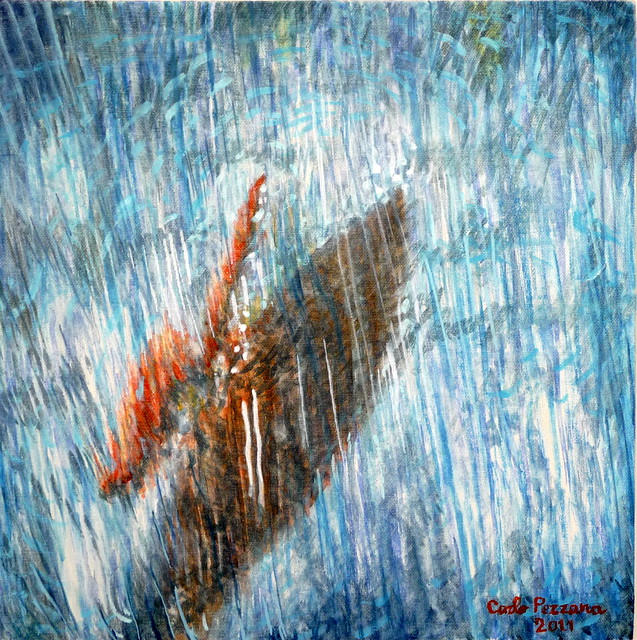
Image of KayArt - di Carlo Pezzana (http://www.kayart.it)
Sono trascorsi ormai molti anni, il suono dell'acufene è aumentato rispetto al periodo iniziale e si è anche
differenziato arricchendosi di nuove tonalità, sempre molto acute.
A volte assomiglia ad uno scroscio d'acqua, come fosse un rubinetto aperto, altre volte è un suono a metà strada tra una sirena e un fischio e l’impressione è che il timpano stia vibrando in continuazione.
L'udito ne risente sempre più (ipoacusia), come anche lo stress conseguente.
In questi anni mi sono informato e ho avuto modo di constatare che tra i soggetti più frequentemente a rischio d’acufene, c'è chi pratica sport acquatici o li ha praticati in passato, perciò i surfisti, i nuotatori, i tuffatori, chi pratica bodybording, kitesurf e chi, facendo immersioni, ha accusato problemi di compensazione.
Kayakers fluviali, hanno iniziato a soffrire di acufeni dopo un bagno in acque fredde, anche se indossavano il casco, che attutisce l'impatto con l'acqua.
A chi gli acufeni sono passati, ho l'impressione che sia stata più una casualità, piuttosto che una specifica cura. La maggioranza di chi ne soffre, ha imparato, necessariamente, a convivere con questi rumori persistenti.
 Imagee of KayArt - di Carlo Pezzana (http://www.kayart.it)
I started a sequence of visits to specialist centers and ENT doctors prescribed me different
exams, which I did regularly, but that did not allow me to understand how to intervene to solve my trouble. exams
ruled out certain diseases.
The more specialist I contacted the more I was convinced that no one could offer a reliable solution.
MRI and CAT scan ruled out more serious problems.
I also made some attempts to cure, but without success, so I resigned myself, trying to live with
this annoying noise.
It has been many years; the sound of tinnitus has increased compared to the initial period and it is also
differentiated enriched with new shades, always very acute.
At times resembling a roar of water, like a tap running, other times it sounds somewhere between a siren and a whistle, and the impression is like that the eardrum is vibrating constantly.
My hearing is affected (hearing loss), as well as the resulting stress.
All these years that I have gathered information and my observations have lead that among those most frequently at risk of tinnitus are those who practice water sports or practiced them in the past. So surfers, swimmers, divers, bodyboarders and kitesurfers, scuba diviners, lament Compensation Issues.
River kayakers began to suffer from tinnitus after a dunk in cold water, even if they wore a helmet, which dampens the impact with the water.
In those cases where the tinnitus is gone, I feel that it's been more of chance, rather than a specific care.
The majority of sufferers have learned, by necessity, to live with these persistent noises.
C'è poi chi afferma di aver eliminato l'acufene dopo una terapia intensiva, durata diversi mesi, con un potente antiossidante ad azione neurotrofica. Altri dicono che si può provare con l'agopuntura. Alcuni hanno provato ad utilizzare, come palliativo, apparecchi acustici che rilasciano un suono mascheratore, che dovrebbe essere l'eguale-contrario al suono dell'acufene percepito e pertanto dovrebbe annullarne il rumore originario, ma tra chi ha adottato questi apparecchi, non conosco nessuno che ha veramente risolto definitivamente il problema. Un medico mi ha detto che in America è possibile intervenire chirurgicamente, ma l’intervento è molto costoso e rischioso, in quanto può provocare facilmente la perdita totale dell'udito. Una volta verificato che l'acufene non è un problema di cerume nell'orecchio e dopo e dopo aver fatto gli esami che escludono le cause extraotogene (cioè malattie che non dipendono dall'orecchio), i medici pensano che la causa del mio acufene sia dovuta a una deformazione o inspessimento o spostamento di un ossicino dell’orecchio, problema causato molto probabilmente da una esposizione all'acqua e, contemporaneamente, al freddo. Sta di fatto che nessun medico è in grado di garantirmi la guarigione, al punto che sono ormai dell'idea che non mi libererò mai più dall'acufene e credo che presto sarò costretto a cercare una soluzione per migliorare il mio udito, che nel tempo si è decisamente ridotto.
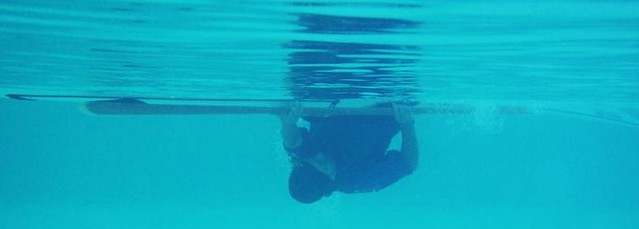 Tatiana Cappucci rolling- (photo Duska Martina Minorello)
There are some who claim to have eliminated the tinnitus after an intensive period of several months, with a powerful neurotrophic with antioxidant action.
Others say to try acupuncture. Some have tried to use, as palliative care, hearing aids that emit a masking sound, which would be exact contrary to the perceived tinnitus sound, and therefore should cancel the original noise. Between those who adopted these devices, I do not know of anyone who has really solved definitely the problem. A doctor told me that in America you can perform surgery, but surgery is very expensive and risky as it can easily lead to total hearing loss.
Once I have verified that tinnitus was not a problem of earwax in the ear and after carring out many tests that would excluded external factors (ie diseases that do not depend on the ear), the doctors think that the cause of my tinnitus is due to a thickening, deformation or displacement of an ear bone, a problem most likely caused by the exposure to water and at the same time to cold.
The fact is that no doctor is able to guarantee me the healing, to the point that they are now of the idea that I will never rid myself from tinnitus and I think that soon I will be forced to seek a solution to improve my hearing, that over time has significantly reduced.
Che dire ancora?
Ecco qualche suggerimento, dettato dalla mia esperienza, nella speranza possa essere utile a prevenire
l'acufene negli appassionati di kayak e di eskimo (rolling).
Certezze non ne ho e non ho una cultura medica, ma, da kayaker, consiglierei di non eseguire l'eskimo senza dei buoni tappi nelle orecchie e una molletta stringi naso, per ottenere un sigillo totale. Orecchio e naso sono collegati e perciò l'acqua che entra dal naso raggiunge il timpano e l'orecchio medio, credo sia opportuno tappare entrambi.
Queste precauzioni sono tanto più importanti, quanto l’acqua e/o la temperatura esterna è fredda.
Le orecchie vanno protette anche in caso di forte vento e in particolare in caso di vento gelido.
Conoscere e confrontare le esperienze potrebbe essere molto utile.
E’ necessario sapere quali sono i rischi per le orecchie del kayaker, per prevenire l’acufene; e conoscere i rimedi efficaci, se esistono, per chi ne è affetto.
N.B. - quando pagaio, come quando sono molto concentrato a svolgere con passione qualche lavoro, pur essendo l'acufene sempre presente, non ci penso e lo percepisco meno, mentre ora che ne sto parlando, anzi scrivendo, raccontandolo, il tinnitus è fortissimo.
Un saluto con pagaia.
Marco
(Eko) http://ekokayak.wordpress.com
ekokayak@gmail.com
What else can I say?
Here are some suggestions, derived from my experience in hope they will be useful to prevent
tinnitus in kayakers and rollers.
I don't have certainties or medical knowledge, however, as kayaker, I recommend not to roll without some good earplugs and a tight nose clip , to obtain a total seal. Ear and nose are connected and therefore the water that comes from the nose reaches the eardrum and middle ear, I believe both.must be stopped.
These precautions are even more important when water and /or the outisde temperature is cold.
The ears should be protected even in windy conditions, especially in freezing wind. To know and compare the experiences could be very useful. And 'need to know what are the risks to the ears of the kayaker to prevent tinnitus; and know the effective remedies, if any, for those affected.
NB - When I paddle, as when I am very passionately focused with a job, while the tinnitus being always present, and I do not think about it and I feel it less, but now that I'm talking about, even writing, describing it, tinnitus is very strong.

photo by Marco Ferrario, publisher of Ekokayak on a trip in Sardegna
This article was translated with Google Translate with additional corrections.