.
Once a year I edit a video of my best footage of sea kayaking in Moreton Bay, Queensland.
No surfing ocean swell, no remote granite islands, no seal colonies and no dry suits here.
The paddling fun is not far away and, even if I don’t live close enough to the bay for a quick morning paddle, most weekends are spend paddling and sea kayak sailing in the warm waters of my local pond.
I love a windy day where I can challenge myself on a few small waves sprinting to catch a short ride, sometimes aided by a sail.
I find calm waters more challenging than textured ones and paddling on a mirror-surface sea is not my thing.
When tidal flow opposes the wind conditions mimic a small tidal race: I can paddle in one direction and surf while making very little ground.
The waves don’t usually spill although they don’t last like in a real tidal race.
Of course all the rough stuff is in name of training for real challenging conditions that I might find myself in when on an extended trip.
.
Showing posts with label British kayaks. Show all posts
Showing posts with label British kayaks. Show all posts
15 January 2014
28 May 2013
Review: carbon-fibre skeg by Norbert Gancarz
A carbon-fibre skeg is the ultimate bling aftermarket accessory for any kayak.
If however one considers a kayak just a tool and has little affinity with his/her craft then I don't think this skeg blade would excite them.
Just as some consider a car just a car and see no point in retrofitting it with performance accessories I am sure that to some a carbon-fibre skeg might seem an unnecessary replacement.
I don't care that much about my car but I will not say the same for my kayaks.
As all of my kayaks are rudder-less and incorporate an adjustable skeg for directional stability, I often wondered if the deployment of my skeg had as much effect on drag as when I would lower a rudder (it has been a few year since I have paddled an over-stern ruddered kayak).
In my Impex Kayak the skeg is a rather chunky HDPE blade (same material as the common kitchen chopping board); if I fully lower that skeg my kayak seem to slow down a bit and become a tad sluggish.
When Norbert Gancarz ( norbertga@o2.pl from Poland) offered me to test his latest creation, a carbon-fibre blade to retrofit the Valley skeg, I was keen to try it.

The skeg blade is of the exact outer shape as the VCP factory standard grey plastic one but this carbon skeg has features that the Valley skeg does not.
The blade is foil shaped like the wing of an aircraft with the leading edge thicker than the back of the blade. This shape minimizes turbulence and promotes an easy flow of water over the blade when the skeg is deployed. Less turbulence equals to less drag that leads to less effort and possibly more speed.
While speed has never been my goal, less effort is certainly welcome.

The skeg blade is a real work of art and the finish is incredible.
Somehow I felt that such a beautiful accessory looked out of place on the basic finish of the Nordkapp LV's skeg box but I was keen to find out if the blade would actually fit and how much effort the retrofit required. After all the existing skeg blade was still working fine...
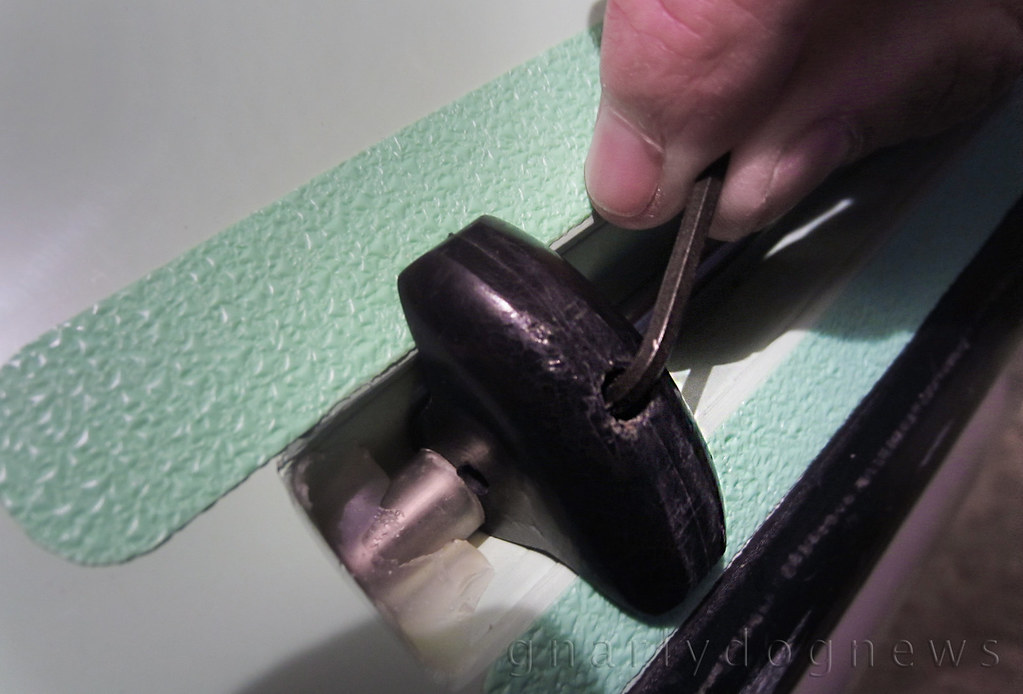
I inserted a 2.5mm Allen key (like the one you get with IKEA furniture, but smaller) into the skeg's control knob found next to the cockpit and tried to undo the grub screw. Initially it would not budge but a squirt of water dispersant (WD40) and a few minutes later the key turned and the pinch on the skeg cable was released.
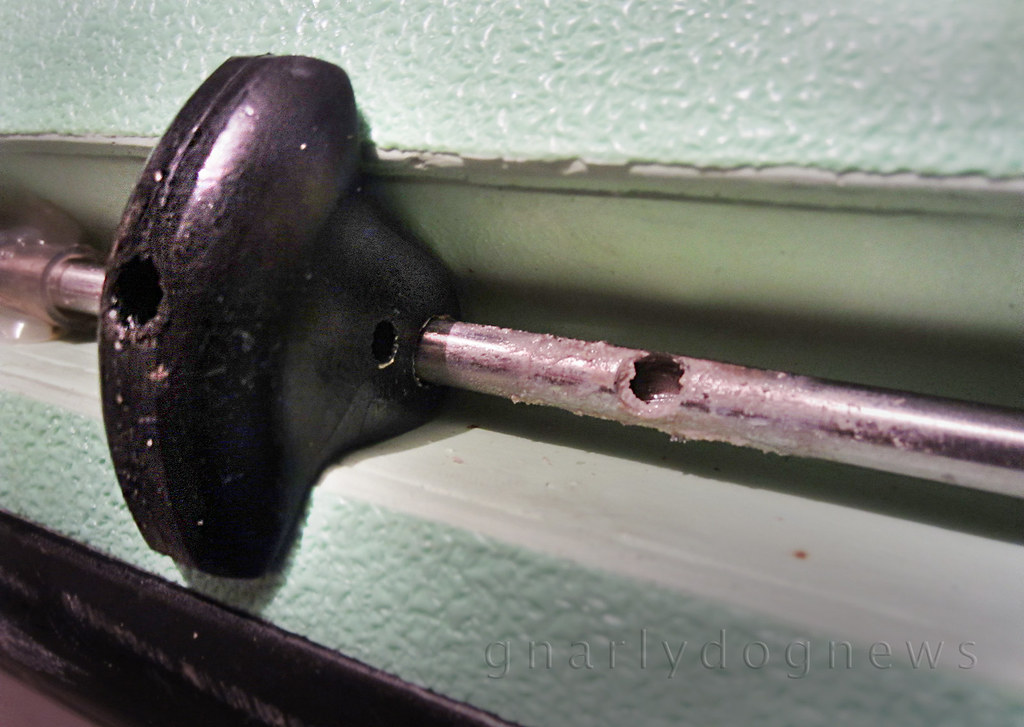
salt built up under the skeg control knob,washes away easily...
The knob was free and now I could pull out the skeg blade past its normal maximum deployed setting; the wire came out easily.
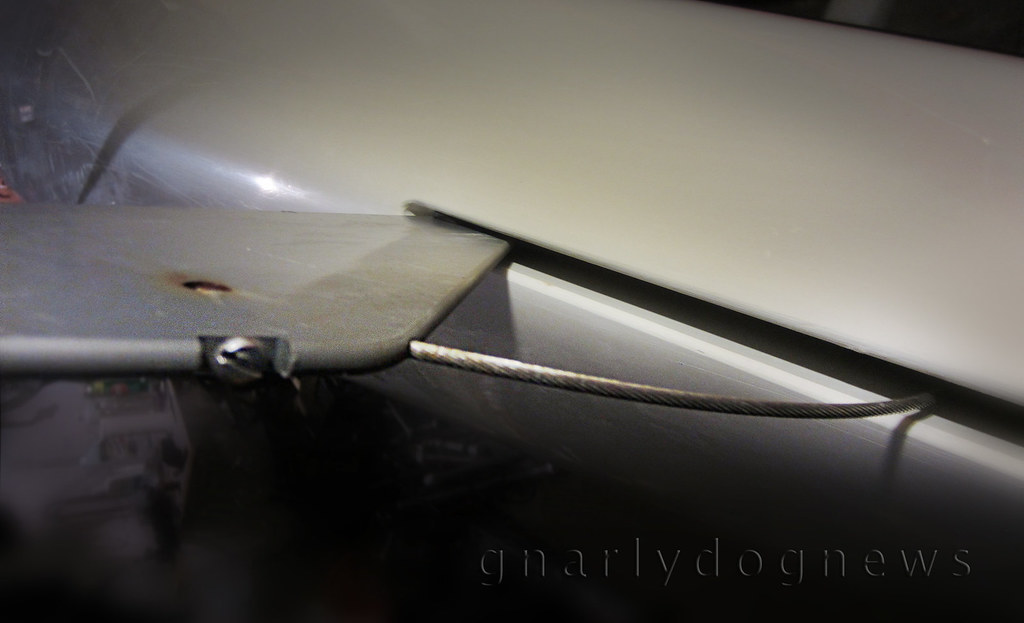
factory VCP skeg blade removal
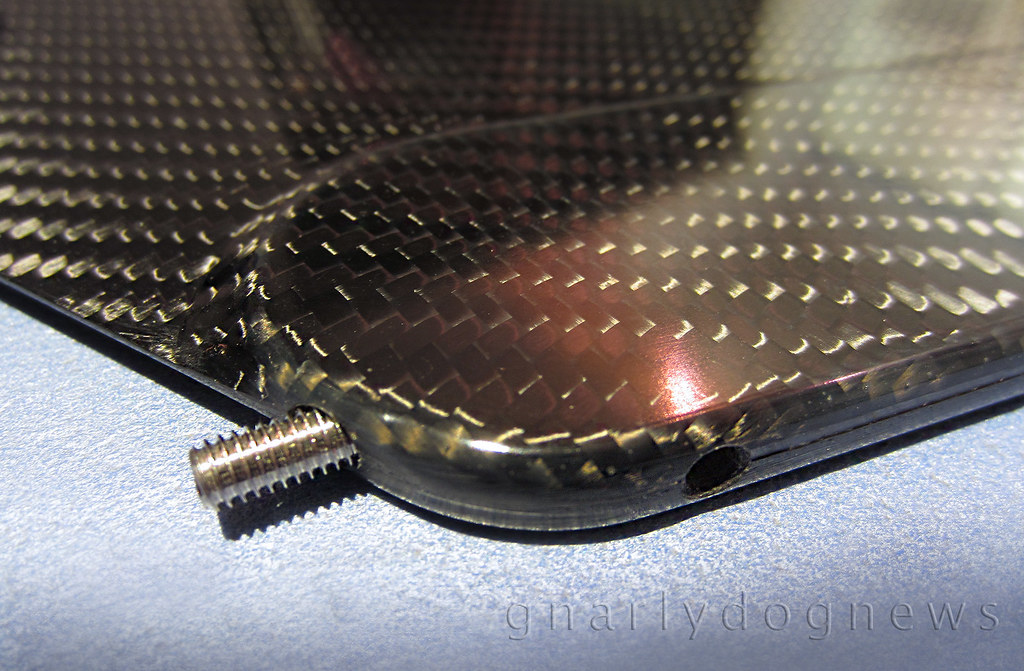
Norbert supplied me with the stainless steel wire that I had to cut as each kayak model has a slightly different wire length .
The carbon skeg has a very neat grub screw that pinches the cable that is inserted into blade (not show here). I measured the length of my existing Valley skeg wire and cut the new one to length with a pair of diagonal cutters (a decent pair of plier would have done the same job).
I fastened the grub screw on the carbon blade onto the wire, inserted the blade into the skeg box and easily wiggled the wire back into the housing all the way to the control knob. The skeg blade was sitting flush with the hull, all the way in the skeg box, before I aligned the knob over the hole in "slider tube" and secured it tightly with the Allen key. I made sure that the knob was in the "retracted" position or I would not be able to deploy that skeg all the way like before.
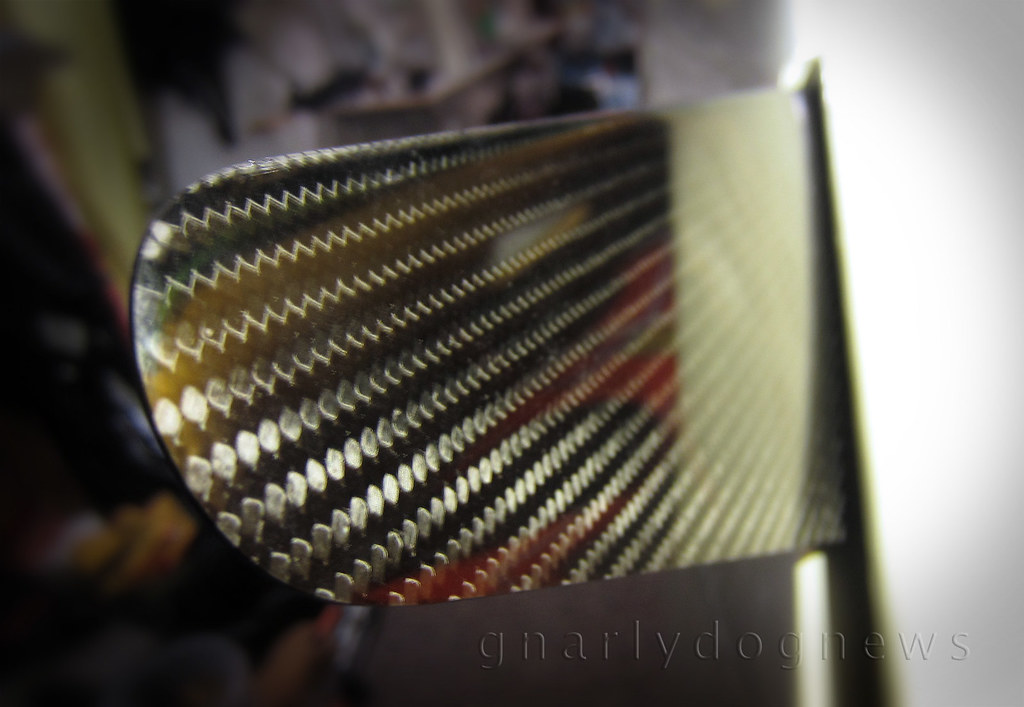
Norbert's skeg blade sits in the skeg box without any wiggle and the two little rubber washers on the pivot point offer just enough resistance to keep the blade in position preventing the skeg blade from creeping back up when the kayak is at speed (one of my kayaks does that and I am yet to fix it...).
But how does the skeg perform in the field, err water?
It seems to have a crisper feel with the lowering amount precisely translating to directional changes. There are no wobbles and no "skeg hum" as I have in some of my other kayaks when I speed down the face of a wave.
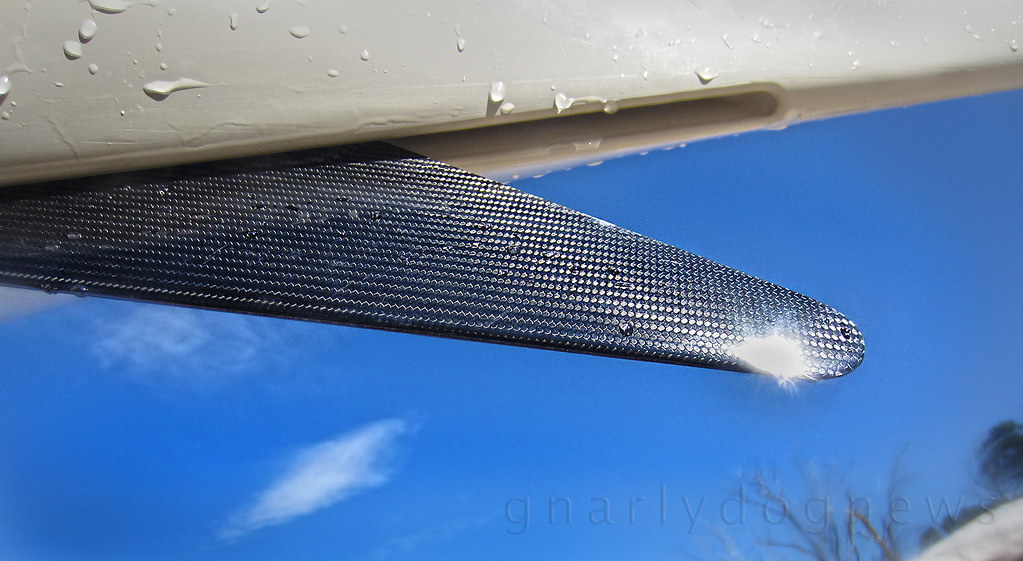
As for increased speed?
I can't attest to that as I don't have a GPS to measure precisely the speed of the kayak.
All I really want is to have the kayak on the beach, belly up, with the skeg standing up proud showing off that sexy carbon weave :-)
Norbert Gancarz can be contacted at norbertga@o2.pl
.
If however one considers a kayak just a tool and has little affinity with his/her craft then I don't think this skeg blade would excite them.
Just as some consider a car just a car and see no point in retrofitting it with performance accessories I am sure that to some a carbon-fibre skeg might seem an unnecessary replacement.
I don't care that much about my car but I will not say the same for my kayaks.
As all of my kayaks are rudder-less and incorporate an adjustable skeg for directional stability, I often wondered if the deployment of my skeg had as much effect on drag as when I would lower a rudder (it has been a few year since I have paddled an over-stern ruddered kayak).
In my Impex Kayak the skeg is a rather chunky HDPE blade (same material as the common kitchen chopping board); if I fully lower that skeg my kayak seem to slow down a bit and become a tad sluggish.
When Norbert Gancarz ( norbertga@o2.pl from Poland) offered me to test his latest creation, a carbon-fibre blade to retrofit the Valley skeg, I was keen to try it.
The skeg blade is of the exact outer shape as the VCP factory standard grey plastic one but this carbon skeg has features that the Valley skeg does not.
The blade is foil shaped like the wing of an aircraft with the leading edge thicker than the back of the blade. This shape minimizes turbulence and promotes an easy flow of water over the blade when the skeg is deployed. Less turbulence equals to less drag that leads to less effort and possibly more speed.
While speed has never been my goal, less effort is certainly welcome.
The skeg blade is a real work of art and the finish is incredible.
Somehow I felt that such a beautiful accessory looked out of place on the basic finish of the Nordkapp LV's skeg box but I was keen to find out if the blade would actually fit and how much effort the retrofit required. After all the existing skeg blade was still working fine...
I inserted a 2.5mm Allen key (like the one you get with IKEA furniture, but smaller) into the skeg's control knob found next to the cockpit and tried to undo the grub screw. Initially it would not budge but a squirt of water dispersant (WD40) and a few minutes later the key turned and the pinch on the skeg cable was released.
salt built up under the skeg control knob,washes away easily...
The knob was free and now I could pull out the skeg blade past its normal maximum deployed setting; the wire came out easily.
factory VCP skeg blade removal
Norbert supplied me with the stainless steel wire that I had to cut as each kayak model has a slightly different wire length .
The carbon skeg has a very neat grub screw that pinches the cable that is inserted into blade (not show here). I measured the length of my existing Valley skeg wire and cut the new one to length with a pair of diagonal cutters (a decent pair of plier would have done the same job).
I fastened the grub screw on the carbon blade onto the wire, inserted the blade into the skeg box and easily wiggled the wire back into the housing all the way to the control knob. The skeg blade was sitting flush with the hull, all the way in the skeg box, before I aligned the knob over the hole in "slider tube" and secured it tightly with the Allen key. I made sure that the knob was in the "retracted" position or I would not be able to deploy that skeg all the way like before.
Norbert's skeg blade sits in the skeg box without any wiggle and the two little rubber washers on the pivot point offer just enough resistance to keep the blade in position preventing the skeg blade from creeping back up when the kayak is at speed (one of my kayaks does that and I am yet to fix it...).
But how does the skeg perform in the field, err water?
It seems to have a crisper feel with the lowering amount precisely translating to directional changes. There are no wobbles and no "skeg hum" as I have in some of my other kayaks when I speed down the face of a wave.
As for increased speed?
I can't attest to that as I don't have a GPS to measure precisely the speed of the kayak.
All I really want is to have the kayak on the beach, belly up, with the skeg standing up proud showing off that sexy carbon weave :-)
Norbert Gancarz can be contacted at norbertga@o2.pl
.
27 November 2012
VIDEO: too windy
I believe in pushing myself in environments that are often outside my comfort level.
It is in conditions that test my skills and endurance that I gain a better understanding of my potential and abilities. I encourage others to do so too because I see it as the only thing that really improves a person's confidence, fast.
Lately I have been spending more and more time paddling in windy conditions because I feel that I greatly need to gain more skills in developed seas.
I used to dread a windy forecast; anything above 15 knots would make me reconsider my paddling plans. Now I look for winds that will oppose a tidal flow hoping for some waves that will mimic a tidal race. Bumpy is good.
Saturday's forecast was mild (up to 15 knots) but Sunday was shaping to have 25-35 knots wind against an ebbing tidal flow. I have paddled a few times there before and I knew that with onshore winds waves will form.
What I didn't know is that too much wind doesn't make for better fun.
I reefed my Code Zero Flat Earth sail to reduce it's surface knowing that a full square meter was going to be too much for me to handle.
Soon after I launched I was again glad to be paddling with a Greenland paddle remembering how much more wind effected my Euro paddles used to be in a stiff breeze.
My progress was a bit erratic and the strong wind kept on pushing my bow downwind. The British kayak I was paddling has proven a handful before I relocated the seat forward (to balance its trim for beam winds); this time her handling was really lousy. I wished I would have weighted the bow with ballast to release the stern a bit as I could barely turn my kayak around and paddle back out into the waves for another run.
Getting the kayak back from the shore across the sandblasting beach with me leaning at a great angle into the wind, was another story.
.
It is in conditions that test my skills and endurance that I gain a better understanding of my potential and abilities. I encourage others to do so too because I see it as the only thing that really improves a person's confidence, fast.
Lately I have been spending more and more time paddling in windy conditions because I feel that I greatly need to gain more skills in developed seas.
I used to dread a windy forecast; anything above 15 knots would make me reconsider my paddling plans. Now I look for winds that will oppose a tidal flow hoping for some waves that will mimic a tidal race. Bumpy is good.
Saturday's forecast was mild (up to 15 knots) but Sunday was shaping to have 25-35 knots wind against an ebbing tidal flow. I have paddled a few times there before and I knew that with onshore winds waves will form.
What I didn't know is that too much wind doesn't make for better fun.
I reefed my Code Zero Flat Earth sail to reduce it's surface knowing that a full square meter was going to be too much for me to handle.
Soon after I launched I was again glad to be paddling with a Greenland paddle remembering how much more wind effected my Euro paddles used to be in a stiff breeze.
My progress was a bit erratic and the strong wind kept on pushing my bow downwind. The British kayak I was paddling has proven a handful before I relocated the seat forward (to balance its trim for beam winds); this time her handling was really lousy. I wished I would have weighted the bow with ballast to release the stern a bit as I could barely turn my kayak around and paddle back out into the waves for another run.
I will take a weathercocking kayak over a "neutral" one any day. In a weathercocking one I can drop a bit of skeg; in a so called neutral, when the wind really blows, it suddenly becomes lee cocking, something I definitely DO NOT want.
My attempt at sailing was dismal: even with only half sail I could not get my kayak going and I quickly capsized. It was then that all the futzing with sculling training in clam conditions came handy as I managed to roll back up without having to wet exit in a rather tricky scenario. I packed the sail back on the deck and continued to just surf the messy waves.
After a few hours of battling with the wind I called it a day.Getting the kayak back from the shore across the sandblasting beach with me leaning at a great angle into the wind, was another story.
.
07 August 2012
DIY: replacement carbon-fiber seat in Valley
.
Seats in kayaks seem to be often a deal breaker: some folk won't buy a kayak if the seat is not comfortable for them. Some kayak seats seem to fit more paddlers than others but there are also some seats that cause a lot of grief and paddlers go to great lengths to fix them.
The most common complaint I hear and read about from sea kayakers is the dreaded dead leg syndrome; after a while on the water (sometimes as brief as half an hour) some paddlers start to feel pins and needles or loose the feel of the legs altogether.
I am one of them: I find a lot of sea kayak seats not suitable for me. Maybe is my chunky thighs that force me to extend my legs lower to make them fit or something but I find most seats too short and too "peaked" (high up front) for my anatomy.
One seat that I have removed from more kayaks than any other one is the Valley plastic seat and the current model seems to be just as aggravating as the previous one.
In Adventuretess' Nordkapp LV I removed the seat and replaced it with a DIY fibreglass one removing the back band and replacing it with a foam block.
Steavatron recently borrowed Adventuretess's Nordkapp LV (Sialuk) and was amazed by the difference in feel and stability of the kayak.
Within half an hour of paddling Sialuk, he politely asked me if a similar seat was possible to be had in his own Nordkapp LV.
I agreed that with his help we could fabricate one for this kayak too, and we might as well go "bling".
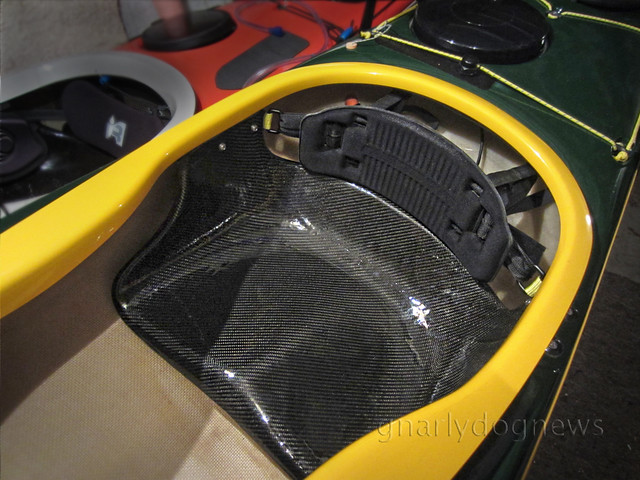
The plastic VCP seat is easy to remove: 4 bolts on the outside of the coaming hold the seat in place.
Once the fsteners were removed the seat came right out but revealed a little problem; the edge of the seat has been "shaving" the hull and a few layers of fibreglass have already been carved away by the motion of the seat slightly swinging when paddling. If not caught in time it would have holed the kayak from the inside out (the same problem occurred in Sialuk).
Patching that divot was dead easy and we restored the hull to full strength.
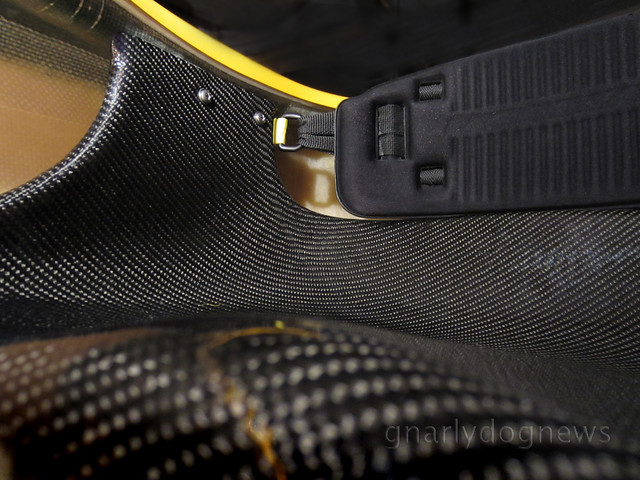
The new seat is made from a laminate of glass fibre, double bias carbon under the sitting area and a veneer of the oh-so-sexy twill carbon fibre on top, for looks of course :-)
The edges of the seat have been reinforced with Kevlar to prevent the typical cracking that I have experienced in other factory chopped-mat kayak seats.
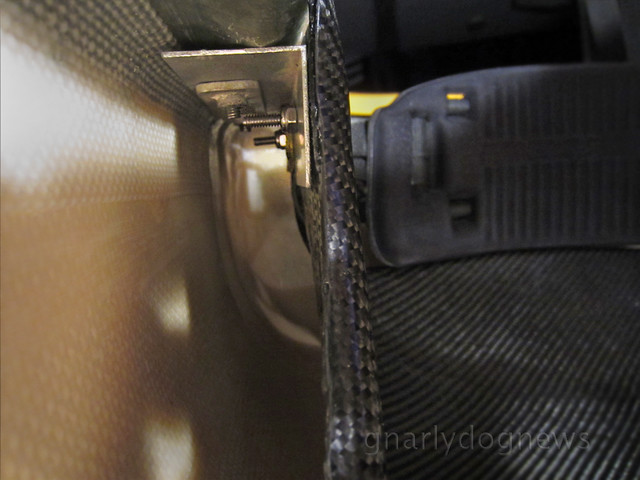
The new seat does not hang on its own but I used "L" brackets to support it. The original VCP hardware was re-utilized and new stainless steel bolts are anchoring the carbon seat to the bracket.

Stevatron was happy to reuse the original back band and hip pads. The back bands sling is attached to the seat with a short piece of webbing and a "D" ring. Existing straps firmly secure the back band to the rear bulkhead to prevent dislodgment when entering the cockpit.
After the maiden voyage Stevatron was happy with the position and height of the new seat and it was then finally secured to his kayak with a few dobs of polyurethane (Sikaflex) sealant to prevent any swinging and deliver a solid feel. In the event the seat would have to be removed for any reason a spatula will be inserted under the seat to break away those few spots of sealant.
Stevatorn finds the new seat a vast improvement on the stock VCP plastic one. The centre of gravity has been lowered and he finds that the Nordkapp LV has changed personality.
He is more confident on putting his kayak on edge and has gained stabilty when in textured waters.
Since the change and after a few paddles of several hours he no longer experiences the dead legs.
.
Seats in kayaks seem to be often a deal breaker: some folk won't buy a kayak if the seat is not comfortable for them. Some kayak seats seem to fit more paddlers than others but there are also some seats that cause a lot of grief and paddlers go to great lengths to fix them.
The most common complaint I hear and read about from sea kayakers is the dreaded dead leg syndrome; after a while on the water (sometimes as brief as half an hour) some paddlers start to feel pins and needles or loose the feel of the legs altogether.
I am one of them: I find a lot of sea kayak seats not suitable for me. Maybe is my chunky thighs that force me to extend my legs lower to make them fit or something but I find most seats too short and too "peaked" (high up front) for my anatomy.
One seat that I have removed from more kayaks than any other one is the Valley plastic seat and the current model seems to be just as aggravating as the previous one.
In Adventuretess' Nordkapp LV I removed the seat and replaced it with a DIY fibreglass one removing the back band and replacing it with a foam block.
Steavatron recently borrowed Adventuretess's Nordkapp LV (Sialuk) and was amazed by the difference in feel and stability of the kayak.
Within half an hour of paddling Sialuk, he politely asked me if a similar seat was possible to be had in his own Nordkapp LV.
I agreed that with his help we could fabricate one for this kayak too, and we might as well go "bling".
The plastic VCP seat is easy to remove: 4 bolts on the outside of the coaming hold the seat in place.
Once the fsteners were removed the seat came right out but revealed a little problem; the edge of the seat has been "shaving" the hull and a few layers of fibreglass have already been carved away by the motion of the seat slightly swinging when paddling. If not caught in time it would have holed the kayak from the inside out (the same problem occurred in Sialuk).
Patching that divot was dead easy and we restored the hull to full strength.
The new seat is made from a laminate of glass fibre, double bias carbon under the sitting area and a veneer of the oh-so-sexy twill carbon fibre on top, for looks of course :-)
The edges of the seat have been reinforced with Kevlar to prevent the typical cracking that I have experienced in other factory chopped-mat kayak seats.
The new seat does not hang on its own but I used "L" brackets to support it. The original VCP hardware was re-utilized and new stainless steel bolts are anchoring the carbon seat to the bracket.
Stevatron was happy to reuse the original back band and hip pads. The back bands sling is attached to the seat with a short piece of webbing and a "D" ring. Existing straps firmly secure the back band to the rear bulkhead to prevent dislodgment when entering the cockpit.
After the maiden voyage Stevatron was happy with the position and height of the new seat and it was then finally secured to his kayak with a few dobs of polyurethane (Sikaflex) sealant to prevent any swinging and deliver a solid feel. In the event the seat would have to be removed for any reason a spatula will be inserted under the seat to break away those few spots of sealant.
Stevatorn finds the new seat a vast improvement on the stock VCP plastic one. The centre of gravity has been lowered and he finds that the Nordkapp LV has changed personality.
He is more confident on putting his kayak on edge and has gained stabilty when in textured waters.
Since the change and after a few paddles of several hours he no longer experiences the dead legs.
.
17 July 2012
VIDEO: Zipper Zone Futzing
.
I like it bumpy, always have.
From bicycles pedalled on rocky terrain, motorcycles ridden off road to bushwalking cross country I recognize a passion for the challenging conditions.
Mindless rhythmical power exertion of my body does not interest me and I usually seek locations where skills and balance are more important than muscles. The same goes for sea kayaking: I seek waters that offer a bit of excitement and unpredictability, where I have to use my body and bracing to keep myself upright.
select HD if you have fast Internet connection
My local paddling location is a sheltered bay away from ocean swell and lacking a rocky coastline I don’t have anywhere to practice my balancing skills in clapotis rebound. Moreton Bay however has a decent tidal flow with 6-7 feet of height variation at spring tides creating shifting banks of sand a few miles from the shore. Power boaters avoid the area and take a different route to travel to the big sandy Moreton Island. I instead seek those locations where tidal flow, residual ocean swell and small wind waves, from the opposite direction, meet over shallow waters of sand banks. The opposing forces of the two waves collide and at the right moment peak high with a great splash. With the confidence offered by the Northern Light Greenland paddle, I play in the area hoping to get caught in the very spot of collision to get tossed high in the air.
.
I like it bumpy, always have.
From bicycles pedalled on rocky terrain, motorcycles ridden off road to bushwalking cross country I recognize a passion for the challenging conditions.
Mindless rhythmical power exertion of my body does not interest me and I usually seek locations where skills and balance are more important than muscles. The same goes for sea kayaking: I seek waters that offer a bit of excitement and unpredictability, where I have to use my body and bracing to keep myself upright.
select HD if you have fast Internet connection
My local paddling location is a sheltered bay away from ocean swell and lacking a rocky coastline I don’t have anywhere to practice my balancing skills in clapotis rebound. Moreton Bay however has a decent tidal flow with 6-7 feet of height variation at spring tides creating shifting banks of sand a few miles from the shore. Power boaters avoid the area and take a different route to travel to the big sandy Moreton Island. I instead seek those locations where tidal flow, residual ocean swell and small wind waves, from the opposite direction, meet over shallow waters of sand banks. The opposing forces of the two waves collide and at the right moment peak high with a great splash. With the confidence offered by the Northern Light Greenland paddle, I play in the area hoping to get caught in the very spot of collision to get tossed high in the air.
.
02 July 2012
PHOTO: zipper play
.
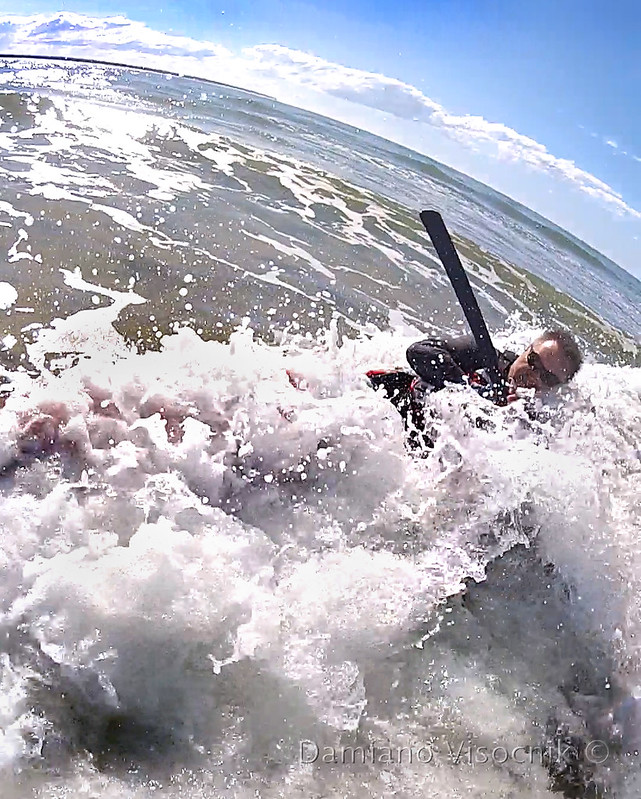
The wind was gone and so were the waves. I looked for something to play in and I had to content myself with a small "zipper".
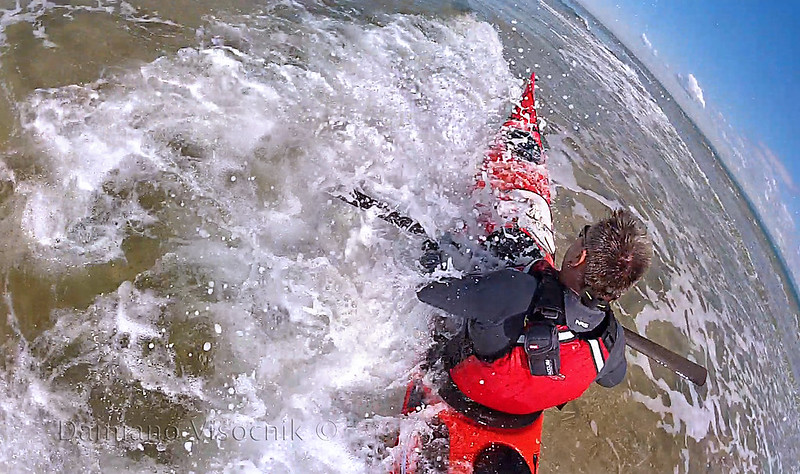
It's when two waves from different directions collide together at a slight angle and form this imaginary zipper that appears to close together. The bay I often paddle has decent tidal flows that create banks of sand miles away from shore. Leaving the fishing folk behind, I played around in the shallow water trying to get caught in the zipper zone.
.
The wind was gone and so were the waves. I looked for something to play in and I had to content myself with a small "zipper".
It's when two waves from different directions collide together at a slight angle and form this imaginary zipper that appears to close together. The bay I often paddle has decent tidal flows that create banks of sand miles away from shore. Leaving the fishing folk behind, I played around in the shallow water trying to get caught in the zipper zone.
.
05 June 2012
GEAR: SEA-LECT Designs hatch covers
.
I regard sea kayaking a wet sport and getting wet is just part of the game.
Water inside the cockpit is often inevitable since I have not found yet a spray deck that really seals 100% (quality tuilik excepted). While I have leaned to live with a bit of water in the cockpit after rolling or heavy seas , I can not understand why so many kayaks have leaking hatches.
A hatch that leaks badly and takes on a gallon of water on a rough paddle it downright dangerous and should be immediately attended to and repaired. What bothers me also are the little leaks that occur in the hatches that apparently have a good hatch cover. I might be anal or OCD but I think there is no need to have sloppy workmanship or design to deliver a kayak with hatch covers that don’t seal well.
Recently one of my not so old kayaks (admittedly I buy new kayaks quite often) the day hatch started to leak. I swapped the cover with another kayak (same size lid) and reduced the leak but never really eliminated it. It annoys me to have wet gear in my hatches: why could not my spare clothing be dry when I need it? why do I have to keep everything in good dry bags to keep it safe? why do I have to wash with freshwater the hatches because they accumulate brine? There has to be a better way.
I managed to rectify the problem on my Zegul 520 with replacement rubber lids from Kajak-Sport (the dual density leaked badly in the heat) but it is also my Valley day hatch that leaks. Some of my paddling friends have noticed their VCP day hatch covers have started to deteriorate and crack; prompted by their concern I checked mine and I noticed the same: cracking of the foam-rubber. After hearing reports from so many kayakers that VCP covers had to be replaced too often and too soon I searched for alternatives. SEA-LECT Designs seems to be the only viable alternative to the factory replacement Valley hatch covers.
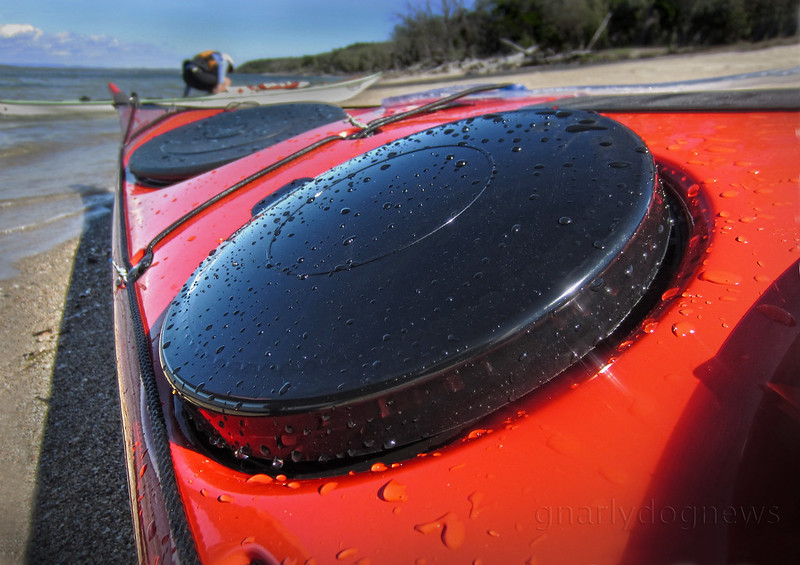
Sea-Lect day hatch cover: no edges to promote unintentional opening
Paddle Sport is the Australian importer for SEA-LECT Designs and Bruce offered me to test some samples. He sent me a day hatch and an oval hatch for my Valley kayak. The SEA-LECT covers are very different than the VCP ones, in material and design. Since I have previously had a bad experience with dual density hatch covers, where the inner hard plastic material would expand too much in the heat and become so loose to let water in, I was a bit concerned with the SEA-LECT one too. SEA-LECT Designs covers are also dual density material (injection molded polycarbonate and TPU material.) but the centre part is much stiffer and the lid shape is domed.
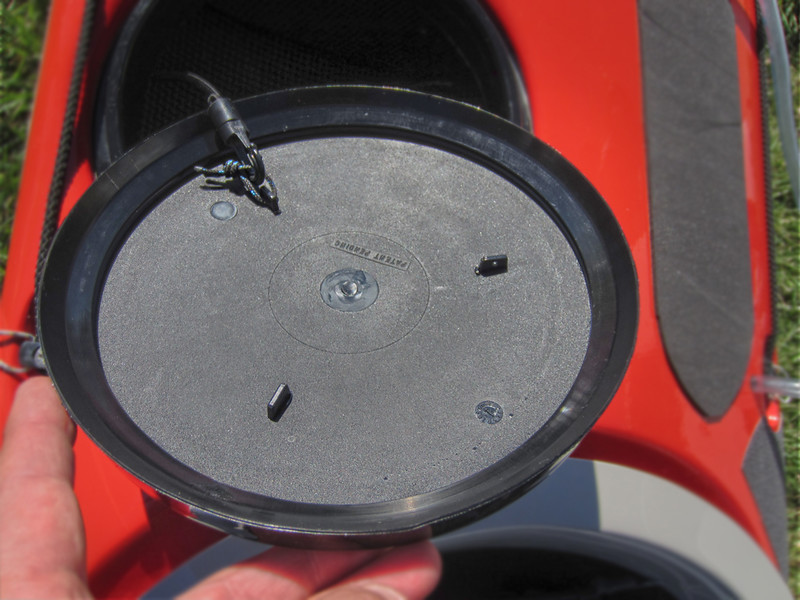
3 solid anchor for a lanyard
The underside of the dome has 3 hard plastic tabs where a lanyard can be attached to. Theses tabs are solid and won't get ripped out anytime soon, unlike the VCP ones.
The hatch cover is installed by depressing the dome firmly to make it expand on pop onto the rim. The action is extremely swift and positive.
Watch video below:
click to view video
The day hatch cover is too easy to install: center it and press down. Done!
It sits very tight on the rim and can not be dislodged unless pulled by the tab. No longer can the lid be popped open when doing a rescue since there are no edges to grab or catch. There is no longer the risk to flood the day hatch by inadvertently removing the hatch cover when you need it the least. The oval hatch cover needs a bit more pressure to pop onto the rim so dumping surf will not implode it. The biggest advantage on the SEA-LECT oval hatch is the thinner perimeter lip.

notice the clearance between hatch cover lip and deck recess
VCP hatch covers need to have the flange of the oval hatch pushed carefully into place or a tight seal is compromised. On some Valley (and other) kayaks I have noticed the black rim not aligned well to the deck recess making this sealing process really difficult. With a SEA-LECT oval hatch there is plenty of clearance and there is no need to follow the flange with your thumb and press into place.
This feature alone makes me want to replace all my hatch covers with SEA-LECT.
Beside the "slimming black", the covers also come in red, yellow or blue: perfect for the kayaker fashionista.
PS as promised to Steve G (see comments) here are a couple of images of detoriorated VCP day hatch covers
UPDATE 10DEC12
GDN reader Frank Baron from Florida, USA had a much more serious case of VCP hatch covers deterioration; his lids literally crumbled away...
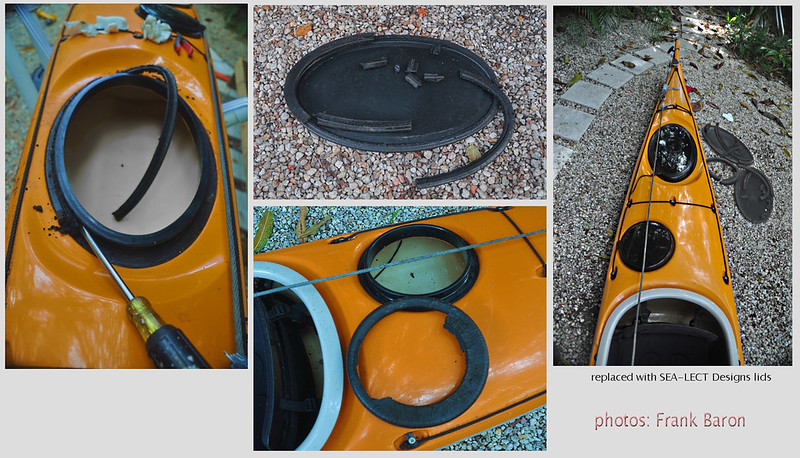
.
I regard sea kayaking a wet sport and getting wet is just part of the game.
Water inside the cockpit is often inevitable since I have not found yet a spray deck that really seals 100% (quality tuilik excepted). While I have leaned to live with a bit of water in the cockpit after rolling or heavy seas , I can not understand why so many kayaks have leaking hatches.
A hatch that leaks badly and takes on a gallon of water on a rough paddle it downright dangerous and should be immediately attended to and repaired. What bothers me also are the little leaks that occur in the hatches that apparently have a good hatch cover. I might be anal or OCD but I think there is no need to have sloppy workmanship or design to deliver a kayak with hatch covers that don’t seal well.
Recently one of my not so old kayaks (admittedly I buy new kayaks quite often) the day hatch started to leak. I swapped the cover with another kayak (same size lid) and reduced the leak but never really eliminated it. It annoys me to have wet gear in my hatches: why could not my spare clothing be dry when I need it? why do I have to keep everything in good dry bags to keep it safe? why do I have to wash with freshwater the hatches because they accumulate brine? There has to be a better way.
I managed to rectify the problem on my Zegul 520 with replacement rubber lids from Kajak-Sport (the dual density leaked badly in the heat) but it is also my Valley day hatch that leaks. Some of my paddling friends have noticed their VCP day hatch covers have started to deteriorate and crack; prompted by their concern I checked mine and I noticed the same: cracking of the foam-rubber. After hearing reports from so many kayakers that VCP covers had to be replaced too often and too soon I searched for alternatives. SEA-LECT Designs seems to be the only viable alternative to the factory replacement Valley hatch covers.
Sea-Lect day hatch cover: no edges to promote unintentional opening
Paddle Sport is the Australian importer for SEA-LECT Designs and Bruce offered me to test some samples. He sent me a day hatch and an oval hatch for my Valley kayak. The SEA-LECT covers are very different than the VCP ones, in material and design. Since I have previously had a bad experience with dual density hatch covers, where the inner hard plastic material would expand too much in the heat and become so loose to let water in, I was a bit concerned with the SEA-LECT one too. SEA-LECT Designs covers are also dual density material (injection molded polycarbonate and TPU material.) but the centre part is much stiffer and the lid shape is domed.
3 solid anchor for a lanyard
The underside of the dome has 3 hard plastic tabs where a lanyard can be attached to. Theses tabs are solid and won't get ripped out anytime soon, unlike the VCP ones.
The hatch cover is installed by depressing the dome firmly to make it expand on pop onto the rim. The action is extremely swift and positive.
Watch video below:
click to view video
The day hatch cover is too easy to install: center it and press down. Done!
It sits very tight on the rim and can not be dislodged unless pulled by the tab. No longer can the lid be popped open when doing a rescue since there are no edges to grab or catch. There is no longer the risk to flood the day hatch by inadvertently removing the hatch cover when you need it the least. The oval hatch cover needs a bit more pressure to pop onto the rim so dumping surf will not implode it. The biggest advantage on the SEA-LECT oval hatch is the thinner perimeter lip.
notice the clearance between hatch cover lip and deck recess
VCP hatch covers need to have the flange of the oval hatch pushed carefully into place or a tight seal is compromised. On some Valley (and other) kayaks I have noticed the black rim not aligned well to the deck recess making this sealing process really difficult. With a SEA-LECT oval hatch there is plenty of clearance and there is no need to follow the flange with your thumb and press into place.
This feature alone makes me want to replace all my hatch covers with SEA-LECT.
Beside the "slimming black", the covers also come in red, yellow or blue: perfect for the kayaker fashionista.
PS as promised to Steve G (see comments) here are a couple of images of detoriorated VCP day hatch covers
UPDATE 10DEC12
GDN reader Frank Baron from Florida, USA had a much more serious case of VCP hatch covers deterioration; his lids literally crumbled away...
.
03 April 2012
VIDEO: backsurfing with a stick
I am gaining confidence with my Northern Light Greenland paddle and slowly I have improved my maneuverability in small surf. From the small shore break I have progressed to something just a bit more challenging.
select 720p if you have fast Internet connection
I still have not had the opportunity (and the courage) to tackle large waves and I am working on edging my kayak when the world slides backwards.
In the meantime I am learning how to control my kayaks when surfed in reverse and avoid being broached too soon.
The thrill of not seeing where I am going and the fear of getting pitched stern deep into the water compensates for my lame technique. This play-boating teaches me timing and body-weight shift to maximize the free ride.
Would a rudder help me?
.
select 720p if you have fast Internet connection
I still have not had the opportunity (and the courage) to tackle large waves and I am working on edging my kayak when the world slides backwards.
In the meantime I am learning how to control my kayaks when surfed in reverse and avoid being broached too soon.
The thrill of not seeing where I am going and the fear of getting pitched stern deep into the water compensates for my lame technique. This play-boating teaches me timing and body-weight shift to maximize the free ride.
Would a rudder help me?
.
13 March 2012
VIDEO: "Pointy both ends"
First and foremost my kayaks are recreational fun vessels.
I have one larger kayak that can swallow a ton of gear and is a bit loose on me (at around 6'1" 240#, that must be one large kayak!) used exclusively for longer trips (a week or more), the other kayaks are intended for having fun: rolling, surfing and playing.
I never speed paddle to reach a destination fast; it just does not interest me.
Therefore I don't really need kayaks that excel in hull speed; I look for maneuverability.
Often I just play with my kayak, going nowhere, and play sometimes involves going backwards.
My kayaks are "pointy" at both ends that at first glance makes you ask the question: which way is forward?
Some call them "elf shoes", some call them "old school" but I am not sure if I could play like this in a ruddered kayak.
sequel video of playing in larger waves coming soon
.
I have one larger kayak that can swallow a ton of gear and is a bit loose on me (at around 6'1" 240#, that must be one large kayak!) used exclusively for longer trips (a week or more), the other kayaks are intended for having fun: rolling, surfing and playing.
I never speed paddle to reach a destination fast; it just does not interest me.
Therefore I don't really need kayaks that excel in hull speed; I look for maneuverability.
Often I just play with my kayak, going nowhere, and play sometimes involves going backwards.
My kayaks are "pointy" at both ends that at first glance makes you ask the question: which way is forward?
Some call them "elf shoes", some call them "old school" but I am not sure if I could play like this in a ruddered kayak.
sequel video of playing in larger waves coming soon
.
24 February 2011
SHOP: retractable grab handle
The latest addition to my fleet of kayaks needed a toggle handle to be repositioned since I deemed it to be attached in a dangerous location.
The kayak’s deck is designed to accommodate an optional rudder and the designer could not attach the grab handle at the stern of the kayak since it would interfere with the rudder.
I have previously detailed the reasons why I regard some grab handles and its position on some kayaks dangerous. After a few pinched fingers and a bruised knuckles I now like to have all of my handles attached at the ends of my boats.
I believe that the best handle on a kayak is the single cord (not a loop) one from SKUK (Nigel Dennis).
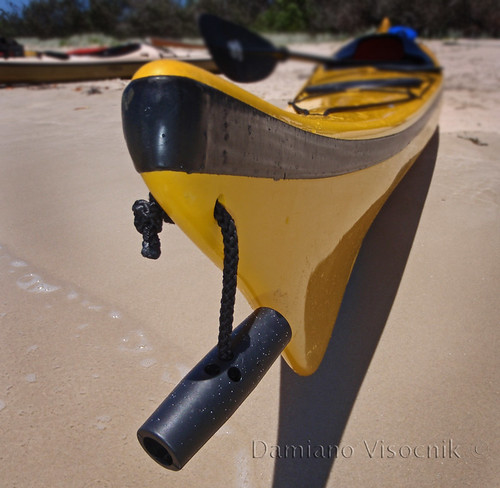
handle on SKUK Exporer
While some argue that it is not as easy to use in an emergency towing situation (no loop for a carabiner to be attached to) I prefer that type of set up to prevent injuring my fingers.
One thing that I don't like is the banging that the handles produces when the kayak is paddled in textured waters. Some other set ups (like Valley kayaks) have a bungee cord tensioning the handle back onto the deck which stops the annoying banging.
Then it dawned on me: why not combine the two? Why not tension the single line?
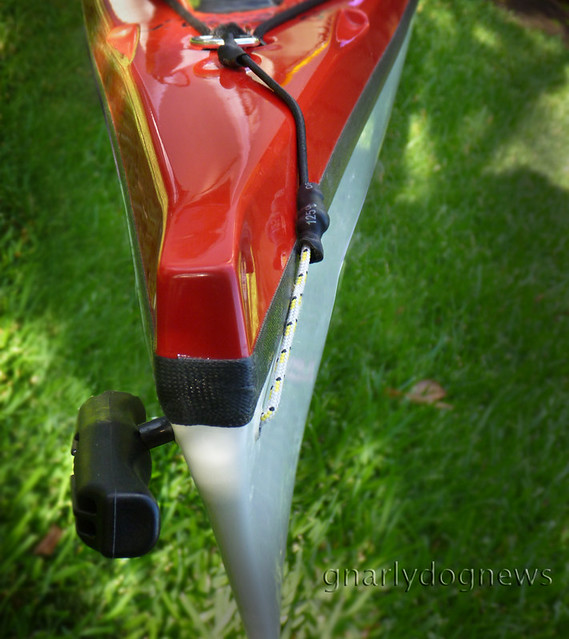
the handle was originally attached on top of the deck
While simple in concept the details of the execution and the quality of materials for this handle set up must be first rate.
I used a sheeted Dyneema core 4 mm line for the cord and quality bungee cord for the retracting/tension section.
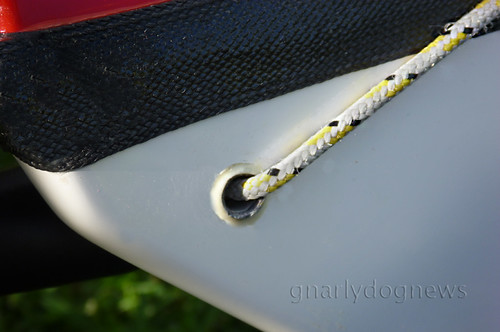
Dyneema line through a sleeve in the hull
A knot joins the two and a bit of heat shrink covers the ends to make it look neater. The knot stops the cord from being pulled through the sleeve in the hull. The bungee is attached to the toggle's original anchor point on deck.
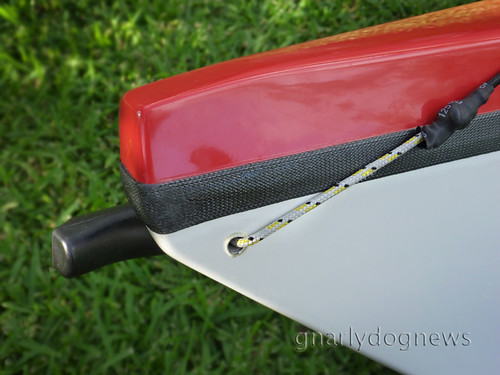
Dyneema/bungee junction
The handle has a short stand-off from the hull so it can be grabbed easily when in a hurry (like in the surf).
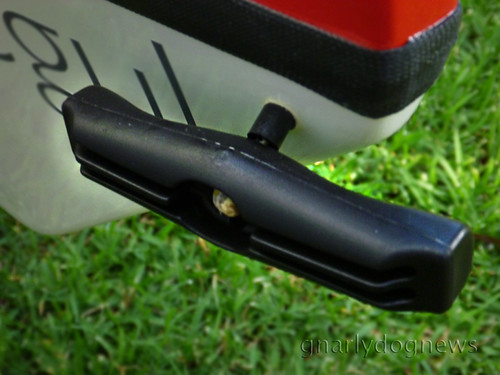
handle with stand-off
The idea of having a retractable handle came to me after I had drilled and sleeved the end of the hull of my kayak.
If I had to do it again I would position the sleeve on a slant to alleviate the (right) angle of the hole and have it more in line with the toggle cord. That would achieve less friction when the handle is pulled out and possibly reduce the wear on the line.
PS You have seen this set up here first
The kayak’s deck is designed to accommodate an optional rudder and the designer could not attach the grab handle at the stern of the kayak since it would interfere with the rudder.
I have previously detailed the reasons why I regard some grab handles and its position on some kayaks dangerous. After a few pinched fingers and a bruised knuckles I now like to have all of my handles attached at the ends of my boats.
I believe that the best handle on a kayak is the single cord (not a loop) one from SKUK (Nigel Dennis).
handle on SKUK Exporer
While some argue that it is not as easy to use in an emergency towing situation (no loop for a carabiner to be attached to) I prefer that type of set up to prevent injuring my fingers.
One thing that I don't like is the banging that the handles produces when the kayak is paddled in textured waters. Some other set ups (like Valley kayaks) have a bungee cord tensioning the handle back onto the deck which stops the annoying banging.
Then it dawned on me: why not combine the two? Why not tension the single line?
the handle was originally attached on top of the deck
While simple in concept the details of the execution and the quality of materials for this handle set up must be first rate.
I used a sheeted Dyneema core 4 mm line for the cord and quality bungee cord for the retracting/tension section.
Dyneema line through a sleeve in the hull
A knot joins the two and a bit of heat shrink covers the ends to make it look neater. The knot stops the cord from being pulled through the sleeve in the hull. The bungee is attached to the toggle's original anchor point on deck.
Dyneema/bungee junction
The handle has a short stand-off from the hull so it can be grabbed easily when in a hurry (like in the surf).
handle with stand-off
The idea of having a retractable handle came to me after I had drilled and sleeved the end of the hull of my kayak.
If I had to do it again I would position the sleeve on a slant to alleviate the (right) angle of the hole and have it more in line with the toggle cord. That would achieve less friction when the handle is pulled out and possibly reduce the wear on the line.
PS You have seen this set up here first
29 November 2010
VIDEO: the little stick that could
select 360p if you have slow internet connection
The locals keep on telling me that my stick ain't no good for much else than show.
I should listen to them.
26 July 2010
Surfing with a stick_part 2
While the "Mexicans" (South of the Queensland border) paddlers have to contend with much colder waters right now, we "banana-benders" are graced with sunshine and ocean temps that don't require much more than a Reed top.
Some locals however still regard the conditions too "extreme" and most popular surfing spots are much less crowded than in summer.
That leaves me so much more room to enjoy sea kayak surfing:
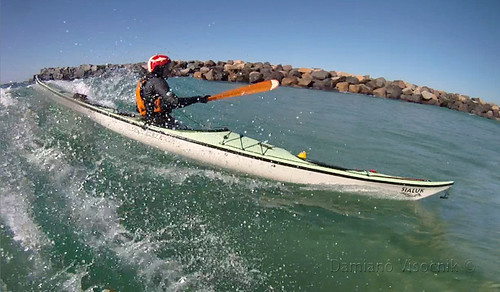
Adventuretess in Sialuk (Nordkapp LV)
Smiles all around.
Ah, I forgot, they were right: those "sticks" are not good for much else than kindling :-)
Some locals however still regard the conditions too "extreme" and most popular surfing spots are much less crowded than in summer.
That leaves me so much more room to enjoy sea kayak surfing:
Adventuretess in Sialuk (Nordkapp LV)
Smiles all around.
Ah, I forgot, they were right: those "sticks" are not good for much else than kindling :-)
26 March 2010
Opinions on sea kayak's maneuverability
I read with great interest a post from Douglas Wilcox on his Seakayakphoto blog.
In his pictures it is clearly demonstrated that a given kayak will behave very differently with a lighter or heavier load (read: paddler).
Obviously the biggest difference will be felt in kayaks that don't use rudders.
A skegged kayak is often designed to be more maneuverable when edged.
When I transitioned from a ruddered kayak to a skegged one I initially observed how a skilled paddler could spin my kayak so quickly around by edging it aggressively.
No amount of extended sweep strokes (without edging the boat) could make it turn as fast as what I observed.

Instructor Craig McSween aggressively edging
If I was not edging my kayak the stern would firmly remain deep below waterline preventing a quick turn.
Eventually I learned that for effective fast maneuvering of a skegged kayak edging was essential.
However that is not always true.
If a kayak was designed to optimally perform for a given load, a heavier kayaker might hinder the maneuverability when edging.
As demonstrated in Douglas images it seems that a heavier kayak will not allow that stern to release and spin.
The same could be said about a too light person/load in a kayak.
The stern might be not buried enough in the water creating a "loose tail".
Weathercocking could be a typical consequence of a larger kayak that is not loaded sufficiently.
I know of some kayakers that deem a Nordkapp hard to paddle when empty.
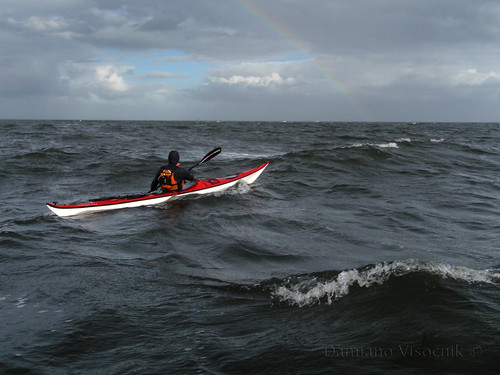
Could be that the their weight is not sufficient to fully engage the intended waterline?
Therefore is a Nordkapp LV less maneuverable for a heavier person?
I believe so.
The Nordkapp LV is designed with a particular weight in mind.
A heavier person will be pushing that hull deeper in the water and when the kayak is edged maybe the stern is not released as much as with a lighter paddler.
Two different kayakers will give the same boat a very different opinion!
Needless to say that skill level will probably be a very important factor when hearing a report on a given kayak but weight should certainly be just as an important element.
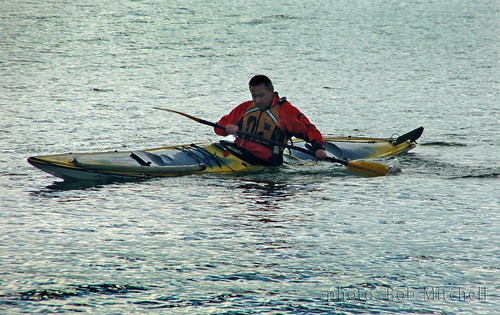
testing edge maneuverability
And just because your friend says that his/her kayak is really good for him/her, will that boat will be as good for you?
If you weigh substantially less/more then him/her, chances are that the kayak in question will behave very differently.
In his pictures it is clearly demonstrated that a given kayak will behave very differently with a lighter or heavier load (read: paddler).
Obviously the biggest difference will be felt in kayaks that don't use rudders.
A skegged kayak is often designed to be more maneuverable when edged.
When I transitioned from a ruddered kayak to a skegged one I initially observed how a skilled paddler could spin my kayak so quickly around by edging it aggressively.
No amount of extended sweep strokes (without edging the boat) could make it turn as fast as what I observed.

Instructor Craig McSween aggressively edging
If I was not edging my kayak the stern would firmly remain deep below waterline preventing a quick turn.
Eventually I learned that for effective fast maneuvering of a skegged kayak edging was essential.
However that is not always true.
If a kayak was designed to optimally perform for a given load, a heavier kayaker might hinder the maneuverability when edging.
As demonstrated in Douglas images it seems that a heavier kayak will not allow that stern to release and spin.
The same could be said about a too light person/load in a kayak.
The stern might be not buried enough in the water creating a "loose tail".
Weathercocking could be a typical consequence of a larger kayak that is not loaded sufficiently.
I know of some kayakers that deem a Nordkapp hard to paddle when empty.
Could be that the their weight is not sufficient to fully engage the intended waterline?
Therefore is a Nordkapp LV less maneuverable for a heavier person?
I believe so.
The Nordkapp LV is designed with a particular weight in mind.
A heavier person will be pushing that hull deeper in the water and when the kayak is edged maybe the stern is not released as much as with a lighter paddler.
Two different kayakers will give the same boat a very different opinion!
Needless to say that skill level will probably be a very important factor when hearing a report on a given kayak but weight should certainly be just as an important element.
testing edge maneuverability
And just because your friend says that his/her kayak is really good for him/her, will that boat will be as good for you?
If you weigh substantially less/more then him/her, chances are that the kayak in question will behave very differently.
01 February 2010
Technique: low deck rolling
Finally I am moving forward with my technique.
I am not sure why my kayaking skills learning is rather slow: is it that "you can't teach an old dog new tricks" or is it that my coordination is not that great (I still laugh at myself when I tried to dance, once :-).
Recently I have progressed from my basic sweep roll to a Greenland roll.
While I get the idea of that roll, I would not exactly call it performed flawlessly.
I watch Greg Schwarz dance in his Nordkapp LV; such grace.
I also know that Greg does a fair bit of yoga, something that I stay away from.
He is much more "bendy" that I am and it shows in his balanced brace.
While Adventuretess does not do much yoga she still rolls much nicer than me, any day.
Am I destined to be a klutz roller for the rest of my paddling life?
Maybe, but there could be a reason that Greg and Adventuretess can pull off some rolls with such finesse.
Greg performing an "elbow crook roll"
I can not lay on the back of my kayaks!
Since my legs are rather chunky I tend to fit production kayaks with higher decks.
Higher in the front for my legs and feet usually translates higher in the back.
Greg and Adventuretess mainly paddle lower rear deck kayaks: a Nordkapp LV.
While Adventuretess has so far rolled any kayak that she has sat in (including some real barges out there) she definitely prefers rolling her low volume Nordkapp.
I have recently removed the factory seat from her kayak and replaced it with a custom made one.
Yesterday, I tried her kayak again: I now can almost fit in it.
My legs can jam under the thigh braces very snugly.
While I would not want that fit for hours on end I thought I would try some rolls in her kayak.
Hello Dubside!
What a difference! No longer am I hitting my back square in the middle while trying to lay lower on the deck ( I still can't get out of the seat and totally lay low on the deck though).
My rolls were easy. Compared to my NorthSea, the Nordkapp LV just seems to roll by itself.
So while I was at it I wanted to try the elusive butterfly roll.
And after a few tries I understood the paddle position needed for that roll and pulled off a couple of decent ones (I know: more grunt than style, but hey, gotta start somewhere :-).
I am now looking for a low rear deck kayak.
I was hoping to fit in the Tahe Marine T but the importer assures me that it is smalled than other kayaks that I don't fit.
Would a custom skin on frame be my only solution?
I am not sure why my kayaking skills learning is rather slow: is it that "you can't teach an old dog new tricks" or is it that my coordination is not that great (I still laugh at myself when I tried to dance, once :-).
Recently I have progressed from my basic sweep roll to a Greenland roll.
While I get the idea of that roll, I would not exactly call it performed flawlessly.
I watch Greg Schwarz dance in his Nordkapp LV; such grace.
I also know that Greg does a fair bit of yoga, something that I stay away from.
He is much more "bendy" that I am and it shows in his balanced brace.
While Adventuretess does not do much yoga she still rolls much nicer than me, any day.
Am I destined to be a klutz roller for the rest of my paddling life?
Maybe, but there could be a reason that Greg and Adventuretess can pull off some rolls with such finesse.
Greg performing an "elbow crook roll"
I can not lay on the back of my kayaks!
Since my legs are rather chunky I tend to fit production kayaks with higher decks.
Higher in the front for my legs and feet usually translates higher in the back.
Greg and Adventuretess mainly paddle lower rear deck kayaks: a Nordkapp LV.
While Adventuretess has so far rolled any kayak that she has sat in (including some real barges out there) she definitely prefers rolling her low volume Nordkapp.
I have recently removed the factory seat from her kayak and replaced it with a custom made one.
Yesterday, I tried her kayak again: I now can almost fit in it.
My legs can jam under the thigh braces very snugly.
While I would not want that fit for hours on end I thought I would try some rolls in her kayak.
Hello Dubside!
What a difference! No longer am I hitting my back square in the middle while trying to lay lower on the deck ( I still can't get out of the seat and totally lay low on the deck though).
My rolls were easy. Compared to my NorthSea, the Nordkapp LV just seems to roll by itself.
So while I was at it I wanted to try the elusive butterfly roll.
And after a few tries I understood the paddle position needed for that roll and pulled off a couple of decent ones (I know: more grunt than style, but hey, gotta start somewhere :-).
I am now looking for a low rear deck kayak.
I was hoping to fit in the Tahe Marine T but the importer assures me that it is smalled than other kayaks that I don't fit.
Would a custom skin on frame be my only solution?
18 January 2010
SHOP: replacing a Valley seat
Valley has recently changed the seat in their sea kayaks (2010).

The previous kayaks were shipped with the above seat.
Some paddlers found a problem with the shape of the seat and the configuration of the back band.
The seat shape did not suit a lot of kayakers that would spend long time on the water and the backband would hinder some rescues.

As shipped from factory the back band would tend to fold down under the paddlers bottom when a rescue (assisted or self) is performed.
Some kayakers have modified the retention system to make the back band more secure and prevent dislogment and nuisance when reentering the cockpit.
But the more important concern is that the shape of the seat seems to cause severe rubbing with some users.
The "slope" of the pan on the rear is too gentle and when the kayak is paddled efficiently with pressure on the footpegs and consequently the body of the paddlers pushed back, the seat would rub the tail bone.
On long crossing some kayakers would rub all the skin off of the end of the spine area and consequently be in pain.
Comparing the Valley seat to other sea kayaks' seat I notice the pronounced difference and tried to rectify the problem.
The Valley seat seems to be made from polyethylene and I tried to use a heat gun and reshape some of the seat and create a better pan.
Unfortunately such solution only alleviated the problem but did not really fix it.
A new seat pan had to be made.

I was lucky to borrow Greg Schwarz's mold that he has made for replacing an ill shaped seat on a different kayak.
In a conventional lay up of double bias glass and 4oz cloth, I used epoxy as resin.
In some areas of high stress I used additional layers of carbon/Kevlar cloth to reinforce possible weak spots (something I have learned by repairing other manufacturer's seats).
A hung seat sees a lot of stress in the "bracket" area.
I did not want to carve a simple but effective closed cell (minicell) foam seat because it prevents the flow of water to the electric bilge pump located behind the seat.
Foam seats are great: easy to fabricate, very comfortable but don't allow water flow to the rear bulkhead.


The previous kayaks were shipped with the above seat.
Some paddlers found a problem with the shape of the seat and the configuration of the back band.
The seat shape did not suit a lot of kayakers that would spend long time on the water and the backband would hinder some rescues.

As shipped from factory the back band would tend to fold down under the paddlers bottom when a rescue (assisted or self) is performed.
Some kayakers have modified the retention system to make the back band more secure and prevent dislogment and nuisance when reentering the cockpit.
But the more important concern is that the shape of the seat seems to cause severe rubbing with some users.
The "slope" of the pan on the rear is too gentle and when the kayak is paddled efficiently with pressure on the footpegs and consequently the body of the paddlers pushed back, the seat would rub the tail bone.
On long crossing some kayakers would rub all the skin off of the end of the spine area and consequently be in pain.
Comparing the Valley seat to other sea kayaks' seat I notice the pronounced difference and tried to rectify the problem.
The Valley seat seems to be made from polyethylene and I tried to use a heat gun and reshape some of the seat and create a better pan.
Unfortunately such solution only alleviated the problem but did not really fix it.
A new seat pan had to be made.

I was lucky to borrow Greg Schwarz's mold that he has made for replacing an ill shaped seat on a different kayak.
In a conventional lay up of double bias glass and 4oz cloth, I used epoxy as resin.
In some areas of high stress I used additional layers of carbon/Kevlar cloth to reinforce possible weak spots (something I have learned by repairing other manufacturer's seats).
A hung seat sees a lot of stress in the "bracket" area.
I did not want to carve a simple but effective closed cell (minicell) foam seat because it prevents the flow of water to the electric bilge pump located behind the seat.
Foam seats are great: easy to fabricate, very comfortable but don't allow water flow to the rear bulkhead.

Greg's mold allows for a channel to let water flow though the middle, under the seat.
Visible in the image above is the front of the new seat installed in a Norkdkapp LV. Expanding polyurethane foam was used for supporting the front of the pan.
The new seat has a much longer pan and offers outstanding thigh support.
This is the second seat that I have fabricate from that mold and to date is the best sea kayak seat for me. While some other seats would offer reasonable comfort others would give me the dreaded "dead legs" on long outings.
This seat however addresses the compression of the sciatica nerve problem and eliminates discomfort that some seats bring.

seat installed in Nordkapp LV, rear bulkhead with electric bilge pump
I decide to remove the back band all together and go for a foam block instead.
A well shaped foam block offers support where needed but eliminates the problem of back bands falling under the paddlers bum in a rescue.
Fabricating a foam back block required the lamination of 4 pieces of coarse closed cell foam (type of foam used for industrial packaging) and carving the centre section to allow for the bilge pump.


foam sections laminated with contact adhesive _ underside of foam back block


The back block is shaped to the contour of the rear bulkhead and fits snugly behind the seat.
To prevent accidental dislogment I used a bungee retention cord (with olive) threaded through the block.
The section of the back block that contacts the body has a softer last layer of quality minicell.
Shown here before final the layer of neoprene that will cover the block.

The new seat installed.
I used a simple anodized aluminium bracket fashioned from a 2" L section.
Stainless steel nuts and bolts to secure the seat to the bracket.
10 January 2010
Size matters
I have the feeling that some individuals are obsessed with size.
Some must think that bigger is better.
I keep on coming across people that appear to have a fascination for acquiring items that seem just too big for them.
Are the large items compensating for their own physical size insecurity?
I have seen it in all aspects of life: young men with clothing that are too big for them (usually on guys that would prefer to be more bulky), riders straddling motorcycle where they can barely touch the ground, outdoor enthusiast that carry a backpack so big that hinders their progress on the trail...
Not forgetting the all-obvious obsession with large vehicle.
If you look at what is driven around in the urban environment one would think that the western world has very little paved roads (particularly around schools at kid’s pick up time :-).
It would appear that most of us live in very rural areas and need very large vehicles to get to work or do grocery shopping.
On the other hand, interestingly enough, I have observed (in Australia and USA) that majority of real active people usually drive compact cars.
Is the large 4WD the domain of the wannabe?
There are obviously legit users of said large vehicles where a smaller one just would not work for their business (i.e. construction).
Is there a trend to compensate with the large for the lack of confidence, or in some cases, for guys, the perceived lack of “manhood”?

somebody not confident about their manhood?
Funny enough the trend seems to extend to sea kayaking as well.
I have been noticing that some are buying sea kayaks that are just simply too large for them.
I can understand the inexperienced novice where his/her priority is usually a “stable” kayak (often by default large) but it seems that some paddlers are trading for larger kayaks that don’t really fit them.
I know of several paddlers that have upgraded from a seemingly OK kayak to monsters 6.1 meters long (21ft) barges.
These kayaks are designed for extended unsupported expeditions and perform poorly in the hands of a paddler that has not got the skills or the strength to maneuver it in a bit of wind.
.jpg)
kayak too big for this paddler needing towing in 15 knot of wind
And just because you are a couple it does not mean that you have to have matching kayaks; surely there is a difference in size and weight between the two of you :-)
So why are there a disproportionate number of barges around used primarily for day paddles or a brief overnighter?
But there is no need to go to that extreme to find yourself in a kayak that is just too big.
If one wants to improve skills and be able to really feel connected to a kayak a smaller size is usually better.
I have witnessed a remarkable advancement of skills after a paddler has switched to a kayak that would fit her properly.
Very evident areas are the ability to edge the boat, quick turns, improved paddle stroke (due to lower cockpit rim and width of kayak) and rolling.
While some seem to justify that a kayak must be large enough to carry supplies and equipment for several weeks majority of us very rarely (if ever) venture on trips of more than a few days. In my part of the world that’s in tropical conditions where very little protective clothing is needed therefore requiring even less cargo space.
Serious major expeditions are usually carried out in medium size kayaks (SKUK Explorer being the most popular one). If remote locations can be reached in those kayaks surely a few days in balmy conditions could be too.
While some manufacturers are rather vague with payloads, Valley's website is informative enough to offer a weight guideline for optimal performance.
So, despite that info, some paddlers still choose boats that are way too big for them.
No amount of padding experience will make an oversize kayak fit well. Wind and waves will make that craft bob around the sea like a cork.
An Aquanaut HV, for example, to perform optimally will have to have a paddler and cargo of 250 lbs (113 Kg)! Such kayak with a lighter paddler will perform poorly compared to one sized to match the paddler.

A kayak that is designed to carry large loads will have too much freeboard (when unloaded) that will act like a sail in anything but calm conditions.
A kayak that does not sit deep enough in the water will feel often a bit tender. Needless to say also that a kayak that is too long will be a handful to turn around, especially in wind.
I could carry on with the disadvantages of a large kayak (long/large ones need more effort to be paddled at Club outings pace, heavier, occupy more room in storage, harder to lift/transport etc.)
A well fitted kayak promotes maneuverability. Unfortunately padding out a cockpit of a too large kayak is often just a marginal improvement but certainly not the solution.
A too high coaming of the cockpit will always remain too high on a paddler that is clearly too small for that given craft.
With the range of kayaks available today to fit most body types there is no longer the need to make do with a boat that does hinder your skills.
Way too often the concept of “the longer waterline equals to a faster kayak” is misconceived if the paddler has not got the strength and technique to actually paddle a longer craft.
Most smaller paddlers will be better served by a kayak that despite being a bit shorter will actually give less resistance to be paddled at Club pace speed.
So very few paddlers rarely reach and maintain the higher “hull speed” of a long kayak.
Paddled at slower speeds the longer kayak is actually harder to paddle.
Honestly, a lot of folk out there on the water would be better off with a kayak that fitted them.
11FEB10: Expedition Kayaks' blog post on "downsizing" is interesting (no direct link available)
Some must think that bigger is better.
I keep on coming across people that appear to have a fascination for acquiring items that seem just too big for them.
Are the large items compensating for their own physical size insecurity?
I have seen it in all aspects of life: young men with clothing that are too big for them (usually on guys that would prefer to be more bulky), riders straddling motorcycle where they can barely touch the ground, outdoor enthusiast that carry a backpack so big that hinders their progress on the trail...
Not forgetting the all-obvious obsession with large vehicle.
If you look at what is driven around in the urban environment one would think that the western world has very little paved roads (particularly around schools at kid’s pick up time :-).
It would appear that most of us live in very rural areas and need very large vehicles to get to work or do grocery shopping.
On the other hand, interestingly enough, I have observed (in Australia and USA) that majority of real active people usually drive compact cars.
Is the large 4WD the domain of the wannabe?
There are obviously legit users of said large vehicles where a smaller one just would not work for their business (i.e. construction).
Is there a trend to compensate with the large for the lack of confidence, or in some cases, for guys, the perceived lack of “manhood”?

somebody not confident about their manhood?
Funny enough the trend seems to extend to sea kayaking as well.
I have been noticing that some are buying sea kayaks that are just simply too large for them.
I can understand the inexperienced novice where his/her priority is usually a “stable” kayak (often by default large) but it seems that some paddlers are trading for larger kayaks that don’t really fit them.
I know of several paddlers that have upgraded from a seemingly OK kayak to monsters 6.1 meters long (21ft) barges.
These kayaks are designed for extended unsupported expeditions and perform poorly in the hands of a paddler that has not got the skills or the strength to maneuver it in a bit of wind.
.jpg)
kayak too big for this paddler needing towing in 15 knot of wind
And just because you are a couple it does not mean that you have to have matching kayaks; surely there is a difference in size and weight between the two of you :-)
So why are there a disproportionate number of barges around used primarily for day paddles or a brief overnighter?
But there is no need to go to that extreme to find yourself in a kayak that is just too big.
If one wants to improve skills and be able to really feel connected to a kayak a smaller size is usually better.
I have witnessed a remarkable advancement of skills after a paddler has switched to a kayak that would fit her properly.
Very evident areas are the ability to edge the boat, quick turns, improved paddle stroke (due to lower cockpit rim and width of kayak) and rolling.
While some seem to justify that a kayak must be large enough to carry supplies and equipment for several weeks majority of us very rarely (if ever) venture on trips of more than a few days. In my part of the world that’s in tropical conditions where very little protective clothing is needed therefore requiring even less cargo space.
Serious major expeditions are usually carried out in medium size kayaks (SKUK Explorer being the most popular one). If remote locations can be reached in those kayaks surely a few days in balmy conditions could be too.
While some manufacturers are rather vague with payloads, Valley's website is informative enough to offer a weight guideline for optimal performance.
So, despite that info, some paddlers still choose boats that are way too big for them.
No amount of padding experience will make an oversize kayak fit well. Wind and waves will make that craft bob around the sea like a cork.
An Aquanaut HV, for example, to perform optimally will have to have a paddler and cargo of 250 lbs (113 Kg)! Such kayak with a lighter paddler will perform poorly compared to one sized to match the paddler.

A kayak that is designed to carry large loads will have too much freeboard (when unloaded) that will act like a sail in anything but calm conditions.
A kayak that does not sit deep enough in the water will feel often a bit tender. Needless to say also that a kayak that is too long will be a handful to turn around, especially in wind.
I could carry on with the disadvantages of a large kayak (long/large ones need more effort to be paddled at Club outings pace, heavier, occupy more room in storage, harder to lift/transport etc.)
A well fitted kayak promotes maneuverability. Unfortunately padding out a cockpit of a too large kayak is often just a marginal improvement but certainly not the solution.
A too high coaming of the cockpit will always remain too high on a paddler that is clearly too small for that given craft.
With the range of kayaks available today to fit most body types there is no longer the need to make do with a boat that does hinder your skills.
Way too often the concept of “the longer waterline equals to a faster kayak” is misconceived if the paddler has not got the strength and technique to actually paddle a longer craft.
Most smaller paddlers will be better served by a kayak that despite being a bit shorter will actually give less resistance to be paddled at Club pace speed.
So very few paddlers rarely reach and maintain the higher “hull speed” of a long kayak.
Paddled at slower speeds the longer kayak is actually harder to paddle.
Honestly, a lot of folk out there on the water would be better off with a kayak that fitted them.
11FEB10: Expedition Kayaks' blog post on "downsizing" is interesting (no direct link available)
12 October 2009
British kayaks, British weather?
The forecast was calling for possible thundery showers but I have to say that most times the weather bureau can't get it right; there are just too many variables to be able to predict the precipitation with pin point accuracy.
The wind however was going to be light and admittedly forecasting wind seems to be more accurate than rain.
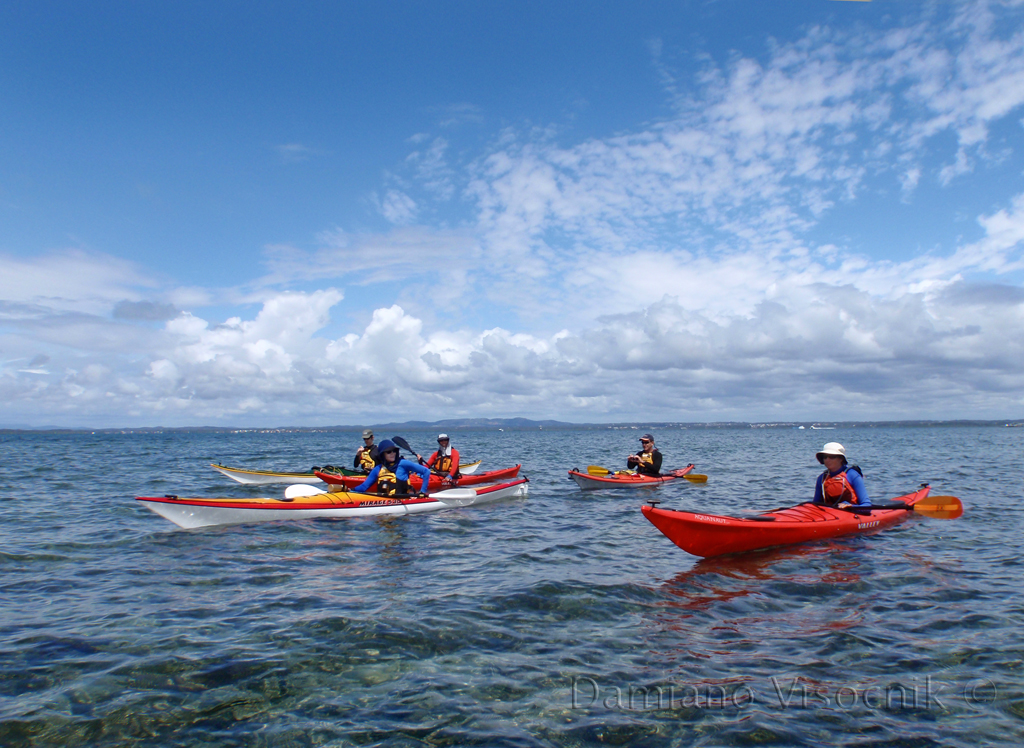
Morning started nice and sunny with only patchy clouds but by the time we reached our destination island 14 Km away the clouds have rolled in and prevented us to have a pic nic on the grassy shores.
The rain made us scurry for a tinned roof shelter and we quickly changed into our spare clothing trying to get warm.
The rain started to bucket and, while waiting to ease off for a quick dash to the "fish'n chips" shop just up the road, the water pouring from the field formed a stream big enough to wash one of our beached kayaks back into the sea!
We looked at our fleet of kayaks on the beach and then it dawned on us: we were all (bar one) using skegged boats, most of British origin, a couple of British style.
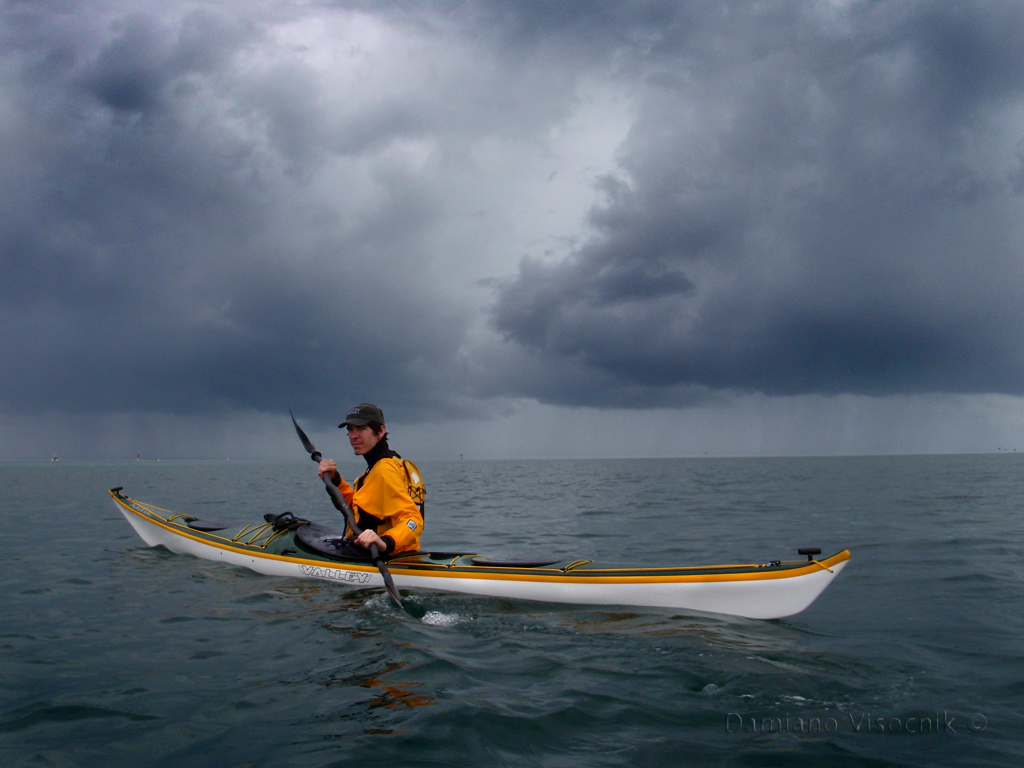
Was it that such a concentration of "British boats" could cause the proverbial British weather?
I don't believe in superstition but it was an odd coincidence :-)
Funny enough though we all seemed to enjoy the weather.
On the return leg (now raining steadily) we were all smiles.
Being warmly dressed made us enjoy the situation.
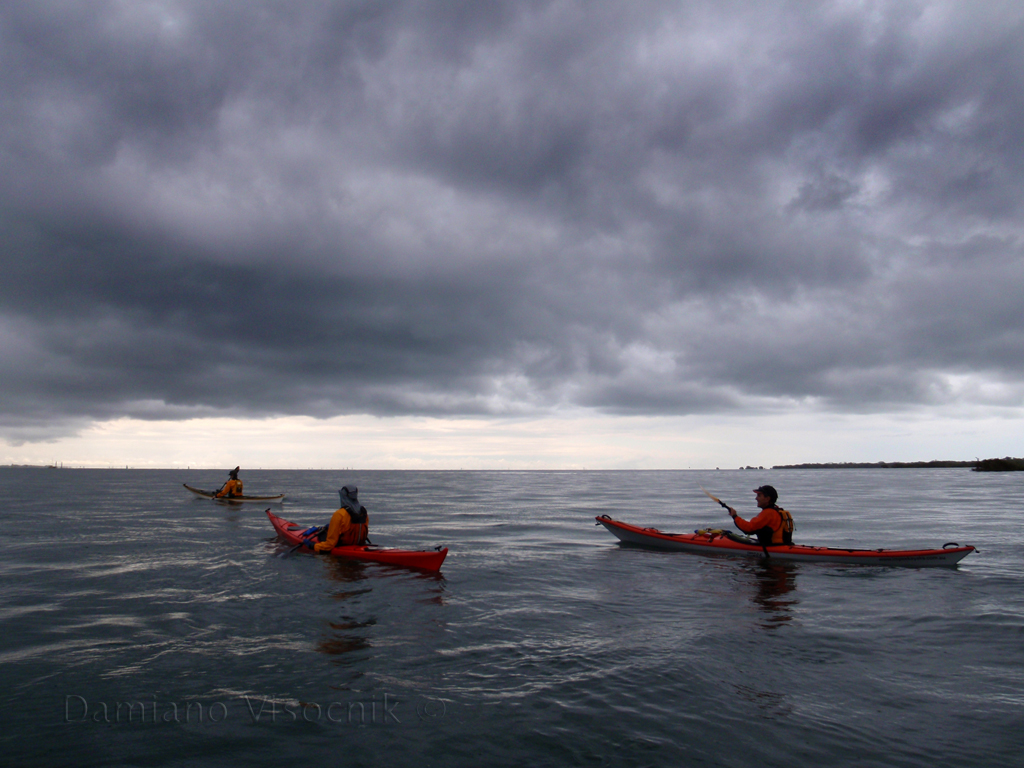
Living in Queensland we opt way too often to chuck in the sponge if the weather is not picture perfect since we can just avoid those rare rainy days and pick most other times to head outside.
What some might have viewed as "terrible conditions" became on opportunity to observe the large water droplets that created the peculiar divots into the water surface.
It looked like somebody had spilled a bag of pearls and now they were bouncing on the sea.
Needless to say we were the only "fools" to be out in such "miserable" conditions.
PS: to my cold weather climate readers: it was a still balmy 20C and not that gnarly anyway. Reed Aquatherm or a light spray jacket was all that we needed...
The wind however was going to be light and admittedly forecasting wind seems to be more accurate than rain.
Morning started nice and sunny with only patchy clouds but by the time we reached our destination island 14 Km away the clouds have rolled in and prevented us to have a pic nic on the grassy shores.
The rain made us scurry for a tinned roof shelter and we quickly changed into our spare clothing trying to get warm.
The rain started to bucket and, while waiting to ease off for a quick dash to the "fish'n chips" shop just up the road, the water pouring from the field formed a stream big enough to wash one of our beached kayaks back into the sea!
We looked at our fleet of kayaks on the beach and then it dawned on us: we were all (bar one) using skegged boats, most of British origin, a couple of British style.
Was it that such a concentration of "British boats" could cause the proverbial British weather?
I don't believe in superstition but it was an odd coincidence :-)
Funny enough though we all seemed to enjoy the weather.
On the return leg (now raining steadily) we were all smiles.
Being warmly dressed made us enjoy the situation.
Living in Queensland we opt way too often to chuck in the sponge if the weather is not picture perfect since we can just avoid those rare rainy days and pick most other times to head outside.
What some might have viewed as "terrible conditions" became on opportunity to observe the large water droplets that created the peculiar divots into the water surface.
It looked like somebody had spilled a bag of pearls and now they were bouncing on the sea.
Needless to say we were the only "fools" to be out in such "miserable" conditions.
PS: to my cold weather climate readers: it was a still balmy 20C and not that gnarly anyway. Reed Aquatherm or a light spray jacket was all that we needed...
09 October 2009
Gordon Brown's upcoming DVD
His book is brilliant.
Waiting for his movie to be released...
PS 13OCT: Expedition Kayaks will be the Australian distributor. The DVD will be available from 01NOV
05 October 2009
Playing in tidal waves
I don't have many opportunities to paddle in tidal flows or races.
There are none in my paddling area.
I was delighted when on a recent trip to Haselwood Island (Queensland, Australia) I came across these little tidal waves.
Vanilla did the camerawork while I was having fun.
A full movie from VanillaVids of our Whitsunday trip will be released at a later date.
There are none in my paddling area.
I was delighted when on a recent trip to Haselwood Island (Queensland, Australia) I came across these little tidal waves.
Vanilla did the camerawork while I was having fun.
A full movie from VanillaVids of our Whitsunday trip will be released at a later date.
21 September 2009
Nordkapp LV stability
.jpg)
stix or Euro paddles: it's all good
On a recent paddle of 25 Km we had two Nordkapp LV in our pod.
Adventuretess and Greg Schwarz love those kayaks for different reasons.
Tess loves how it performs in rough waters (video here) and she prefers it to other kayaks for surfing.
She also can roll that kayak very well (although she admits a Tahe Marine Greenland would be the ultimate roller, for her) and finds it very reassuring.
Greg Schwarz on the other side does not seek out the surf.
His preferred game is rolling.
He is happy to spend a few hours just playing around in the bay in front of his house.
He does that regularly. He also has admitted to me that he gets "pumped" watching Dubsides's DVD and he learns a new way to roll just about every other week.
Needless to say I ask him to show me his new tricks every time I see him.
Greg also is very happy to teach other kayakers interested in Greenland rolling technique, not formally but from the pure joy of spreading this amazing feeling when rolling.
But what I find interesting is that both Greg and Tess deem the Nordkapp LV as a "stable" boat.
I have tried to paddle the Nordkapp LV once (had to shoehorn myself into that tight cockpit) and did not find it excessively tippy.
I often hear and read that the Nordkapp LV is a kayak that a lot of paddlers find "demanding".
So, when Greg suddenly got out of his seat and stood up in the LV, I was amazed.
Therefore, I understand that what might feel very tippy for one person obviously is not for an other.
When a paddler would praise a kayak (often his/her own ride) and discard another one (sometimes one that they have not even paddled) I now view their opinion with caution.
If I want to value their opinion I ask them what other boat they paddle and what is their skill level.
What might appear as rather "tippy" to a novice it could be regarded as "dead" (too stable) by other advanced paddlers.
On that note I have to admit that a kayak that I purchased (sight unseen) a few months back and found very "demanding", is now warming up to me.
Not sure if I will even have the balance to be able to stand in a narrow kayak but practice can only make me a better paddler.
PS: a very good article on understanding stability was found at Hunter Kayak Klan.
Article here
Subscribe to:
Comments (Atom)