Showing posts with label rudder. Show all posts

29 January 2013

GEAR: a rudder like no other

.
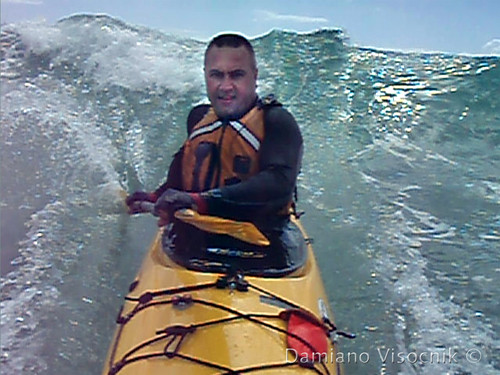
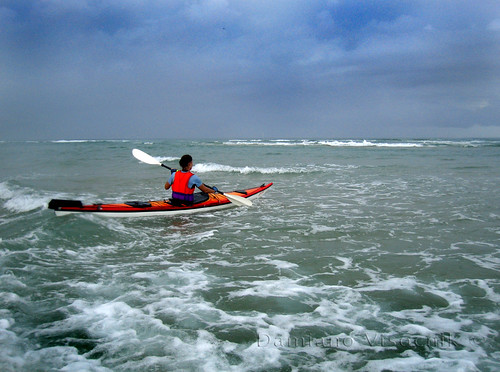
I found myself constantly sweeping on my right hand side with my Greenland paddle to keep away from the crushing waves against the tall cliffs.
The mild swell of 1.5 mt and the stern wind of 15 knots were affecting my British kayak like I have not experienced before.
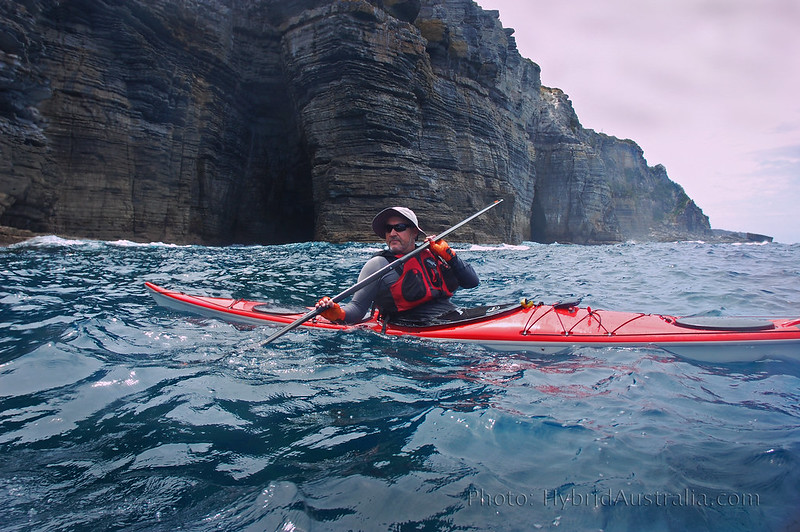
Beecroft Pen_cliffs_JAN13
in a bay away from the heavy seas
I often paddle in environments where wind is the only reason for a bumpy sea.
Even on my extended trips I have dealt with following seas and breezes with ease where a bit of skeg control would balance the weather cocking of my rudderless kayaks.
I used to paddle kayaks with over-stern rudders and while I found the cruising much easier than in a skegged boat I eventually abandoned the pesky blade sticking from the end of my boat.

The deciding point of getting rid of those kayaks with “crutches” came when for the 3rd time my rudder was damaged when paddling in waves.
I was not happy with the unreliability of rudders.
As I transitioned to skegged kayaks I learned how to maneuver a boat with my body (by edging) and sweeping paddle strokes while directional stability was taken care by the adjustable skeg.
I now have 6 sea kayaks, all without rudders.
There is no denying that a skegged kayak is slower for me and that I don’t keep a perfectly true course in following seas. That does not bother me: I am in no rush and I usually don’t like to paddle too close to my buddies to be then bumping into them if my kayak sways a bit.

But all that I wanted right now was keeping myself off the big spraying smashing waves against the rocky coast. I looked over to my paddling buddy and I noticed that he was paddling with greater ease and I didn’t see any corrective strokes.
He was paddling a Hybrid550.
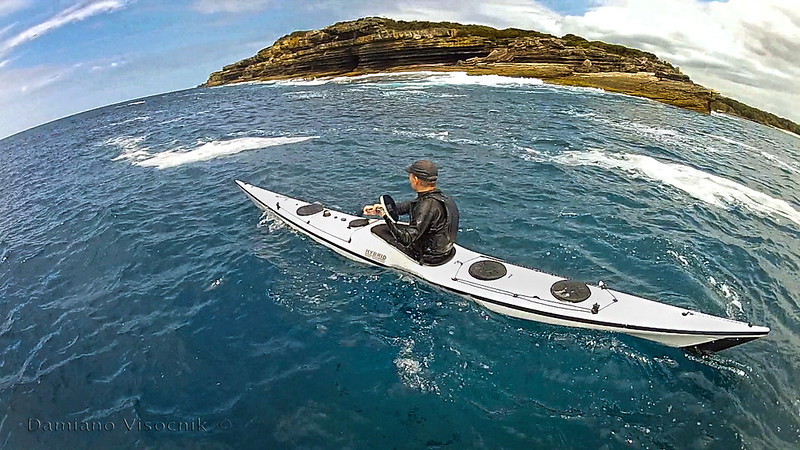
Hybrid550_1_c

The Hybrid550, designed by Andre Janecki, is a kayak like no other. It has features that I have not seen on any other boat. The thought process that went into designing and redefining that kayak is astonishing.
Unlike so many kayaks that capture my attention and look so similar to each other, the Hybrid550 is unique. Its cockpit concept is inspired by white water boats with outstanding ergonomics for this chunky body of mine while still perfectly accommodating a more nimble paddler. One thing that concerns me is the width of the cockpit rim since my, how can I put it, “love handles” might rub after a while.  I hope one day Andre will produce the Hybrid 550 L (larger cockpit) but I understand his priorities are with the “UNLIMITED”  www.hybridfoundation.org.au
 
What intrigues me however is the unique design of the rudder.
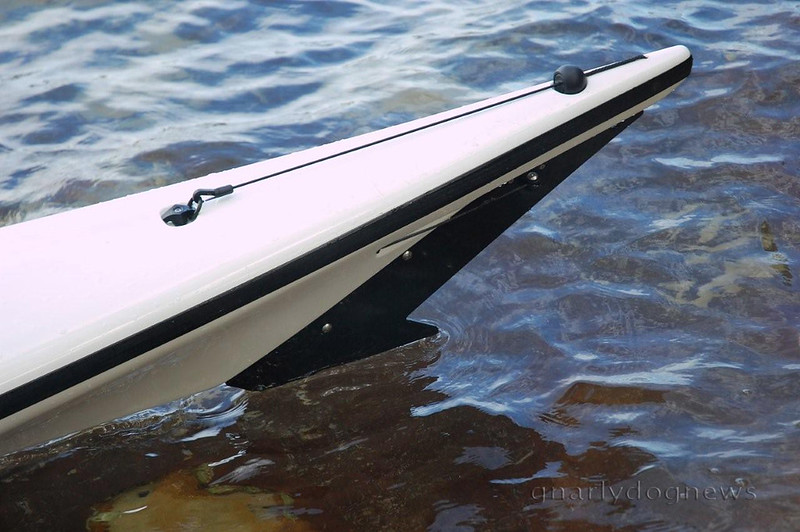
Hybrid rudder_1

As I was dissatisfied with my own rudder boats many years ago I looked at the alternative integrated rudder of Mirage kayaks. I liked the look and I like the idea of not having anything above deck, nothing to swing and insert in to the water with so many less parts moving resulting in a simpler design. What concerned me though is the fact that the Mirage rudder is always there, even when I want to seal launch or beach land and drag the kayak.
After repairing a few split rudder blades from friends' Mirages I decided that if I wanted a rudder boat it had to be stronger than that.

I did the initial mistake of confusing the rudder design of the Hybrid550 as a copy of the Mirage but I never had a real close look at the details.
I now know that the pivot points are totally different, the action of the swinging blade is different and the construction is nothing like the Mirage...
 
Hybrid rudder_2

I had a GOOD look at the rudder on the Hybrid550 and I have one thing to say: brilliant.
It can take a reverse surf landing, right on the blade. What other ruddered kayak can do that?
None that I have seen so far.

Hybrid rudder_3
rudder folding away and bending when being hit
I am a skeg man, I don’t paddle with ruddered kayaks. I came to the realization that rudders are not suitable for my style of paddling.
With the Hybrid550 however I now have to rethink my philosophy. 

Psychologists have found that familiarity breeds fondness: Repeated exposure to a new idea leads to progressively lower fear and avoidance and even, eventually, sometimes, to acceptance. (Megan Kimble)
 

28 June 2010

Feedback and advice: which boat is right for me?

From a recent email to Gnarlydog News:
>>
G'day Mate,
...I love the ocean paddles, my boat is a second hand plastic Tasman Express.
Having no knowledge of what to buy as a kayak I bought the first boat I saw.
The Tasman has done me proud and I am now looking to upgrade to glass.
I became a member of the sea kayak forum a short while ago and love everything on it, but yesterday I decided to have a look at your blog.
I have never had a look at anything like it before, I have to say I am blown away by your fantastic writings and knowledge.
I can hardly get away from the pc because you have so much for a bloke like me to read and study.
... I have paddled the new P.H. Cetus, a Valley, Shearwater, Tui, Sea Bear, Raider x and express, I can't make up my mind on what to buy and after reading just a small portion of all your information I am back at stage one....
Half an hour ago I read about how you made a new seat and a new back support and also the water storage system behind your seat.
Bloody hell, I'm out of me depth here I thought, this bloke Gnarly dog is a Whiz kid, how fantastic is your knowledge and the ability to pass it on to people like me.
My skill level is at the stage where I want a skeg boat because even in the Tasman I don't use the rudder unless I need it and that is only because the Tasman does not like a side wind, the rudder generally has to be used, except on the day where it packed up in two metre seas and twenty knot winds and I still paddled without the rudder by just sweeping and edging.
Now that was one hell of a day over thirty kms in heavy conditions, loved it...

....Do I just continue on trying out different boats till I feel comfortable with the way I handle it, do I buy a rudder or a skeg boat, remembering our conditions in the West similar to all Aust. Terry (...) has told me not to buy a boat without a rudder because why should I have to edge a boat and use a paddle to brace etc. when I can just move my big toe and the boat will steer.
That's Terry's thoughts and as you probably know he has done many thousands of miles in a kayak...
My idea is: I want to work on getting my skill level as high as possible.
I love the rough conditions and love winter paddling because my skill level accelerates pretty quick in the rough.
Les's boat looks and goes well with the people that bought one, and if I get one off him it will be custom made to suit me, my build and skills and be light enough for an old bloke like me to lift...

After all this writing here it only comes down to me wanting to say G'day to you and thank you for such an interesting reading blog.
Any ideas on boats etc will be appreciated, and I have weeks more reading to do just on your own web site...
Thanks again.

<< Dear "Reader",
thank you for your email and for your comments.
While some of my thoughts are somehow expressed in my blog there are a lot of ideas that I don't want to publish since a lot of paddlers (especially local ones) might get offended.
Please remember that in the end they are just the opinions of an average paddler with no formal qualifications.
I have however always had a critical eye for technical things.
While the industry tries to accommodate for so many different styles and tastes occasionally they produce untested or badly designed gear.

From what you say, you seem to be very active in the outdoors (way more than myself as weekend warrior).
I am familiar with only some of the boats that you mention: Cetus, Seabear, RaiderX.
You probably know my opinion about rudders: they are great for racing or comfortable cruising.
My skeg kayaks are generally slower and more demanding.
I often compare the two to cars: stick shift versus automatic.
What would I rather have? on a winding mountain road? or in day-to-day city traffic?
While I would love to drive a racy car on traffic-less sweeping-corners road the reality is that I drive an automatic car in city traffic.
Why? Because it’s easier than clutching and shifting gears all the time.
What has that got to do with kayaks?
For me paddling is fun, not just going form A to B with the minimal fuss.
If I paddled the way I drive chances are my kayaks would have a rudder.

rough waters (c)
I like to maneuver my kayak with my body, roll and occasionally surf. A ruddered boat is not generally ideally designed for that.
I had ruddered kayaks and they were good but not for what I wanted to do.
If my goal would be covering long distances in rather non demanding conditions with the minimum input from the paddler (myself) I would use a ruddered kayak.
I also have broken a few rudders in surf, but never a skeg.

Currumbin_surfing5 (C)
I cut myself on rudders in choppy waters, I damaged boats when rafted up with rudders and I caught towing lines in rudders… they just aren’t for me.
I do however use a bit more effort in edging my skegged kayaks in following seas while cross winds are taken care with the deployment of the skeg.
While ruddered kayaks are often the preferred choice for some expeditioners, just as often I see skegged boats used for demanding long trips too.
It’s a personal choice.
I do however have strong reservations towards ruddered kayaks that are very difficult to paddle in conditions (wind or waves) with the rudder retracted.
Storm kyking (c)
Imagine a rudder failure (quite an occurrence) on a long trip.
Most skegged kayaks are relatively easy to paddle with a malfunctioning skeg (has not happen to me yet) while most rudder dependant kayaks are sometimes impossible, when windy.

A kayak should be your choice not somebody else’s.
What suits very well one paddler does not necessarily suit me. Boat fit, weight and skill level will dictate what the perfect boat is for you.
And "perfect" is only a perceived attribute that will probably last for a relatively short time.
As my skills progressed and my objectives changed the “perfect boat” suddenly became limiting or boring.
I have owned only a limited number of boats and I can see myself getting a few more (maybe selling the current ones, one day….) as my skills will progress and my goals will change.
Will I own a ruddered boat again?
I can’t see that happening right now, maybe in the future if I become lazy and I want to take it easy. I can't see myself racing :-)

Once you have decided on the style of kayak you want/need for the goals you have in mind, boat fit should be the deciding factor.
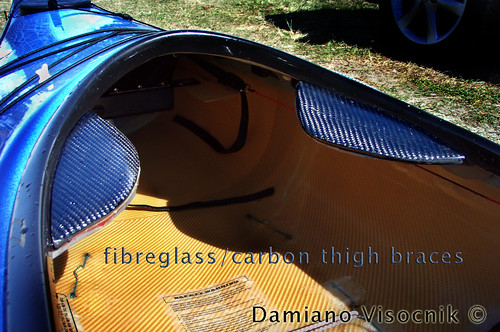
I like good contact with my upper thighs (not knees) on the thigh braces (some cockpits lack decent thigh braces, some don’t have thigh braces altogether).

Sean's Arctic Raider_braces
I also like a bit of wiggle room for my legs too.
A kayak that finds me with the legs always stretched out to the floor is going to cramp me.
For a kayak that I spend paddling all day I like to see a bit of a bend in my knees.
While a comfortable seat does not determine the ultimate purchase (I have the skills to fabricate one that fits me) a person without the ability of customizing a seat should be wary of the seat that gives the dreaded “dead legs”.
And finally I look at the boat’s strength.
I have occasionally discarded a boat that I loved test paddling but that in my opinion was badly constructed.
While I can reinforce/modify/repair a kayak, I think that an top price brand new kayak should be right from the get-go and not spend weeks in my garage getting reinforced/modified.

Thank you for reading GnarlydogNews.

Best Regards.

Damiano

PS I would like to publish in GnarlydogNews your query (part of it) and my answer to you.
I would like to maintain your anonymity though...