Showing posts with label siloconized nylon. Show all posts

07 April 2010

Dusting off the boots

It has been some time since I last wore my hiking boots.
Sea kayaking has been so absorbing that I forgot the pleasure of just carrying a backpack into the wilderness.
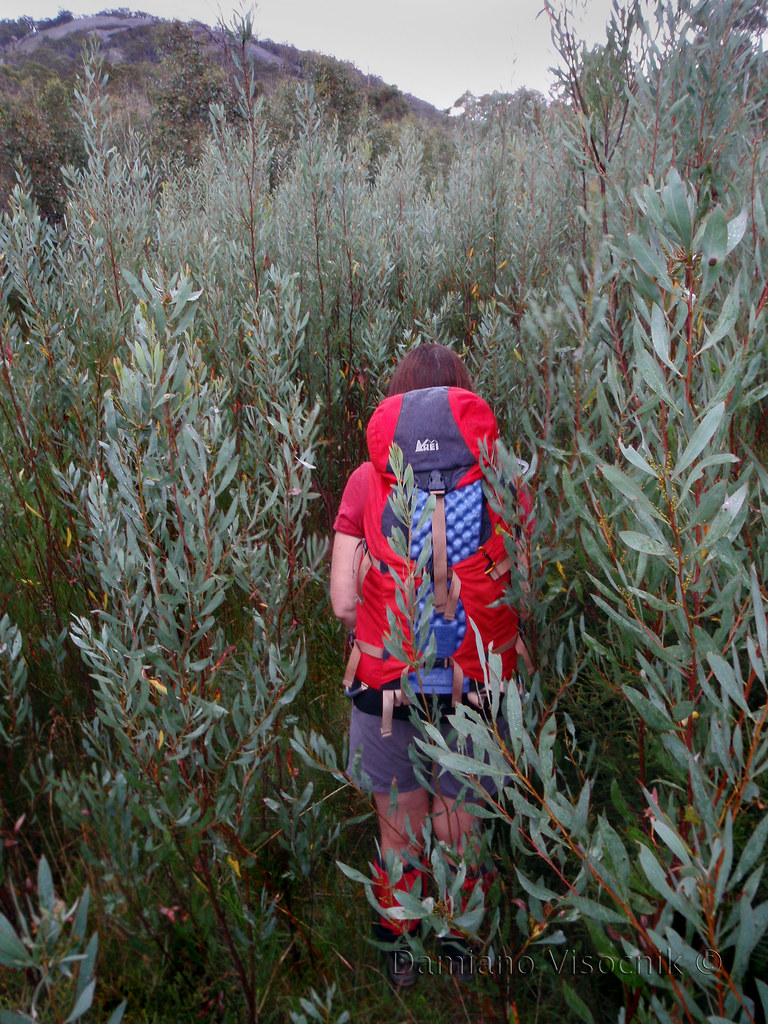
Girraween APR10_4 (c)
lost among the new saplings
Easter can be a real busy place on the water in my area (Moreton Bay) and I was looking for some quality time away from the aquabogans (read: rednecks with motorboats) that seem to destroy the enjoyment for any paddler.
I had four days in a place where I only saw one other person (that's because I crossed a road) and the only noise was from the wind, rain and birds.
I wanted to travel light, off-trail and feel "outdoors" when camping.
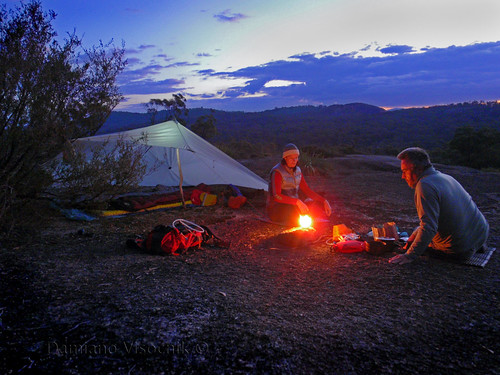
Girraween APR10_2 (c)
since fires are not permitted here I used a Candlefire
I only used a very light tarp (365 gr.!) to shelter the two of us.
This time I camped on exposed granite ridges and managed to pitch the tarp despite the solid rock.
I really cherish travelling light and making do with so much less gear than sea kayaking.
Now that the heat of summer has gone I will probably wear my pack more often.

21 April 2009

SHOP: DIY lightweight tarp

The lightweight tarp has become one my favorite shelters.
Years ago I purchased a tarp from EMS because I liked the idea of being "outside" while still sheltered from the rain.
The tarp did not work too well.
It was too heavy and bulky (normal urethane coated fabric) and because of its catenary cut design (the sides were not straight cut but bowed) it did not allow to be pitched right to the ground and prevent splashback in case of rain.
Fast forward ten years and I reconsidered the idea.
A new material became available: SilNylon (Siliconized Nylon).
The stuff is very thin, light and surprisingly strong.

Sea to Summit sells a silicone one side, urethane coated on other side tarp.
Not as light and strong as true siliconized nylon though.
A fabric that has no coating will be inherently more tear resistant. The fabric can stretch an conform to stress forces way better than a “static” fabric like a coated one.
Therefore a tarp made from a fabric that stretches will also shape better when strung. It will almost assume a catenary design and minimize the dreaded flapping in the wind.
Unable to source a modestly priced silnylon tarp locally I set to make my own one.
Gee, how hard can it be to make a square tarp?


Sourcing the fabric proved to be the hardest.
I finally found a supplier that is happy to sell small quantities of the high tech fabric: Outdoor Wilderness Fabrics Inc. of Idaho.
Lynn Maine specializes in high end outdoor fabrics and sells to the consumer.

I have made several tarps to date with her silnylon fabrics.
Most weigh around 500-600 grams (18-20 oz.) for a 3.1X4mt tarps and take the space of a one litre bottle.
The tarp is sewn in the centre which then acts as the peak for the “roof”


enjoying a dry evening by the candlefire (TM)
I hem the sides by rolling the fabric and create a casing. A single “fold” is not sufficient since the fabric will eventually fray (despite what some light tent manufacturers say!)
The corners are reinforced by nylon ribbon tape (gross grain) about 30 cm along the hem, leaving a little loop in the corner for cord attachments.

The main central seam is sealed with SilNet sealer since other sealants will not stick to silicone.
In some tarps I add some attachment loops along the seam for hanging a night lamp or clothesline.

A complete basic tarp generally will cost me around US$50-60.
A much cheaper proposition than the commercial silnylon ones.