30 September 2013

Photo: Sea of jelly fish


An evening paddle as the sun was setting, my paddle bumping the jelly fish, sea turtles' favorite food.


Bribie sunset paddle_1_c

.

25 September 2013

Technique: pitching a tent on rocky slabs


My favorite natural environment is rock; granite to be precise.
I am not a rock climber these days but I have always gravitated to locations where exposed granite forms the landscape.
Last season I traveled to the  High Sierras, to a familiar area.
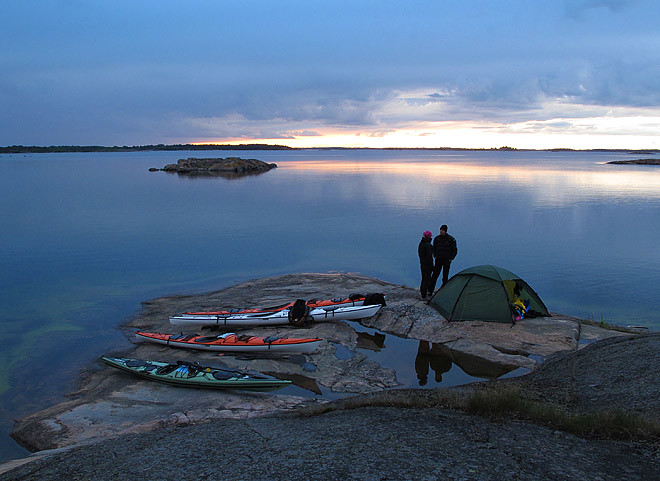
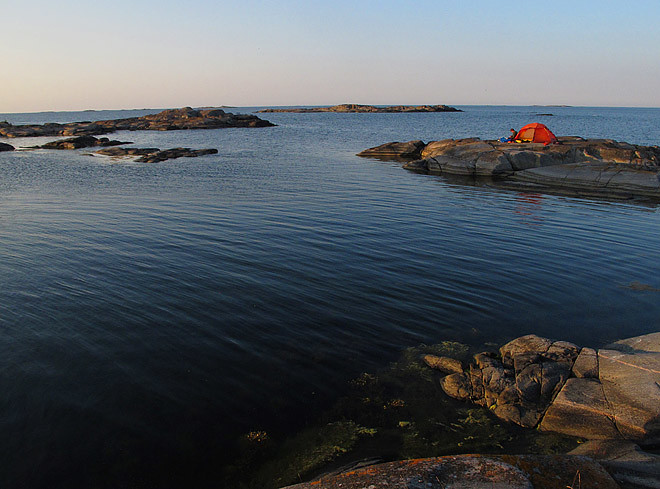
This season I chose to undertake a sea kayak trip instead where thousands of little island gently emerge from the sea and create incredibly smooth landscapes.
There is a strong similarity between the High Sierra and the Stockholm archipelago; both have glacially polished granite, the latter at sea level.
For the Sierras I chose a very light shelter since I knew I didn't need an inner tent to protect myself from insects.
PeeweeLake camp_c

For Sweden I chose a tunnel tent: a known design able to shed wind well.
I chose a non-freestanding tent over a more pitch-friendly free standing one because of weight and bulk. I dislike travelling with heavy gear and flying across the word to reach my destination usually limits my choice of equipment; there is an incredible difference between car camping and international travel.

Tunnel tents however pose some problems when pitching on hard ground.
Staking out the ends of the tent is essential  to keep the tent erect (unlike in a freestanding tent).
Since polished granite offers too much resistance for conventional pegging (like rock-hard ground!) a little tinkering on my part is usually necessary to have a secure shelter for the night.
Sunset at Windy camp_c

Instead of relying on pegs at the stake point I collect a stick and a couple of decent size rocks.
I insert the stick into the stake loop of the tent and place it horizontally on the ground where a large rock will secure it in place. I find that a rock on top of a stick is generally a way better anchor than a typical tent peg pushed into soft ground.

Furthermore, where the ground is a polished slab there are usually a few cracks.
Here is where I like to place a little wired metal wedge designed for rock-climbing  (aka stoppers, nuts, rocks etc).
A carefully placed wedge is bombproof and no amount of wind will rip that anchor out.
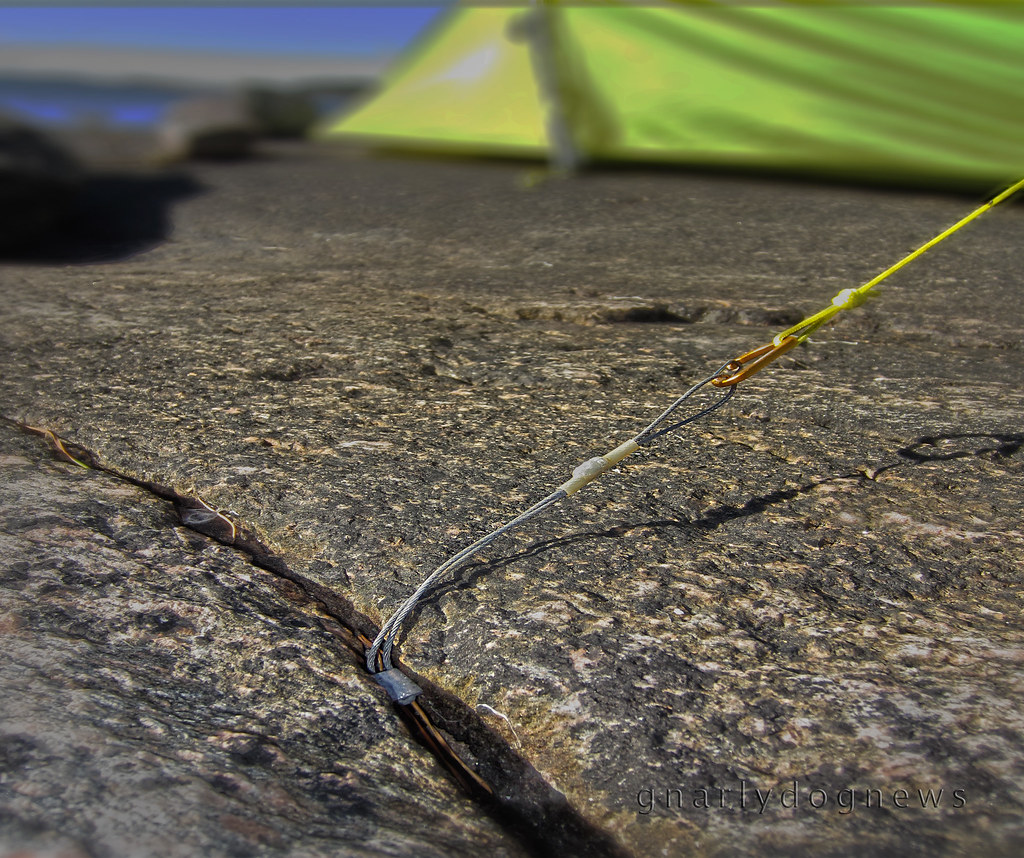
rock anchor_c
Black Diamond stopper
In locations where there is little to no trees, or large boulders to create a wind break, I am confident that my tunnel tent will stand  up to strong winds, even without any pegs secured into the ground.
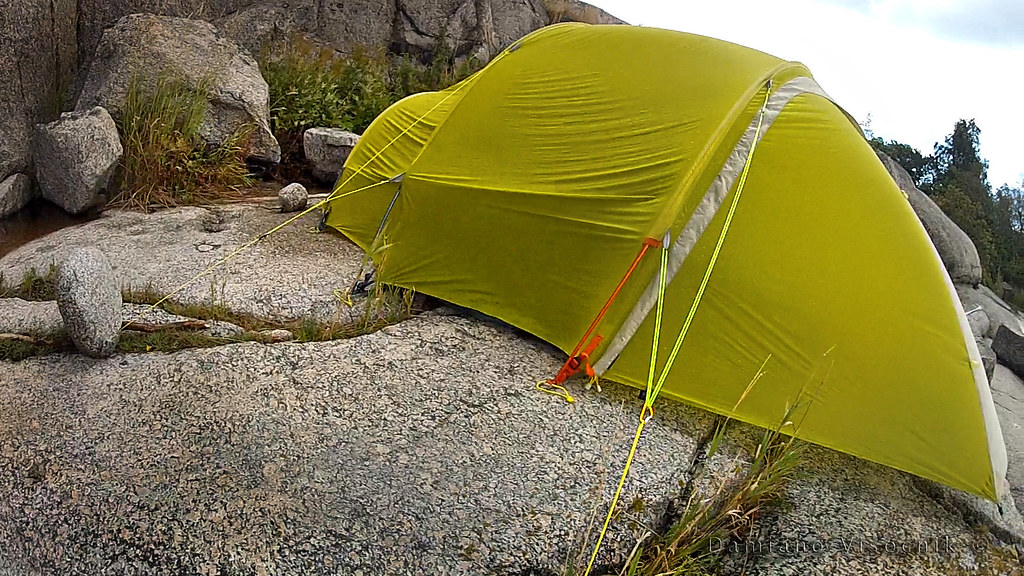
Windy on Magic_c

rock anchor_gdn
Omega Pacific wedgie

17 September 2013

Photo: Kiss in the Storm

.

Kissing in the rain_c

A summer storm can't dampen the spirit of love.

.

10 September 2013

Destination: Magic Island

.
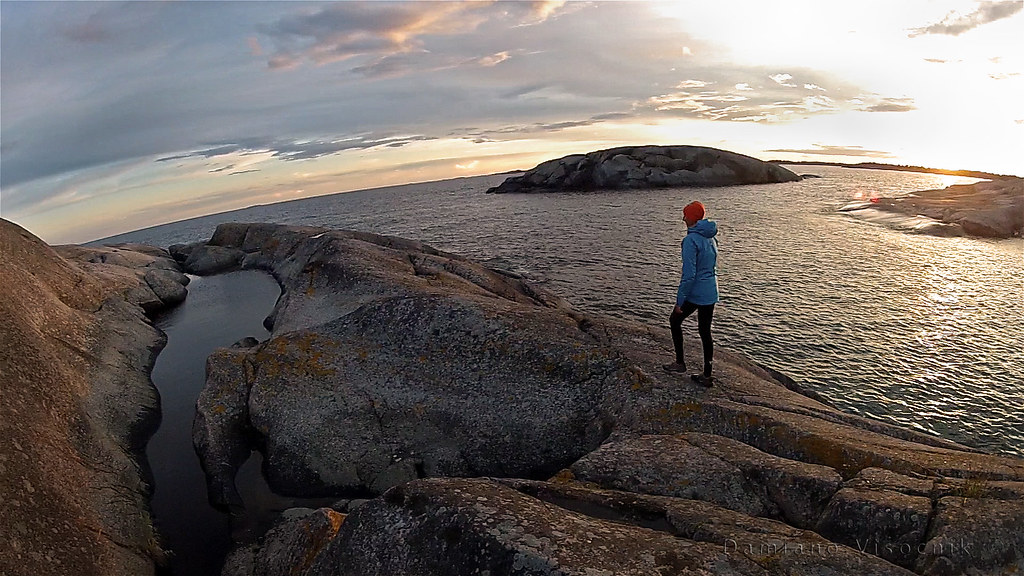
There is a place on the East Coast of Sweden, in the Baltic Sea, that I named “Magic Island”; I paddled to it on my recent Scandinavian sea kayak trip.
The seas were bumpy, created by the waves rebounding the rocky cliffs hitting the outer islands. I was paddling unprotected waters and the steady breeze from the preceding  days was sending a decent swell in my direction. My paddling companion Petra was a little concerned as her paddling experience was mostly limited to very different waters of land locked Austrian lakes; the last time she paddled salt water was in Pacific Ocean, Australia.
Rounding the South-East point still presented non land-able locations for a camp. The map showed a little cove but I was having a bit of trouble finding it; after all with 30.000 islands in the Stockholm archipelago alone I was now having doubts that I was in the right place… And suddenly there it was, as promised by my little map, a fantastic sheltered bay of polished granite.

Magic Is sunset_3

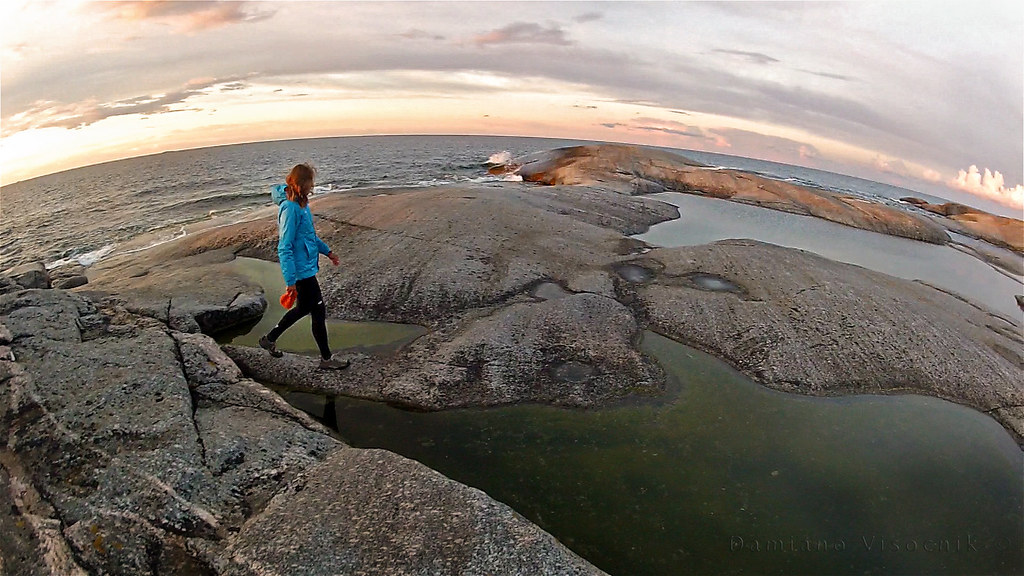
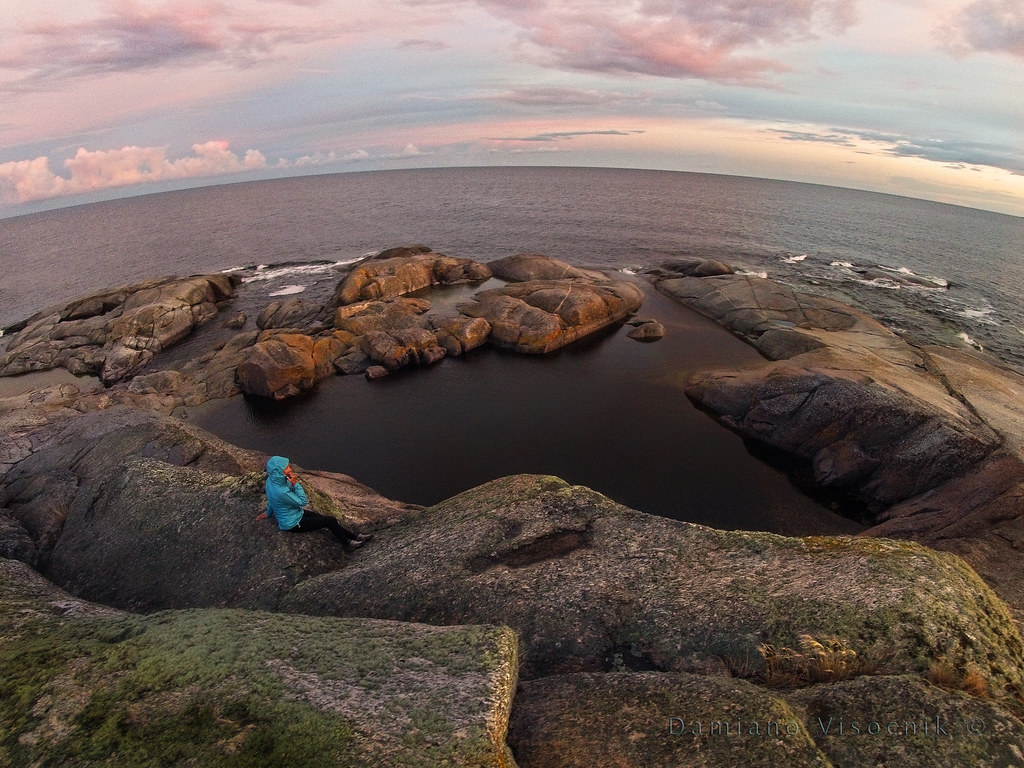
The action of the glacier of the last Ice Age some 11.000 years ago managed to shape this very hard granite into smooth rocky waves. The location of this island away from the mainland prevented a lot of vegetation from taking hold and the winter storms have dwarfed and shaped the small trees. The presence of this windy place was palpable; I felt exposed and vulnerable here. The skies turned to dark clouds and storms could be seen approaching.

Magic Is2_c

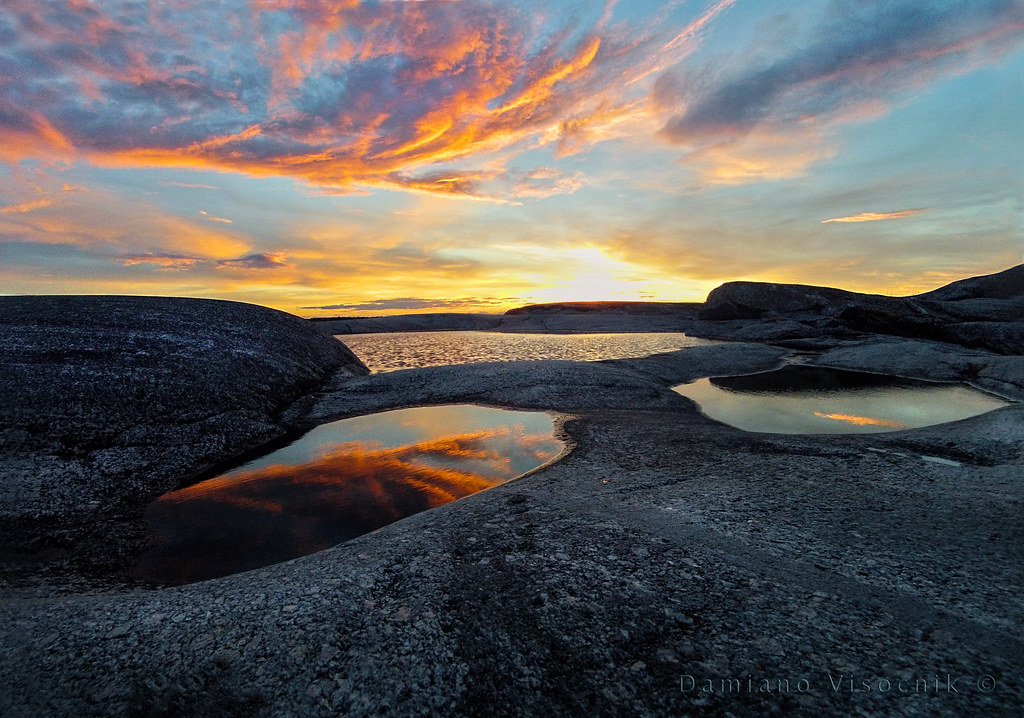
I climbed up a small rocky outcrop and could see lighting in the distance. The storm would be upon us soon and I made sure I secured our tent with extra guidelines anchored to the cracks in the granite. The wind came followed by a downpour and as we lay in the tent, I was glad that I was picky in selecting just the right tent site as small creeks ran down the smooth rocky slopes. We stayed dry and the tent proved to be solid. But as most summer thunderstorms this one did not last and eventually it passed leaving only a few puffy clouds around. The sun was getting lower and the magic hour was approaching (I borrow this term from my early inspirational photographer Galen Rowel. Galen describes the perfect time of the day to take photographs when the light is warm and the shadows long as magic hour). The rock was still wet but we wanted to see the sunset on the other side of the island, facing West.
We took a walk.

Magic Is sunset_4_c.Still002

Magic Is sunset_5_c

In Sweden, at such high latitudes, the sun sets later in the evening and the twilight lasts so much longer than at home in Australia; I did not have to rush to see the landscape in its best light but I could take my time to wonder around and pose to take it all in. Cold enough to wear a wind braking jacket I could feast with my eyes on the sensual soft shapes of granite waves sculpted by ice. A few birds were still trying to catch dinner before darkness fell and I kept on smiling, happy to be present in this magical place.

Magic Is sunset_3


Magic Is sunset_2

Video coming soon
.

03 September 2013

Photo: ominous evening sky

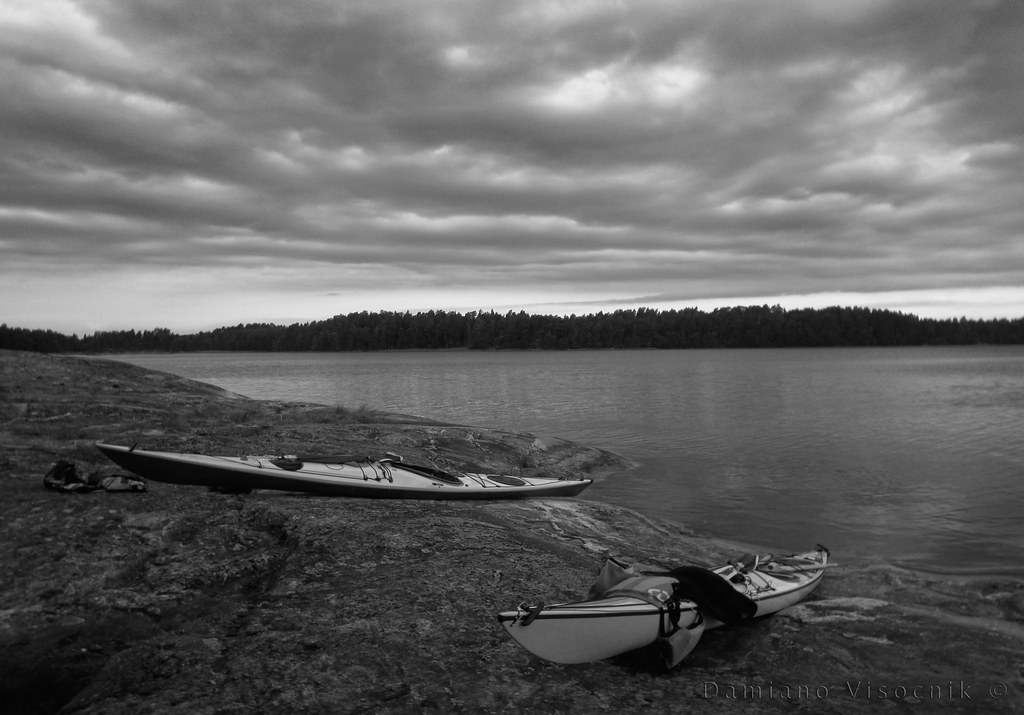
Evening brought heavy skies and wind.
The small cove of a rocky island was going to be home for the night.

Kyks on Windy Is_BW_c

12 August 2013

Kayak swapping

.
I know I live in a great part of the world where sea kayaking is really beautiful and easy.
Australia, and especially Queensland is a very desirable destination coveted by paddlers around the globe.
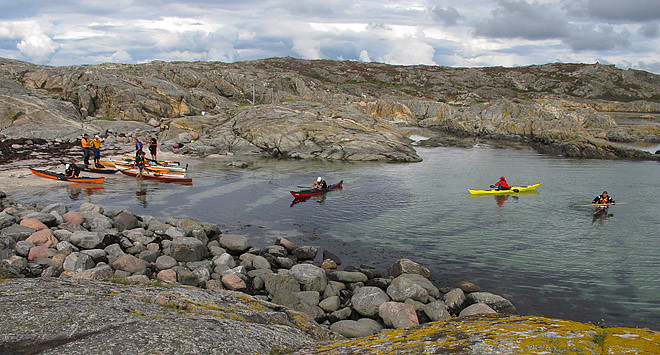
While I receive a lot of comments of how beautiful my part of the world is, I occasionally connect on a deeper level with some paddlers. Johan Wirsen, designer of my Zegul 520, was interested in my paddling style and we came to know of each other. He sounded friendly and considerate and after a few emails I invited him to come and visit me to paddle warm waters while his Baltic sea was gripped by a thick sheet of ice. I have enough kayaks that would fit a range of paddlers and enough gear to outfit a small party. We spoke on the phone and travel was arranged soon after; Johan trusted me to look after him. All I had was one small picture to go by to spot him at the airport pick-up but there was no mistake; somehow I recognized him from the distance. We planned a mini sea kayak camping expedition to the warm waters of the Capricorn coast.

Unloading the kayaks_c

Johan tried kayak sailing for the first time and we exchanged ideas and shared the passion for paddling and kayak design. Johan’s personality suited well; mellow enough to go with the flow but with great skills to feel comfortable in demanding conditions. We have similar goals too: no rush, no racing, no destination fever, just happy to explore and play on the water. The rest is just details.
I was invited to visit him in his native country in the Baltic archipelago. Johan has a shed full of kayaks (he is not sure how many) and lives on the water of the Swedish East Coast.
I have been longing to see Scandinavia again since I first traveled there in my teens but little I knew that the coast is a paddler’s dream. Thousand of islands litter the rather calm sea that has very little tidal influence. Those images of tents pitched at almost water level on polished granite slabs are not staged, one can really do that. 

IMG_2320

IMG_2980

This year things fell into place and I am currently lost somewhere among those islands. Johan has limited vacation time in summer and only paddled with me for a short week, while I am continuing my sea trip heading North.
At the last Rock&Roll I was lucky to meet Petra, on her extended visit to the land of OZ. A very keen sea kayaker from the land locked Austria, she is my travel companion on this incredible trip although her “training” already started Down Under where she learned to roll in the warm waters of Moreton Bay.

It is wonderful how this little sea fearing vessels that have such ancient roots can bring people together from around the globe. The paddlers that I have met share the same passion for self reliant travel and simple life styles; I am drawn to them through this primeval need to be in contact with nature. I have shared amazing times with people that seek outdoor diversions to the structured life we lead. I have met sea kayakers that are authentic and honest, willing to open their hearts and homes to help and host travelers. It seems that the values of hospitality of the first kayakers of Greenland is now passed on to us.

IMG_3233
2nd, 3rd and 4th image courtesy of Erik Sjostedt

I am not sure where I will end my trip but I will know when the time will come to get off the water and catch a bus back to my car.
.

22 July 2013

Sea trip to the Northern Coast.

.
“I have come to accept the feeling of not knowing where I am going. And I have trained myself to love it. Because it is only when we are suspended in mid-air with no landing in sight, that we force our wings to unravel and alas begin our flight. And as we fly, we still may not know where we are going to. But the miracle is in the unfolding of the wings. You may not know where you're going, but you know that so long as you spread your wings, the winds will carry you.” C. JoyBell C.​

Kvällspaddling vid Ö bokö

There is a need in me that calls me to travel to far away places. When young I travelled a lot with my parents exposing me to new cultures and alternatives lifestyles. Then one day I left my native country and moved to Australia. I love my new country but my soul still searches for familiar landscapes where spruce trees are the forest, not gum trees. I love the cold as it is in my bones as I love skiing and winter camping; it reminds me of the bitter winter mornings waiting for the school bus on snowy roads.
I find pleasure in being rugged up and feeling the cold air on my face.
My upbringing saw me outside a lot and I lived for the forests and mountains behind my house. I feel that evenings become more contemplative when I camp in cold weather; I am not a big fan of sweltering Queensland summer nights.
Give me a down jacket and a decent shelter from wind and I feel at home. After a few years of dreaming to eventually paddle in arctic waters this time the stars aligned and I am off to the land of the long shadows.

Långeskär i Fjällbacka

I have a vague plan but not distinct destination. I want to spend the days exploring and make decisions as I see them fit my mood. No destination syndrome and no log of my mileage: sea travel at its best with the unknown and surprises my driving force.


Toppbestigning
all images courtesy of  Eric Sjostedt

I will have limited access to the Internet. Please allow a few days (or weeks) to see you comments appear on this site.

.

10 July 2013

Photos: autumn paddling in Queensland

Blessed with windy conditions I have been sea kayak sailing in the last couple of months.
As the forecast has been calling for unfavourable conditions for the motorized crowd, quite often I would find the bay very quiet.
Gone are the pesky jet skiers and only sailing boats find the choppy waters to their liking.

Sailing Mockpool_c


Bribie Passage sailing_c

But not all forecasts have been accurate and often the conditions were mild.
There have been days that my sails have been stowed on deck and the cleared colder waters of autumn have created mirror like conditions.

Liquid silver_c

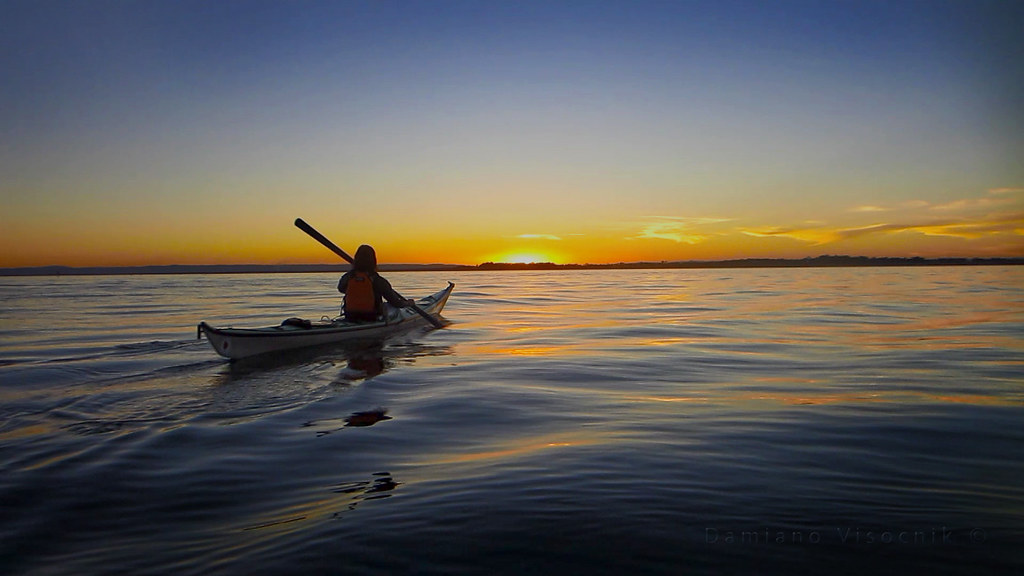
As the sun has been setting early I would often be still on the water to enjoy the last light of the day.

Bribie Passage sunset_c


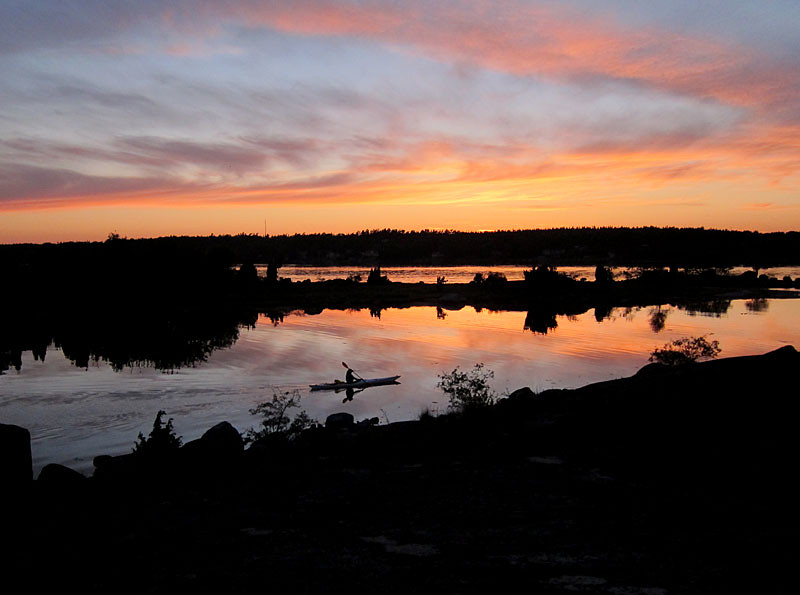
Bribie Sunset_1

.

19 June 2013

REVIEW: shoulderless Northern Light Greenland carbon-fibre paddle

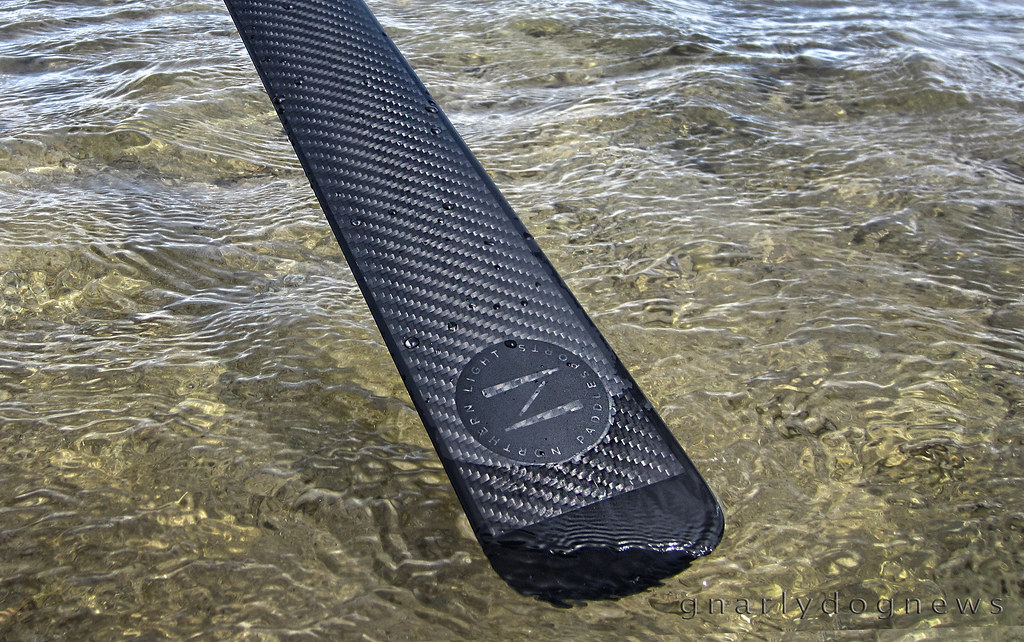
The new Northern Light paddle recently received is different: it's a shoulderless version of the three piece carbon fibre Greenland paddle that Paul produces. 
The sectional loom is the same as all the other Northern Light paddles (Greenland and Aleut) but this blade is much narrower than my standard Greenland paddle, which I have been using for all my paddling.

NLP_nar_2_c

I have grown to love the Northern Light Greenland paddle that, despite my best efforts to destroy it, has never let me down.
Despite me abusing it, all I managed to create was a hairline crack in the insert after a wave dump and high brace onto a bank of sand, which was later easily repaired. 
No other paddle would stand up to the abuse I now subject my Northern Light paddles.

The new carbon-fibre Northern Light paddle is shoulderless and my hands slide along the shaft without feeling the familiar notch of the shoulder. Initially I thought I needed to feel my hands centred on the paddle and the blade’s shoulders of my Greenland were the reference point, but as I paddle kayaks with skegs I tend to wiggle a bit and often extend the paddle on one side.
Ruddered kayakers find it odd that waves slide my kayak sideways a bit and make it broach just so slightly needing corrective strokes.
To address directional changes I use sliding strokes where my hands let the paddle extend to one side; all without being even aware of such technique.
I no longer keep my hands in the exact same position on the loom (as I used to with Euro paddles); they are literally all over the place.
When I want to accelerate hard I extend my Greenland paddle to insert more blade into the water and create more resistance.  If I want to correct my direction a bit, I extend the paddle and slightly sweep, all unconsciously. This new paddle lends itself perfectly to my “wandering’ hands.

NLP_nar_3_c

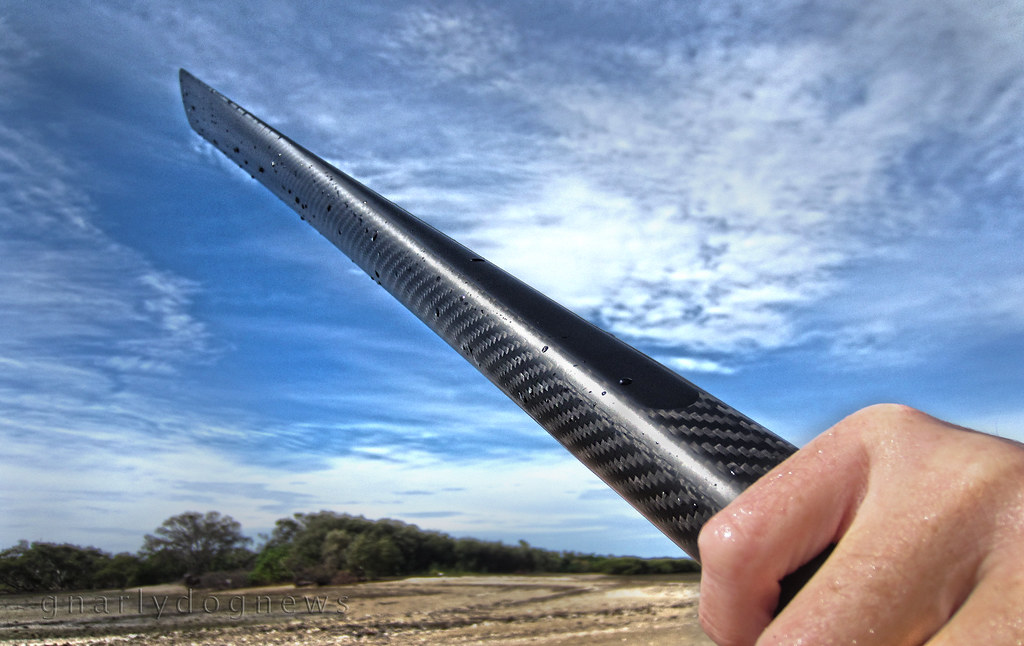
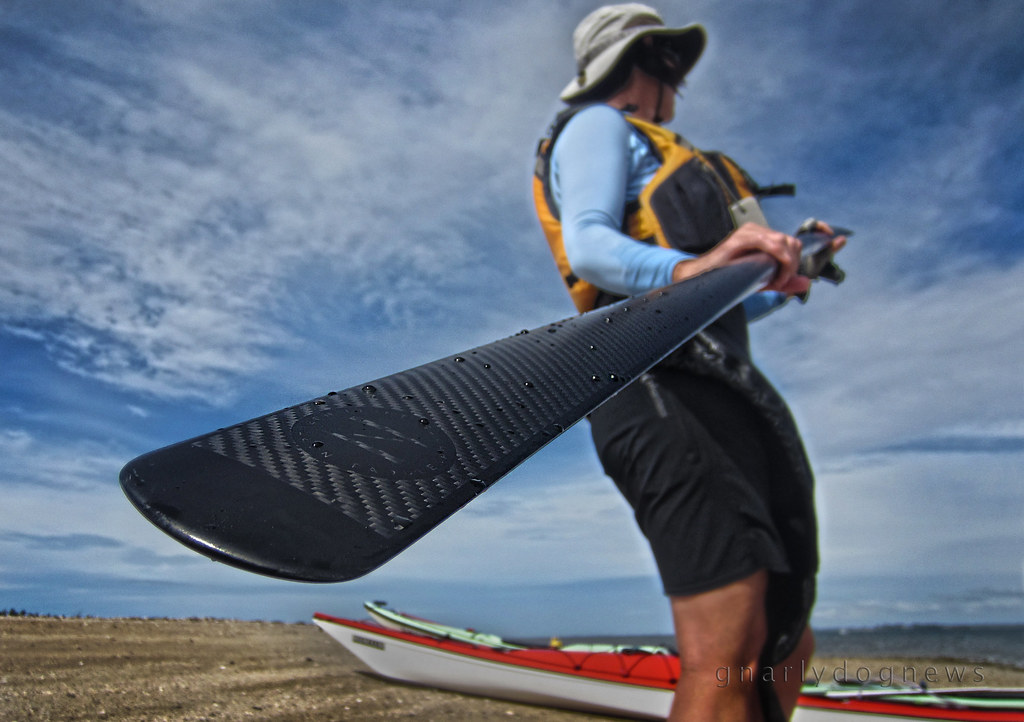
The Northern Light “Skinny” Greenland is incredibly smooth and has an organic feel in my hands.
The edges are very fine allowing silent insertions into the water; canted strokes feel effortless. It
literally slices through the water.
The “Skinny” has been in the works for a while and Paul spent a lot of time talking to some of the best known Greenland kayakers like Maligiaq and Dubside before he and Carlos (his former partner) came up with the dimensions for this paddle.
The paddle has actually been in production, with prototype testing going on for over a year now.

I thought that such diminutive paddle (if compared to big blade Euro style) would lack purchase resulting in reduced kayak speed.
But as Maligiaq demonstrates, a fine edged Greenland paddle used with correct technique (canted) and a higher cadence can produce hull speeds equal to larger blades, the proof seems clear in his results against world class sprinters.

As the blade is so fine I expected to experience some flutter, as most Greenland paddles seem to have in the first ten minutes or so until my brain “learns” the traits of the new blade and adjusts.
The “Skinny” was immediately at home with me and no adjustment was needed. Canting it was super easy (maybe it’s the pronounced flat surface on the loom) and I noticed no splash, even if I purposely tried to use a sloppy stroke. It was also a surprise to see rank beginner kayakers trying this paddle and loving it immediately with very little wobble when sprinting.

 
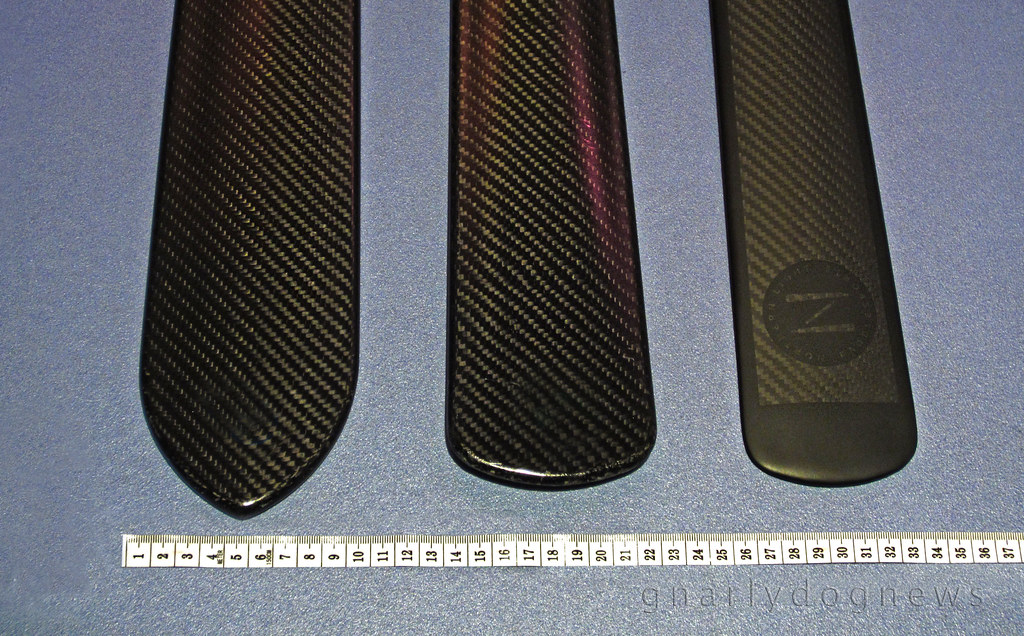
comparison_1
Northern Light paddles size comparison: Aleut, Greenland and "Skinny"
Small hands will find this skinny paddle easier for sculling (compared to the standard Greenland) as it allows the blade to sit more comfortably in the palm closer to the end of the blade.
Furthermore the "Skinny" can be converted from a full size adult paddle to a perfect child paddle; this was a very important consideration when designing this paddle.  

With the use of the included insert the "Skinny" makes a smooth paddle for the budding new paddler. 
Weighing a bit less than the standard Northern Light Greenland the "Skinny" is just as modular as the original.
Paul has maintained the concept of a 3-piece paddle where the loom is the variable part to accommodate for different size paddlers.

The unique ability to break down the paddle in sections small enough to allow air travel as part of check-in luggage (fits perfectly inside a large duffel bag) makes this paddle a trusted companion for remote locations. 

NLP_nar_1_c
 

But how does it handle the choppy waves?
No different than the larger sister original Northern Light Greenland.


So why not use the “skinny” all the time?
All paddles have their strengths and the NLP “Skinny” is no different.  The sharp edges lend themselves to more technical paddling as it slices through the water allowing for a higher cadence when paddling distances and also for sculling rolls.  A lot of times a thicker paddle allows one to rely on the volume to auto correct a bit when rolling.  The “Skinny” requires good technique in this regard.
The noticeable difference I could feel was when I accelerated from a standing start; I felt just a little bit less resistance in the water and maybe a stroke more was needed to bring my kayak to cruising speed.
Side by side with my paddling partner Adventuretess we swapped paddles back and forth; using a perfectly synchronized stroke our kayaks maintained the exact same speed.
I can only conclude that the “Skinny” offers enough hydraulic resistance to propel a kayak to hull speed.

I had no chance to try the “Skinny” in the surf yet, where a big blade is desirable to be able to suddenly accelerate down the face of a wave; that’s where the Northern Light Aleut shines. 

On my planned trip to the land of the long shadows I was planning to take the standard “fatty”; I am now reconsidering and want to have the "Skinny" with me.


11 June 2013

Photo: friends in the Circus

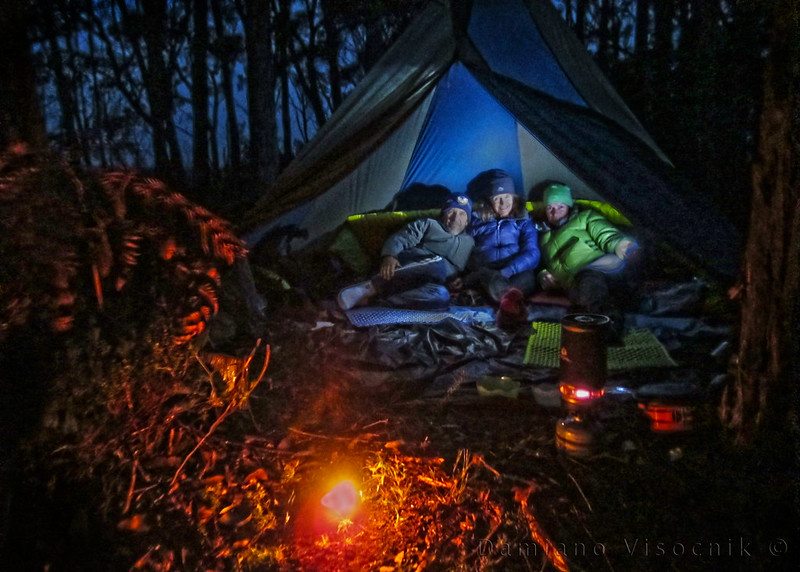
To shelter from the wind as evening light was fading we all bunched up in the Circus tent.
The little fire-in-a-can offered no real heat but warmed our hearts as dinner was cooking on our little camp stoves.

Friends in the circus_2_c

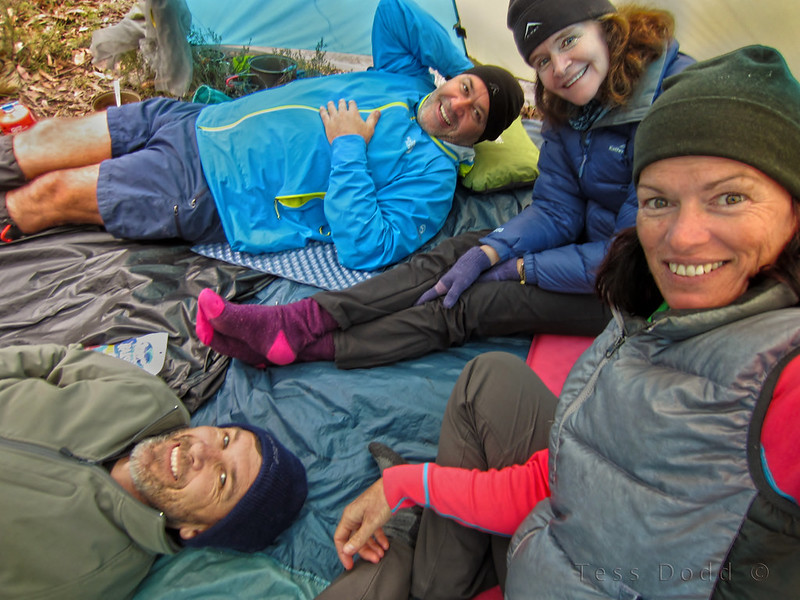
The joy of sharing the evening with good friends listening to each others stories is one of my great pleasures in life.
As the cold weather brings people closer together, winter camping has often created the best times for me.

Friends in the circus_c