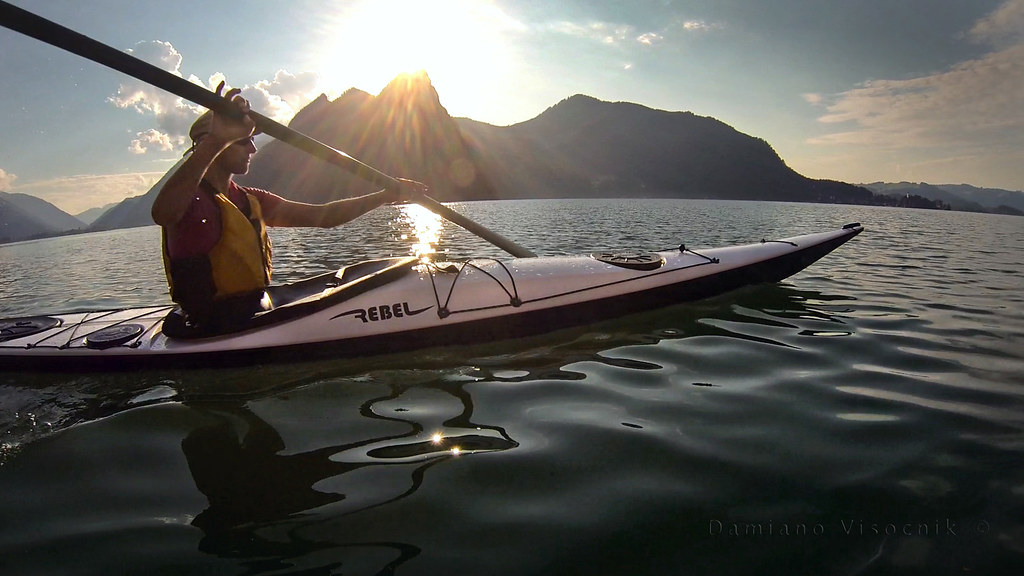
. Johan Wirsen is today one of the most prolific kayak designers.
His home is in Scandinavia and his heritage of sea fearing Vikings is well represented with his skillful art of designing modern sea kayaks.
I was lucky to meet Johan in 2011 when I invited him on a trip to the Queensland tropical coast.
A very understated person with great insight, Johan is an incredibly likable character.
Humble and considerate in his thoughts and trusting by nature has not always been an advantage in the cut-throat business of sea kayak manufacturing. He has been designing and constructing boats and kayaks since early teens and it is his livelihood.
Last July I visited him in his hometown of Borgholm on Oland Island, Sweden and he revealed to me that something big was brewing in his shed. After years of designing and working for other manufacturers, fed up with some of their attitude and malpractices (he got ripped off several times) he decided that it was time to launch his own brand: Rebel Kayaks.
Ann-Kristin Skinlo at Göteborg Boatshow_ image with permission from Lars Jönson I took the opportunity to interview Johan Wirsen:
gdn) You have started a new
brand of sea kayaks called Rebel: why another brand ?
JW) -You know, since 2001 I have
been working independently with kayak designs for a number of companies. Of
course I was building and designing my own kayaks before that so I more or less
took the experience I had and transformed that from “one off” designs to a serial
production. But as you know, the kayak business is also quite dirty and some of the companies
I have been working with were also very greedy, so I have decided to terminate
some contract with the “big ones” and start all over with this new little
company Rebel Kayaks and try to keep the passion for the sport and paddling
alive for myself.
Where and when will these kayak be available?
- For the moment we are that
lucky that we have been contacted by so many high end retailers, dealers and customers that we can’t satisfied them all!!
The truth is that we are too small and can’t
produce that many kayaks, yet. When we shift our production to Poland we naturally will start to sell our kayaks
here in Northern Europe.
image courtesy of Janusz Kowalski from Rebel kayaks
What style of kayaks
are you focusing on under your brand Rebel?
-The first two models that we put
into production are my two Greenland
styled kayaks: the “ILAGA” and the ”T”. Those are the type of kayaks that I personally
feel a lot for, and since they are well known they are like a signature for me. It feels important to me that I design and in the future build kayaks that I would
like to paddle myself.
Since our production capacity is not too big, we also
prefer to put the effort into building light and stiff. – Why build something you would not want for yourself ?
Are you still designing
for other manufacturers?
-Yes I still do some work
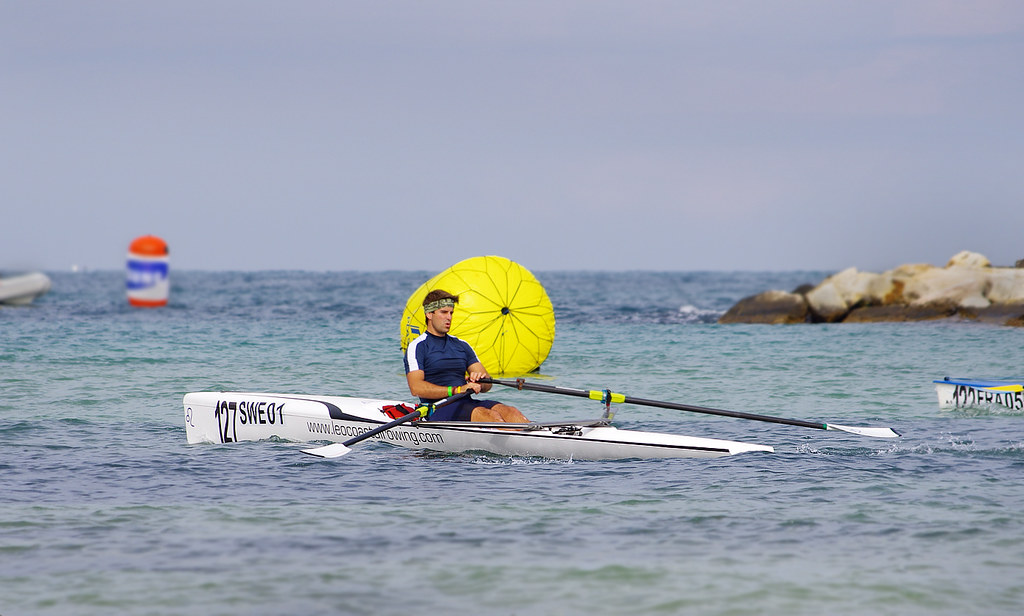
for other companies, and for the moment I am working on a Coastal Rowing boat.
I notice a certain consistency of style in your creations even if the kayaks that you have designed have different goals in mind. How did you get involved in boat design and what is the driving
force for your passion?
-Born on an island, and growing up with a father that had all kinds of
boats (anything from fishing to sailing and even a water-ski boat) it is not that
unusual that I got this interest and eventually I went to school to become a boat
builder. I have always tried to build or rebuild my own stuff, even
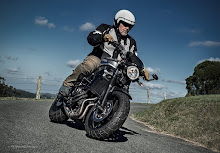
motorbikes!
But boats and especially traditionally boats with smooth lines have
always appealed to my eyes. And there is something special about boats and the tree dimensional shapes that should be put together in a smooth way (to achieve less drag).
For ex. The single coastal
rowing boat that I recently designed where I had to learn new traits while listening to skilled rowers
to get the ergonomics right. I am not a rower myself so there was a lot to learn.
Another kind of boats I love
is our traditional wooden boats and of course to sail them.
The picture shows my 17´ “Sandbacken” which is our traditional type of boats from our Island
What? Rowing boats???
- Yes, this is actually really funny.
It started
as a small project that then won tree medals in last World Championship!! (Gold
and Bronze – men, and Silver – woman)
Mats Leo (rower and the owner
of the project) asked me if I could help him to design a boat and together with one
of the most skilled rower here in Sweden, Peter Berg, we got this
far!!
Pictured Peter Berg. Recently Peter Berg also won a race in Monaco
Sea kayak sailing:
what do you think of that?
- I must admit that I have not experienced sailing with a kayaks before I visited Australia. But I really got
hooked! It is fun, it is energy saving
and the “Flat Earth Sails” are working well. The position of the mast is not
ideal on a sea kayak, however at the same time you don’t want it to
interfere with paddling. But it works, and I recommend
paddlers to try out.
Swede form or Fish
form: what is the best hull shape?
- A quick explanation, or to
say when and where is best would be hard to describe here in a short form. A Swede form
(the widest part aft of centre of the hull ) creates less drag and wave resistant
on the surface resulting in more laminar flow and less turbulent
flow than on a fish form, that has the opposite shape. However there are also so many
other things to be taken in consideration when designing a kayak or a hull. In my current designs I concentrate on the thought of how strong we are as a paddler, and I try to make a kayak as fastas possible in the low speed area, let say in 3 – 4 pound drag area; because
this is where most of us ordinary paddlers fit with our “touring sea kayaks”. If you would like more info please visit www.marinerkayaks.com and click the link at the bottom about designs. It does not tell every thing but can give you something to think
about.
When I am working on a new
design, in most cases I also build and test paddle my kayaks. It gives me the
possibility to make adjustments before the kayaks goes in production, unlike many other producers today that make something up on a computer and then
email it to a CNC-machine shop. Furthermore, in their catalog, they will then tell you all about
the kayak's advantages before they even ever built the first one.
Johan, you know that
this is a passion of mine: What do you think of Greenland
paddles?
- In the beginning I did not
find the Greenland paddles interesting. I had
been using a Euro paddle produced from our Swedish brand VKV for many years and
modified the size of the blade more for a touring paddling, since the original
blade was too big for long distance paddling; I also made the paddle shorter and I was happy with that.
When I started to become more focused on rolling and was paddling more Greenland style kayaks I
had to re-think. I can’t say that I have a pure Greenland
paddling technique and while I do more what is intuitive and adept to the situation I
almost never use anything else than a “stick” today. If speed is a concern the Greenland paddle is not limiting, and if we talk about feeling I have the biggest respect
for that paddle.
I love to hold onto a wooden paddle, even if I have had
in mind to make some carbon ones. However hollowed ones made out of cedar are around 650 gr.
image courtesy of Janusz Kowalskifrom Rebel kayaks
- If anybody here in
Scandinavia is interested in learning good rolling, or paddling techniques, consider Helen
Wilson and Mark Tozer from Greenland or Bust in partnership with Rebel Kayaks, on their “Nordic Tour 2014”: a three months long tour around Sweden, Denmark and Norway. For more info visit www.greenlandorbust.org
I have seen you tool
around with the shape of the Greenland paddle and
I have seen an interesting twist to the traditional shape. Thoughts on that?
- I started to make my
paddles like that a few years ago. I like the shoulder on the loom as a
position for my thumbs; at the same time I just make the other (top) side smoother for my hand to hold onto. What is most important is that the edges of
the blade should be sharp so the paddle works quietly. I also have my tip of the
blade more rectangular and at a slight angle. Some of my paddles have been copied and are for sale at Rebel Kayaks now. The paddles are made of cedar with ash edges as a harder more durable wood. The length of my paddles is often
around 2.18m total, while the width of the blade can vary.
Last words?
Well I guess that would be: With paddling try to make it your own journey.
The experience I have is not “one size fits all”. We all have to listen to our self and it is not always that important what gear we are using or if we go to the most exotic places; your own bay is often good enough. Paddling or sailing is mindfulness in itself for me, and hopefully for you too. / Johan Wirsén
.
The popularity of Greenland paddles has been growing rapidly. I no longer feel like being the "ugly duckling" when I meet other paddlers on the water and while there is still some disdain in certain circles the majority of the paddlers are accepting GPs as an alternative style to the high angle big blade Euro paddling.
But like all things that are different and don't conform to the status quo, they attract resistance by the old school masters. Ironically Greenland paddles are one of the oldest forms of paddles, it's just that modern materials have allowed for advancements in paddle design that led to short and wide blades that then became the norm and the old form was nearly forgotten (even tho short and wide was not unknown, just not as popular as in modern times).
The renessaince of the Greenland paddle would seem to be driven by nostalgia and would appeal to sea kayakers that work with timber and like to make their own equipment.
And that is true for the vast majority of the Greenland paddlers.
As Greenland paddles excel for rolling and plenty of paddlers practice the art of rolling with GPs, they are often also associated with paddling in calm conditions where an easy steady pace to cover distance is often sufficient and matches the speed of Euro paddling.
But things change when we talk about dynamic waters.
A lot of paddlers shake their heads when I suggest that the GP is a very useful and powerful paddle in the textured waters. Surely there is a difference between the skinny stick and the fat blade, is their argument.
Yes, there is an undeniable difference between the "big water" short blade of white water inspired sea kayak paddle and the distributed surface of a GP.
I would like to emphasize the "distributed"
A lot of Greenland paddles have a surface area that is similar to touring Euro paddles. Yep, if one measures the whole blade of the GP the numbers add up. If the GP is on the long side (230cm+)the surface area is actually surprising large and can exceed the widest Euro paddles, however I find no need to have an extra wide or long GP for playing in dynamic waters.
A typical cruising GP stroke is a low angle one where often just a portion of the blade is inserted into the water.
That is actually all is needed to cruise in a sea kayak: very little effort in propelling that hull in the water.
If one wants to then push the kayak and get close to hull speed more energy is required. While the common conception is that one has to paddle "faster" (higher cadence) to go faster with a GP I tend to change the angle of insertion of the blade into the water.
Once my stroke angle becomes higher I can deliver more blade into the water (more surface) and I have more resistance (less "slipping" back of the paddle) to apply more energy to my stroke. I can travel just as fast with a GP than with a EP.
So how does that translate to dynamic water paddling?
James Manke using a Greenland paddle (Northern Light) in all comditions
I use a higher angle when paddling in the surf zone, where I want a faster acceleration with my kayak; more blade enters the water allowing me to have more grunt.
Of course, water being a fluid substance, will flow around the skinny GP easier than a fat EP and while the difference is noticeable is not impossible to overcome. It is at this moment that I apply a higher cadence to achieve the desired initial propulsion in my kayak.
I think of it as driving a smaller engine car that is delivering the desired power by revving higher than a big block V8; the feel is different but the results similar.
So, in the surf zone where acceleration is really needed I have a higher angle and a higher cadence.
It is a short burst that is needed to get me gliding along with the energy of the wave.
The biggest benefit I find in a GP is the gentle support that it offers in a high brace.
As I surf along the wave I often broach, where my kayak is suddenly in line with the wave and getting pushed along sideways. If I don't want to get tipped I use a high brace to stabilize myself, like an outrigger.
As the waves can be occasionally powerful when I broach, the paddle in a high brace position tends to get elevated to the surface of the water. I feel that with a Greenland paddle that force is never as strong as with a wide bladed EP where a high position of my elbow could risk getting me a dislocated shoulder.
I seem to be able to contain that force and try to keep my arm in a much safer location.
Few can demonstrate the validity of the of the GP as an all rounder paddle better than Warren Williamson can in this video of extremely fast and turbulent waters of Deception Pass in WA, USA.
And while the current record of paddling around Vancouver Island is held by Joe O'Blenis with a Greenland paddle, we even have the Brits joining in the retro revolution with paddling around their big island .
It has been an honor to host world class kayak designer and boat builder Johan Wirsen from Sweden.
Johan Wirsen is the man behind the brilliant design of two of our favorite kayaks: the Tahe Greenland and the Zegul 520.
He paddles those two kayaks back in Sweden and he obviously felt very comfortable when borrowing ours.
Johan is a very good paddler and roller and we had a quick session on the shore of Redcliffe. He was all smiles still incredulous of how warm our waters are; as he left Sweden a week ago the ice had just melted!
Forward ending rolls with a Norsaq were particularly interesting.
Johan Wirsen paddling Stika's Greenland
We took the opportunity to spectate the start of the Brisbane to Gladstone yacht race from the water, in a kayak.
The latest development in superlight paddles has lead to thin incredible pinnacle of engineering: the Invisible paddle.
Strictly designed for Greenland style rolling it is aimed to the advanced kayaker.
Beginners will find this paddle way too light, unsupportive and downright too difficult to use.
Expert paddlers however will cherish the flexibility that this laminated paddle (according to Helen Wilson) offers. It is also one of the lightest and most compact paddles for air travel.
I am sorry Paul, but your Northern Light paddles have met their match :-)
I have come across this video of Warren Williamson Greenland rolling the new Pygmy Murrelet.
This guy really has incredible skills.
Warren is a true artist at his craft and can execute Greenland rolls with finesse that is just jaw dropping.
As well as being such a smooth roller Warren can also rip it up in tidal races, not to forget him trailing just behind Wayne Horodowich in speed races, all done with a GP.
The lower temperatures and settled weather produce clearer water here in Queensland.
The January floods that tainted the waters of Moreton Bay are just a memory and once again rolling in a kayak is a pleasure.
While our cousins down South are dressing up in serious immersion gear for cold water, we are lucky to enjoy seas of 19C where a lightly insulated top is usually enough to keep us warm.
Starring Greg Schwarz, the resident rolling mentor, in his Tahe Greenland dressed in a Reed tuilik.
The paddles are his creations: hollow core, laminated Western red cedar.
It has been a few years since I have swapped my Euro paddle for an Aleut and Greenland one.
Some initial adjustment was necessary to my stroke to gain the maximum benefit from these new tools.
My forward stroke no longer needed to be so high and I had to learn how to cant the Greenland paddle to achieve a quiet and efficient stroke.
Eventually I started to venture into the surf with the traditional paddles and I now find them easier to use than the big bladed Euro.
The biggest difference however came when I started rolling with a skinny paddle.
I was thought the typical CtoC kayak roll where the emphasis is on the blade and much less on kayak rotation to execute the roll.
Only now that I use traditional paddles I can notice the marked difference between a graceful roll and a forced roll.
The revelation came when a very proficient paddler, surf kayaker and roller could not execute a roll when handed one of my Aleut paddles.
Why could he not roll with my paddle when he was so good with his wing paddle?
I could not figure it out at the time but looking back at pictures of my style then and now I see what was happening.
Sea kayak instructors all over Australia teach the explosive white water style roll where momentum and support from the paddle are essential.
Once I started to roll regularly with my new skinny paddles I looked at my rolls (video footage) and noticed a problem: my paddle would end up vertically before the kayak was rolled.
Through mentoring of the selfless dedicated self taught Greenland roller Greg Schwarz I started to correct my poor style and progress into a direction where body pressure on the deck/thigh braces of the kayak is way more important than pressure on the paddle.
Slowly I gained the knowledge and confidence to roll Greenland style. I watched a lot of videos and started to notice that all good rollers executed their rolls with such grace and finesse, never rushing and never forcing their rolls.
Since there is no formally qualified Greenland technique instructor in Australia most rollers are self taught.
While self teaching has great merits often leads to bad habits if one is not referencing his/her style to the one of the masters.
One such master is Helen Wilson. Her style is incredibly graceful.
Luckily for aspiring G rollers, Helen has produced an outstanding video that specifically looks at the technique of basic G rolls.
Her video might not be the most technically produced footage (some of the audio is rather erratic and hard to hear) but her explanation on how to execute Greenland rolls has helped me and my friends to correct some of our mistakes.
Helen Wilson’s video is available in Australia through :
Sydney Harbour Kayaks (NSW)
Blue Earth Paddle Sports (NSW) Adventure Outlet (QLD)
and Fat Paddler direct for the other states.
I know that there has been resistance from some instructors in embracing the fast growing following of Greenland rolling but I assume that the reason behind is ignorance in the technique.
I have seen several videos lately where local kayakers have started to explore the use of the stick but are having the same problems I had myself: powering those rolls instead of finessing them.
It seems apparent that they are willing to try the stick but have not understood the fundamental difference between a white water roll and a Greenland Roll.
A well executed G roll will not show force or momentum. The emphasys is on controlling and rotating the kayak to come back up, not on the support offered by the paddle.
If a roll with a skinny paddle is marginal in calm waters it certainly will not work in the surf where aerated water will not offer enough resistance on the pressure applied to the paddle.
Some examples of forced rolls using a Greenland paddle:
Adventuretess in her early rolling days
source: Queensland Sea Kayak Club
I am lucky to have a dedicated group of kayakers that mentor each other with rolling and criticize and correct each other’s mistakes with the goal to gain better boat control and overall performance out of our crafts.
And here is Adventuretess a few months ago:
It looks like her style has improved...
PS Gnarlydog and Team are away on safari right now and will return to MEI Headquarter in early May...
Tahe Marine Greenland is one of the few production kayaks specifically designed for Greenland style rolling.
Very low volume and low rear deck allow for advance moves that in most other kayaks are much harder to perform. A low rear deck promotes laybacks where the paddler can honestly lay with his/her back on the rear deck.
Some paddlers find that the position of the seat in the Greenland is a bit too close to the rear coaming and that the back band is a little bit uncomfortable. When laying back there can be localized pressure on the spine against the rim of the coaming.
Below is an example of a highly modified cockpit of a Tahe Greenland, customized to the needs and body shape of the owner of the kayak.
The seat has been moved forward and the fabric back band has been removed.
Thin closed cell foam (minicell) has been added to strategic points to alleviate pressure on the pelvis bone.
The back band has been replaced by a custom made contoured fibreglass extension of the existing seat that is hinged for behind-the-seat access.
Located behind the seat is an electric bilge pump that allows quick removal of water that might have entered during launch in rough waters. The Greenland has very little freeboard (that's the nature of low deck kayaks) and launching on shores with waves can be tricky trying to avoid flooding. The solid backrest pivots on stainless steel bolts anchored into the coaming. The flanges of the cockpit coaming have been extended to allow for the seat to be moved forward.
The owner of this Greenland found the stock Tahe seat a bit short and not supportive enough for long paddles. He wanted more support under his legs and modified the seat with fibreglass "wing" extensions, padded with closed cell foam. He also modified the underside of the deck to create "cradles" for his thighs and have a more positive area for boat control. Perfectly shaped closed cell foam now engages his thighs exactly the way he wants it.
Visible is also a custom made under deck "glove box".
View inside the kayak showing supports for the seat extensions.
UPDATE 13DEC12
After receiving numerous emails asking for details on the procedure for the above mods, here are some additional images of work in progress.
EPS foam plug in place of back band
Only in recent years has Australia started to see an influx of imported kayaks.
In the past, they were the domain of keen individuals that went through the hassle and expense of shipping them personally.
Most local retailers would offer kayaks that were mainly designed for paddling long distances and/or were rudder dependent.
Honestly, there really was not much choice for somebody desiring a performance close-fitting boat.
Available kayaks had huge hulls, high decks and most times an ill fitting cockpit.
I used to envy paddlers in North America and Great Britain: they had a huge choice available to them.
A few years ago skegged boats started to gain popularity here and only very recently some paddlers desired kayaks that are body fitting.
While the majority of paddlers are seeking a kayak that gets them on the water and allows them to explore the sheltered shores, some kayakers are discovering the fun that rolling brings.
Yes, you read it right: rolling can be fun.
Most paddlers are content learning to roll as a mean to self rescue in an accidental capsize. My circle of friends of dedicated kayakers view rolling more than just a practical skill; they like rolling for the sake of rolling.
Once we learned the basic roll to right ourselves back up we started to explore the possibility of different rolls.
Introduced to traditional paddles, we were no longer satisfied with just a forced marginal “all paddle” powered roll; we sought variety.
It’s hard to explain to a non roller what it feels like to be confident underwater and enjoy the feeling of being immersed upside down to then gently rotate your body and rise to the surface with grace.
A lot of our rolls require a lay back position onto the rear deck of the kayak that lowers the centre of gravity.
Unfortunately not many kayaks are designed with a lower rear deck.
Most kayaks are bulky and offer maximum cargo space often sacrificing maneuverability.
For the last couple of years I have observed a growing trend towards a more graceful paddling style where control of the boat is performed by edging of the hull instead of just pressing on the rudder pedals.
The ultimate kayak for this type of paddling is a Greenland style kayak.
Typically recognized by a low profile with a low rear deck and hard chined hull.
Importer Craig McSween of Adventure Outlet now has 3 different kayaks in stock that follow this design philosophy, all from Tahe Marine.
Already familiar with the performance of the Tahe Greenland, I was interested in trying out the larger siblings: the Tahe Greenland T and the Sea Spirit.
Craig was generous to allow us to test paddle them one afternoon in the relatively sheltered water of the Gold Coast Broadwater.
Conditions were mild: wind gusts of max 15 knots with little or no waves with a max of 1 knot of current.
The Greenland T is regarded as true Greenland form while I think that the Sea Spirit is more an all round kayak of Greenland style.
The T is a bit larger than the classic Greenland, a bit beamier and a slightly higher deck: unfortunately still too small for my large thighs and big feet.
Vanilla fitted the T well and Adventuretess found it roomy enough for possible all day paddles with a bit of wiggle room.
(Vanilla’s personal kayak is an Impex Force5 and Tess’ preferred kayak is her Nordkapp LV).
The T and Sea Spirit have a keyhole cockpit making entry/exit a bit easier than the traditional “ocean style” cockpit on the Tahe Greenland.
We had no means for scientifically measure max speeds of these kayaks but I don’t think they are designed as sprinting vessels.
Having a shorter waterline they accelerated easily and to maintain a cruising speed of 6-7km/h required little effort. The kayaks will start to hit the “hull speed wall” sooner than a long kayak.
However, because of their reduced wetter surface they will be easier to paddle, at club paddling pace, than a longer kayak.
The finish and the attention to detail on Tahe kayaks are superb. The external seam is a narrow black Kevlar tape that has a clear textured finish. Extremely neat.
There were no visible print through areas in the gel coat. The inside of the cockpit is finished with flow coat to prevent any possible fiberglass rash where the body contacts the deck.
The hatch covers (Kajak Sport lids), while very easy to secure/remove, maintained a dry interior during our prolonged rolling session.
select 360p to view vidoe if you don't have a fast internet connection
I believe that Tahe kayaks are a very good value for money alternative to the well established brands offered locally.
They might not be the ultimate bombproof expedition hulls of some British kayaks but they weigh and cost substantially less.
A novice might find the T a bit on the “tippy” side while the wider hull Sea Spirit will instill more confidence, in a beginner.
The T was fitted with a skeg and the Sea Spirit had a rudder (skeg also available).
In beam winds the T weather cocked minimally (a bit of edging was necessary if no skeg deployed). The Sea Spirit displayed no tendency of turning into the wind. Tess didn’t use the rudder (a spring loaded over-stern design that retracts onto the deck when not deployed) while Vanilla used it.
I did not like the rather diminutive back band on the T: maybe it was not adjusted well but kept on sneaking too low on my butt. It would be a real challenge to find a back band that would be supportive enough but still out of the way when lying back over the low rear deck.
Greenland style kayaks have a hard chined hull that allow for fast maneuvering. Edging drastically changes the footprint of the submerged hull resulting in sharper handling than a round hull.
Hard chines promote and “engaged” paddling style where the kayaker uses his/her body to direct the kayak instead of relying on the rudder.
Both kayaks are fitted with integrated thigh braces allowing a good contact with the body for a positive retention when rolling.
I see the Sea Spirit as a very good learning kayak that still rewards an intermediate paddler that is interested in advanced techniques.
As expected both kayaks were outstanding rollers, compared to a higher rear decked one.
Both Vanilla and Tess (not expert rollers) could perform moves that are challenging in their own kayaks.
I believe the Sea Spirit would also be an ideal kayak for the beginner aspiring to become a proficient paddler seeking control of the boat.
The seats in these kayaks are hung (bolted) from the deck and supported on the hull with a positive fastener that prevents them from swinging and potentially fail due to stress on the hanger (something that has happened on several kayaks of mine).
I found the Sea Spirit’s thigh braces too low and my legs would not fit comfortably under the deck. Unfortunately that is the case with the majority of performance kayaks: my legs are larger than average.
Adventuretess thought that the thigh braces were great. Vanilla would like to see them just a bit higher (or possibly modified by cutting away a small section of fiberglass).
Tahe offers solid foot pegs that are really easy to adjust, even while seated in the cockpit.
Swapping foot reach between Vanilla and Tess was a breeze: no need to undo any bolts or force a stubborn footpegs into the new position. On long paddles, if needed, one can simply reach below deck, twist a little shaft and reposition the pegs in a different location.
The Sea Spirit had only two hatches and lacked the typical day hatch behind the cockpit. Instead it had a nice low profile mesh bag in front of the cockpit.
I like Tahe’s philosophy on this one: to be able to offer a budget kayak (current retail of under $2600) they reduced the features instead of the quality.
So far I have only had the opportunity to trial just a few of the kayaks from the extensive range available at Adventure Outlet.
Maybe one day I might even try one of the ruddered kayaks :-)
Kayak rolling can be a very serious matter.
Competition rolling has very strict rules and events are held around the world to crown the rolling champions.
Our little group of dedicated kayakers is lucky to have a highly skilled mentor who selflessly offers us his help to improve our skills even if we might never get to compete.
He practices yoga daily to keep his body supple and trains rolling several times a week.
Every time I meet up with him he shows me a new way to roll his kayak.
Most of his rolls are internationally recognised official Greenland style rolls used in competitions.
Lately he has been working on a roll all of his own that would make Australians proud: the Vegemite roll.
This roll complements the growing repertoir of Australian rolls that now inlcude the Magnum and the Thong roll.
I had the opportunity to do a brief test paddle of a brand new kayak: the Zegul 520 LV (by Tahe Marine). The local importer had several new (to Australia) sea kayaks available for testing but the Zegul 520 definitely caught my eye over the 530 and the 550 models aimed towards the "need for speed" crowd. Its profile resembles a more traditional kayak (so called Greenland lines) with a healthy overhanging bow. With possibly a more pronounced upturned ends than the typical skin on frame kayak that I have seen, the hull appeared to have a considerable rocker in its keel. The bow and stern are not as fine as the Tahe Greenland (also on offer at the demo) as there is more volume in those areas. Actually the whole kayak is more "chunky" than the super-sleek looking Greenland. With its generously long keyhole cockpit I could seat "bum first, legs later", even with my rather long legs. The coaming slopes aggressively from high up front to pretty low on the back (I had no chance to get those measurements...). Compared to the Greenland T, the front was substantially higher and the rear probably an inch higher. Looking at the profile of the cockpit it had good credentials to be a "comfortable" low rear-deck kayak. My quick compression test (the good old fashioned: press with my hand on the deck and hull) revealed that this kayak's lay-up had a bit more substance than the alarmingly soft deck of some other "glitter finish" British offerings :-) The hull is a very solid carbon/Kevlar weave that is vacuum infused . The finish is superb, inside and out. The rear deck has a very clever profile that despite looking flat gives the surface an very positive support for possible over the deck reentry (not that you would on such a narrow high end kayak) and did not flex when I sat on it.
Initially I was sceptical about the third hatch in front of the cockpit: my experience with another British boat with that design was not positive. But, on the Zegul, it proved to be out of the way of my knees and just big enough to store small items (compact camera, snack, towrope etc.) The seat was a bit on the narrow side (may I say that my ass ain't size 30....). I didn't like the configuration of the backband anchor point inboard, on the seat pan. I would move it to the exterior of the pan and have a smooth surface with no plastic protruding into my hips. The Zegul 520 trialled was an LV (low volume) version. My thighs were just getting pinched at the start of the thigh braces. I think I would fit the HV version better. Kudos to Zegul (Tahe) for identifying that one size does not fit all body types and having two deck versions of the same hull. Greg balance bracing Zegul 520 LV How did it behave on the water? Better than expected. Where you expecting it to behave bad? Well, not really, but hopping in a new boat that is considerably narrower than my current kayaks, I was expecting the initial stability to be a bit more tender. Interestingly enough Vanilla found the Zegul not as stable as I did. Admittedly I thought it was a bit more tippy than the Tahe Greenland but I still felt confident to let go of the paddle and relax. It will be interesting to see how the Zegul behaves in textured waters.
The low deck allowed me to lay on the back of the deck (with PFD) without lifting my bum out of the seat: great. Finally a kayak that fits my legs and allows lay-backs. The Zegul appeared to track straight (short test paddle with very little wind) and could be turned relatively sharp with a gentle sweep stroke and edging. The hard chined hull allows for precise maneuvering and correction of direction by dropping and edge, something that my round hulled kayak does not. I felt a solid secondary stability and could drop the seam of the deck lower into the water than usual, without going over.
The Zegul shined when rolled: really. With my limited rolling skills I could perform very slow Greenland layback rolls, something that I can't do too well in my high decked kayaks. Skulling was a breeze, to the point of falling into a static brace with little effort. The cockpit is roomy enough to allow my body to twist and my legs to move and apply pressure onto the deck to rotate the hull. When I asked Greg Schwarz to briefly test the Zegul I just watched in awe the beautiful moves he could perform. Then again Greg looks good in just about any kayak.
select 360p (not 720p) if you have slow internet connection The Zegul 520 is a strong contender in my search for that elusive "Greenland style" kayak that would fit my non slender figure. The quality of construction is impeccable and with the considerable lower price than the British competitors Tahe has brought to the masses a fantastic line-up of new kayaks.
PS FEB2011: I have added a Zegul 520 HV to my fleet and after a few paddles I have modified the cockpit set up. Details of the new seating arrangement coming soon...
I had to perform 47 rolls on Saturday, plus one for good luck. In my paddling circles that’s the norm. On one’s birthday, we don’t just eat cake or get drunk, we get wet. The celebrated paddler must execute a roll for each year of his/her age. Adventuretess started the trend last January and now we all do it.
Despite the rather cold temperatures, 7 other paddlers joined me for the on-water celebrations. While my rolls were not really a great challenge I was glad that I wore a neoprene hood: water was nippy in the bay. After my mandatory rolls my friends performed the “Mexican Roll” where, all lined up in a row, they rolled in sequence like in a Mexican wave, then back again. It was good to see that the skill level of my paddling circle has advanced to the point that we now all roll consistently. Interestingly enough we were all in rudderless kayaks too …
Vanilla wanted to gift me with a special roll. Never performed before he proceeded to execute the “Thong Roll”. As a true Queenslander he wears thongs (flip flops, in US and A), and wanted to see if one could be used as a norsak. His Thong Roll worked well and he was ecstatic about it, while I captured it on film. Adventuretess was a bit miffed about Vanilla’s success and decided to demonstrate her version of the “thong” roll: she went for the American “thong”.
Following the famous Magnum roll, the Thong Roll is now part of a new movement: The Australian Rolling style :-)
After attempting this elusive roll repeatedly in a Nordkapp LV, it was finally performed for the first time by Adventuretess in a Tahe Marine Greenland. The Magnum® roll is a highly advanced Greenland roll that possibly will be included in future Greenland rolling competitions :-)
Yet another masterpiece from Greg Schwarz: a laminated Greenland paddle. Greg has been rolling avidly for some time now. His favorite DVDs are on Greenland style technique and he challenges himself all the time with a new way to roll. His rolling is really gentle and beautiful to watch. He has been using a Werner Ikelos that gradually has unfeathered from a hefty 60 degrees down to 0. For most of his rolls he prefers his blades parallel so he always knows where the face of the paddle will be when underwater (Ken Whiting advocates that in his instructional video). Also, some of the rolls require blades to be unfeathered, like in the butterfly roll. What amazed me though was that Greg despite his love for Greenland style paddling was however not using a Greenland paddle. While I have witnessed most kayakers that roll (using a Euro style paddle) muscle through the water to bring themselves back up, Greg never uses much blade support when rolling. Unlike some very good paddlers that can’t roll with a Greenland paddle (are they relying on the resistance that a big bladed Euro or wing paddle offers?) a good roll should be more rotation of the kayak with your hips/thighs than arm muscle. Lately Greg's interest in the Greenland paddle was rekindled when he borrowed one of my sticks for a few weeks. Not surprisingly he suddenly saw the light and after a short transition period now advocates GP for finessing a roll or for general paddling.
Greg however was not just happy with the commercial offerings that he saw; he knew he could do better. Admittedly the sturdiness and lightness of the Werners are hard to beat but Greg saw potential in an easily worked material: Western red cedar. Some GPs tip the scales at a hefty 1.2Kg (41 oz.) if durability and strength are a factor. Surely there are some light Western red cedar GPs out there but it’s not unheard of a few of them failing when used with force like in a hard high brace or while surfing. Greg decided that a laminated paddle would offer most strength and thin strips of reinforcement of Silver Ash were used for additional strength. Using wood that adds strength usually translated to a denser material that consequently will be heavier. The only way you could end up with a paddle that is strong but does not weigh too much is to shave away material where it is not needed. Since the GP’s shape should not be altered too much externally, the option is to remove wood that adds little strength: internally. On the same principal that the foam core of his Werner carbon paddle adds little strength to the whole paddle, Greg knows that the wood inside the paddle does not offer a great deal of sturdiness. He therefore hollowed the guts (core) of his Greenland paddle. Painstakingly removing unnecessary material from the loom sections of wood before lamination, Greg shaved away a significant amount of weight (150 gr) without compromising the integrity of the paddle. Once the various pieces of Western red cedar and Silver Ash had the core routed out he laminated them together with epoxy. From there he carved away the surface to achieve the desired final shape. The finish on his paddle is epoxy first with a light coat of boiled linseed oil. The results are amazing, something these images can’t give credit. The joints are superb and the look is outstanding. The paddle offers incredible buoyancy and despite its light weight has a great sturdy feel (very little flex, unlike some light weights I have tried).
For the record, Greg shaved away 150 gm of wood (hole of 20 mm diameter the length of the loom) from a 220 cm long paddle. The loom measures 38x35 mm (oval diameter), max blade width is 87mm and tips at the scales at 865 gr (29.8 oz.).
It took him 45 hours to complete the paddle and if this paddle would be commercially available would cost a bomb. Greg has made a second paddle for his wife Moira. At 210 cm long, with a slightly smaller loom diameter of 35x32 mm (hollowed out at 16 mm) her paddle weights an insane 677 grams (23.4 oz.)! Greg is confident that his paddle is as strong as any commercial offering despite being light but as any Western red cedar paddle it needs to be treated with care since it damages easier than a carbon one.
Closer to a work of art than a tool, Greg’s Greenland paddle is superb and the performance while rolling and sculling is noticeable superior to any GP I have tried.
03.2010 MEI (Multisport Expeditions International) is a non profit organization.
Gnarlydog News is MEI's technical bulletin that shares a collection of ideas with like minded people. Started as a group email it has evolved into an entity that draws international attention and has followers around the globe.
Happy to share my thoughts and findings but please remember: ALL IMAGES, TEXT AND CONCEPTS ARE COPYRIGHT PROTECTED PROPERTY OF DAMIANO VISOCNIK, unless otherwise credited.
Follow the path of the independent thinker. Expose your ideas to the dangers of controversy. Speak your mind and fear less the label of 'crackpot' than the stigma of conformity. And on issues that are important to you, stand up and be counted at any cost.--- Thomas J. Watson--------While aspirations to glory elude me I want to better my skills to be able to reach places I could not before.
******
Involved in the outdoor industry in the past as DH bicycle race mechanic and later manager of a bicycle shop these days I am a desk jockey, crunching away at the keyboard...
Passionate about the stix, would that be water, land or snow I have gone through phases were mountain biking was my primary passion, followed by backpacking and lately sea kayaking (salt water).
Not satisfied with the "off the shelf" offerings, you will find me tinkering and modifing poorly designed equipment.
I have consulted to various manufacturers and I continue to test and offer them feedback.
How do I find the time to do all this? simple: I got rid of my TV. That's right, I ain't got no TV!
(PS recently aquired an HD TV to view quality movies but not waste time with broadcast junk)
All concept, drawings, ideas, prototypes and actual products depicted, submitted, or displayed on this site are for the sole purpose of reviewing items only. From time to time the operators of this website may convey personally preferences of some items over others, however users of any items must make their own choices, and as such the operators of this website cannot be held to have endorsed, suggested, or guarantee the effectiveness, suitability or operation of said items for your personal needs.
Any person using, reproducing or modifying any concept or design of any of the items is doing so at his/her sole discretion and risk. The operators of this website assume no legal responsibility for the implementation of any design. By using this website, you the user accept the liability for any use or misuse associate with any said items.





.jpg)
.jpg)
.jpg)
.jpg)